


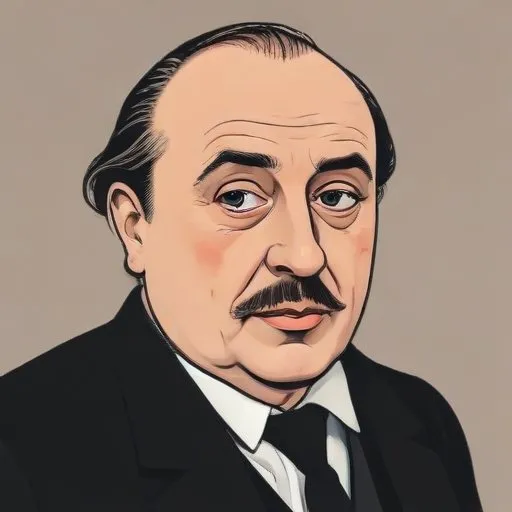
A witty and versatile writer and artist, renowned for his humorous essays, clever parodies, and exquisite caricatures that captured the essence of Victorian and Edwardian London. He is celebrated for his unique blend of wit, satire, and artistic flair.
Max Beerbohm was a luminary of English literature, celebrated for his biting wit, masterful caricatures, and delightful essays that poked fun at the absurdities of high society. As a humorist, parodist, and essayist, he left an indelible mark on the literary world, earning him a place among the greatest writers of his time.
Born on August 24, 1872, in London, Max Beerbohm was the youngest of nine children to a Lithuanian-born grain merchant, Julius Ewald Edward Beerbohm. His mother, Eliza Draper Beerbohm, was the sister of Julius's late first wife. Despite speculations about his family's Jewish descent, Beerbohm clarified that there was no evidence to support this claim.
Beerbohm's early education took place at the day school of Mr. Wilkinson in Orme Square, where he developed a love for Latin, which he credited with enabling him to write English. His drawing skills were honed under the tutelage of Mrs. Wilkinson, the only art lessons he ever received. This modest start laid the foundation for his future successes as a writer and caricaturist.
In the 1890s, Beerbohm's wit and humor earned him a reputation as a dandy and humorist. He became the drama critic for the Saturday Review, a position he held until 1910, when he relocated to Rapallo, Italy. During this period, he honed his skills as a parodist, creating scathing yet hilarious caricatures of society's elite.
Among his most notable works is his only novel, Zuleika Dobson, published in 1911. This satirical masterpiece tells the story of a beautiful and captivating young woman who wreaks havoc on the cloistered world of Oxford University. The novel's clever prose and biting wit established Beerbohm as a master of literary satire.
Beerbohm's caricatures, drawn usually in pen or pencil with muted watercolor tinting, are highly regarded for their subtlety and nuance. Many of his works are now part of public collections, testament to his skill as an artist. His subjects often included prominent figures of the time, whom he skewered with his sharp wit and clever observations.
In his later years, Beerbohm became popular for his occasional radio broadcasts, which showcased his wit and wisdom to a wider audience. He passed away on May 20, 1956, leaving behind a legacy of laughter, satire, and literary excellence.
Max Beerbohm's influence on modern society is undeniable. His biting satire and clever observations pierced the veil of Victorian propriety, revealing the absurdities and hypocrisies of high society. His works continue to delight readers and inspire writers, solidifying his place as one of the greatest humorists of his time.
These works, along with his numerous essays and caricatures, form a lasting testament to Beerbohm's genius and wit. His legacy continues to inspire generations of writers, artists, and humorists, ensuring that his wit and wisdom will be cherished for years to come.
Born in 1854
A witty and flamboyant literary mastermind, renowned for crafting clever, humorous, and poignant works that continue to delight audiences with their clever wordplay and societal commentary.
Born in 1856
A renowned Irish playwright and critic, known for his witty, thought-provoking plays that often challenged social norms and conventions. His works include Pygmalion and My Fair Lady.
Born in 1866
A visionary writer who pioneered the science fiction genre, crafting timeless classics like "The Time Machine" and "War of the Worlds" that continue to inspire and captivate audiences today.
Born in 1865
A renowned author and poet, best known for his imaginative and vivid stories, particularly "The Jungle Book", which have captivated readers of all ages with their timeless themes and memorable characters.
Born in 1879
This celebrated author crafted novels and plays that probed the human condition, exploring themes of social class, morality, and personal relationships, with a distinctive wit and insight. Their works continue to captivate audiences with their nuanced portrayals of English society during the early 20th century.
Born in 1882
A pioneering author of modernist literature, known for experimental novels and essays that explored the human experience, blurring the lines between reality and fiction.
Born in 1885
A pioneering writer of the early 20th century, known for exploring themes of human nature, relationships, and the clash between individual desire and societal expectations through novels like "Sons and Lovers" and "Lady Chatterley's Lover".
Born in 1894
Author of dystopian classics like Brave New World, exploring the consequences of technological advancements on humanity. Known for prophetic warnings about government control and manipulation.
