


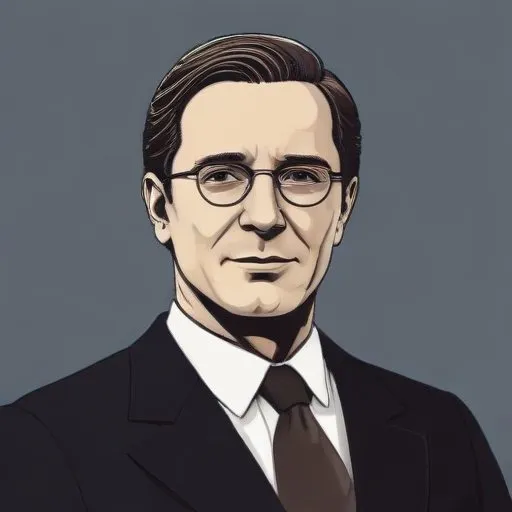
A prominent lawyer and diplomat who played a key role in shaping US foreign policy, particularly during the Cold War era, and was a strong advocate for human rights and international cooperation.
As a renowned American diplomat, Max Kampelman is best known for his instrumental role in shaping international relations during the Cold War era, particularly in his capacity as Ambassador to the Conference on Security and Cooperation in Europe. His tireless efforts in promoting peace, security, and cooperation between nations have left an indelible mark on the world stage.
Born on November 7, 1920, in New York City to Jewish Austrian immigrant parents, Kampelman's life was marked by a strong sense of purpose and duty. His educational pursuits took him to New York University, where he earned his B.A. in 1940 and LL.B. in 1947, and later to the University of Minnesota, where he obtained his M.A. in political science in 1946, an M.A. in public administration in 1947, and a Ph.D. in political science in 1952.
Kampelman's career began during World War II, when he volunteered for the Minnesota Starvation Experiment at the University of Minnesota, conducted by nutritionist Ancel Keys. This experience led him to renounce pacifism and pursue a path of public service. He served as Legislative Counsel to Minnesota Senator Hubert H. Humphrey from 1949 to 1955, laying the foundation for his future work in diplomacy.
Throughout his diplomatic career, Kampelman played a crucial role in promoting dialogue, understanding, and cooperation between nations. His expertise in international relations, coupled with his unwavering commitment to peace and security, earned him widespread respect and admiration.
Kampelman's contributions to international diplomacy have had a lasting impact on modern society. His tireless efforts in promoting disarmament, reducing tensions, and fostering cooperation between nations have inspired generations of diplomats, scholars, and policymakers.
Max Kampelman's remarkable life and career serve as a testament to the power of dedication, perseverance, and a commitment to the greater good. His legacy continues to inspire and motivate individuals to work towards a more peaceful, secure, and cooperative world.
Born in 1923
A renowned diplomat and strategist who played a pivotal role in shaping global politics during the Cold War era, known for his Realpolitik approach and brokering peace agreements .
98 Years Old
A Polish-born American strategist and policymaker who served as National Security Advisor, shaping US foreign policy and advising presidents on global affairs. Known for his realist approach and expertise on geopolitics.
88 Years Old
The first female US Secretary of State, serving from 1997 to 2001, who played a key role in shaping American foreign policy during the Clinton administration. She's known for her strong diplomatic efforts and advocacy for democracy and human rights.
Born in 1925
American diplomat who served as Secretary of State under President Bill Clinton, playing a key role in international relations and foreign policy during the 1990s. He's known for his efforts to broker peace in the Balkans and Middle East.
95 Years Old
The 62nd United States Secretary of State, serving from 1992 to 1993, played a key role in shaping American foreign policy during a tumultuous period in world history, particularly in the Balkans. He's also known for his extensive diplomatic career, spanning over 40 years.
Born in 1924
The 59th United States Secretary of State, a four-star general who played a key role in the Nixon administration and later served as a diplomat, known for his controversial and influential decisions during the Cold War era.
Born in 1920
An American economist and politician who served as the 60th United States Secretary of State, playing a key role in shaping foreign policy during the Cold War era. He's known for his diplomatic efforts to end the Cold War and his advocacy for economic freedom.
Born in 1917
A decorated military officer and lawyer who served as Secretary of Defense, playing a key role in shaping US foreign policy and military strategy during the Cold War. He's most known for his hawkish stance and significant military budget increases.
