


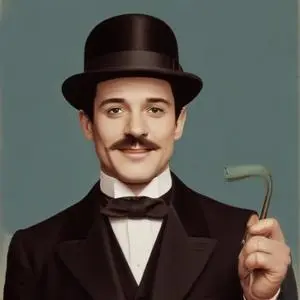
A pioneering figure in silent comedy, known for his clever, sophisticated, and influential films that inspired Charlie Chaplin and Buster Keaton.
Known as the first international movie star and the first film star anywhere, Max Linder was a trailblazing French actor, director, screenwriter, producer, and comedian of the silent film era. His on-screen persona, "Max," was one of the first recognizable recurring characters in film, charming audiences with his debonair charm and comedic flair.
Born Gabriel Leuvielle on December 16, 1883, in Cavernes, France, Linder grew up with a passion for theater and enrolled in the Conservatoire de Bordeaux in 1899. He soon received awards for his performances and continued to pursue a career in the legitimate theater.
Linder's transition to film began in the summer of 1905, when he started appearing in short comedy films for Pathé. His first major film role was in the Georges Méliès-like fantasy film The Legend of Punching. During the following years, Linder made several hundred short films portraying Max, a wealthy and dapper man-about-town frequently in hot water because of his penchant for beautiful women and the good life.
Starting with The Skaters' Debut in 1907, the character became one of the first identifiable motion-picture characters who appeared in successive situation comedies. By 1911, Linder was co-directing his own films with René LePrince as well as writing the scripts.
Linder enlisted at the outbreak of World War I, working as a dispatch driver and entertainer. During his service, he was injured several times, and the experiences reportedly had a devastating effect on him both physically and mentally.
After the war, Linder moved to the United States but was unable to achieve the same level of success he had in Europe. His career began to decline, and he struggled with personal demons.
Max Linder's impact on the film industry cannot be overstated. He is credited with creating one of the first recognizable recurring characters in film, paving the way for future generations of comedians and actors.
Linder's legacy extends beyond his own filmography, influencing comedians such as Charlie Chaplin, who often credited Linder as an inspiration.
Despite his untimely death in 1925, Max Linder's impact on the world of comedy and film continues to be felt to this day.
Born in 1889
A pioneer of silent film, he is renowned for his iconic "Little Tramp" character and groundbreaking work in writing, directing, and starring in his own movies.
Born in 1895
A pioneering silent film comedian, known for his deadpan expression and ingenious physical comedy, who wrote, directed, and starred in his own films.
Born in 1893
Pioneering silent film star and stunt master, known for performing daring physical comedy and iconic scenes, such as hanging from a clock tower.
Born in 1887
A silent film star who charmed audiences with his comedic talents, directing and writing skills, and is infamous for a scandal that tarnished his reputation.
Born in 1880
Pioneering filmmaker and comedian who developed the Keystone Kops and introduced Charlie Chaplin to the screen, revolutionizing silent comedy.
Born in 1923
A legendary French performer who brought silence to life through pantomime, entertaining audiences worldwide with his iconic character "Bip the Clown" and inspiring generations of artists.
Born in 1903
A beloved French comedian and singer, known for his iconic mustache and starring roles in popular films like "Don Camillo" and "La Vache et le Prisonnier".
