


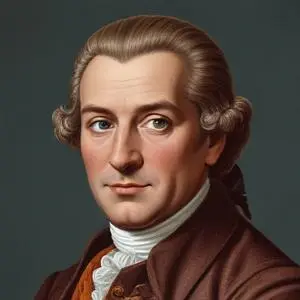
A German financier who established a global banking dynasty, known for masterminding a vast financial empire that still wields significant influence today.
Mayer Amschel Rothschild, a German-Jewish banker, is renowned for laying the groundwork for the Rothschild banking dynasty, earning him the title of "founding father of international finance." With a legacy that has stood the test of time, Rothschild's pioneering spirit and shrewd business acumen have made him one of the most influential businessmen of all time.
Born on February 23, 1744, in the Judengasse, the Jewish ghetto of Frankfurt, Holy Roman Empire (present-day Germany), Mayer Amschel Rothschild was one of eight children to Amschel Moses Rothschild and his wife, Schnche Rothschild. The Rothschild family's roots can be traced back to 1569, with the name originating from the German "zum rothen Schild" meaning "with the red shield," a reference to the family's ancestral home.
With the help of relatives, Rothschild secured an apprenticeship under Jacob Wolf Oppenheimer at the banking firm of Simon Wolf Oppenheimer in Hanover in 1757. This formative experience laid the foundation for his future success, as he learned valuable skills in foreign trade and currency exchange. Upon his return to Frankfurt in 1763, Rothschild established himself as a dealer in rare coins and soon became a personal supplier of coins to the Prince of Hesse.
Rothschild's business philosophy was built on the principles of integrity, hard work, and strategic partnerships. He believed in the importance of building strong relationships with clients and associates, which enabled him to navigate the complex world of finance with ease. His keen sense of intuition and ability to adapt to changing market conditions were key factors in his success.
At the height of his career, Rothschild's net worth was estimated to be in the hundreds of millions, making him one of the wealthiest men of his time. His financial acumen and innovative banking practices had a profound impact on the global economy, earning him recognition as one of the most influential businessmen of all time.
Rothschild's pioneering efforts in international finance have had a lasting impact on modern society. His innovative banking practices, which emphasized the importance of global connections and strategic partnerships, paved the way for the development of modern banking systems. Today, his legacy continues to inspire generations of financiers and entrepreneurs around the world.
"Give me control of a nation's money, and I care not who makes the laws." - Mayer Amschel Rothschild
Rothschild's life and career were marked by significant historical events, including the Napoleonic Wars and the rise of industrialization. Despite the challenges posed by these events, he remained steadfast in his pursuit of financial innovation, leaving behind a legacy that would shape the course of international finance for centuries to come.
Rothschild's contemporaries included other prominent financiers and entrepreneurs of the time, such as Nathan Rothschild and James Mayer Rothschild. While they shared similar goals and ambitions, Rothschild's unique approach to finance and his ability to adapt to changing market conditions set him apart from his peers.
Rothschild's contributions to the field of finance are immeasurable. He single-handedly revolutionized the banking industry, introducing new practices and techniques that would become the standard for generations to come. His legacy continues to inspire and influence financiers around the world.
Born in 1896
Austrian-Jewish screenplay writer behind iconic films like "The Cabinet of Dr. Caligari" and "Sunrise", credited with influencing the development of cinematic storytelling.
Born in 1797
A 19th-century literary mastermind who penned poignant poetry and biting social commentary, known for his witty satire and romantic verses that still resonate today.
Born in 1815
Unified Germany's founder, a master strategist who forged a nation through diplomacy and war, leaving a lasting legacy in European politics.
Born in 1769
A French military leader who rose to prominence during the French Revolution and became Emperor of France, known for his military conquests and reorganization of Europe. He is also famous for his Napoleonic Code, which remains a foundation of modern law.
