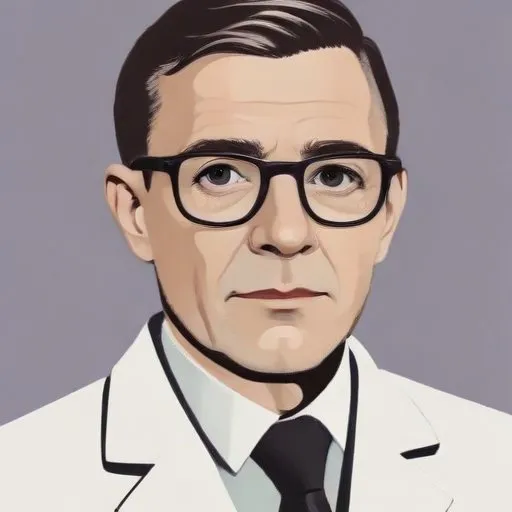
Norman Heatley

Norman Heatley

Norman Heatley was born on January 10th, 1911

Birth Place: Wisbech, Cambridgeshire
Occupation: Biologist and chemist
Nationality: English
Born: January 10, 1911
Died: January 7, 2004
Alma Mater: University of Cambridge
Notable Work: Penicillin purification
Awards: MBE

Developed methods to mass-produce penicillin, making it widely available to treat bacterial infections. Their work revolutionized the treatment of bacterial diseases and saved countless lives.

Timeline
1911
Born in England
Norman Heatley was born on January 10, 1911, in England.
1930
Studied Biochemistry
Heatley studied biochemistry at Oxford University in the 1930s.
1940
Worked on Penicillin Development
Heatley worked on the development of penicillin during World War II, alongside Alexander Fleming and Ernst Boris Chain.
1950
Continued Research in Biochemistry
Heatley continued his research in biochemistry in the 1950s and 1960s, focusing on antibiotic development.
2004
Died in England
Norman Heatley passed away on January 7, 2004, in England.
Norman Heatley

Norman Heatley Quiz

Norman Heatley's contribution to medicine was instrumental in making which antibiotic widely available?

Score: 0/5
FAQ
What role did Norman Heatley play in the development of penicillin?
Norman Heatley was a British biologist and chemist who played a crucial role in the development of penicillin. He worked alongside Alexander Fleming and Ernst Boris Chain to purify and characterize the antibiotic.
What were Norman Heatleys contributions to the Oxford University penicillin project?
Norman Heatley was responsible for developing a method to produce penicillin on a large scale, which involved fermenting the mold in a broth. This breakthrough led to the mass production of penicillin, making it possible to treat patients with the antibiotic.
What awards did Norman Heatley receive for his work on penicillin?
Norman Heatley was awarded the Copley Medal in 1946 for his contributions to the development of penicillin. He also shared the Albert Lasker Award with Alexander Fleming and Ernst Boris Chain in 1946.
What was Norman Heatleys early life and education like?
Norman Heatley was born in 1911 in Cambridge, England. He studied natural sciences at Cambridge University, graduating in 1933. He later pursued his Ph.D. at Oxford University, where he worked under the supervision of Professor Ernst Boris Chain.
What was Norman Heatleys later life and career like?
After his work on penicillin, Heatley went on to work on other antibiotics and became a professor of biochemistry at Oxford University. He was also involved in the development of the antibiotic cephalosporin and made significant contributions to the field of microbiology.

Related People:

Alexander Fleming

Born in 1881

Discovered penicillin, a revolutionary antibiotic, and pioneered its use in medicine. This breakthrough has saved countless lives and transformed the field of healthcare.

Howard Florey

Born in 1898

Developed penicillin as a medicine, revolutionizing the treatment of bacterial infections. This discovery has saved countless lives and transformed modern medicine.

James Watson

98 Years Old

Discovered the structure of DNA, revolutionizing our understanding of genetics and earning a Nobel Prize. Pioneering work in molecular biology has far-reaching implications for medicine and beyond.

Francis Crick

Born in 1916

Pioneering scientist who discovered the structure of DNA, revolutionizing our understanding of genetics and life itself.

Rosalind Franklin

Born in 1920

A British scientist who contributed significantly to the discovery of the structure of DNA, providing high-quality X-ray crystallography images that helped James Watson and Francis Crick develop their famous model.

Maurice Wilkins

Born in 1916

A Nobel Prize-winning physicist and biologist who contributed significantly to the discovery of the structure of DNA, using X-ray crystallography to produce the first clear images of the molecule.

Frederick Sanger

Born in 1918

Developed techniques for sequencing DNA and proteins, revolutionizing molecular biology and earning two Nobel Prizes in Chemistry.

Max Perutz

Born in 1914

Pioneering crystallographer who unraveled the structure of hemoglobin, revolutionizing our understanding of biological molecules. His work paved the way for major advances in medicine and biochemistry.