


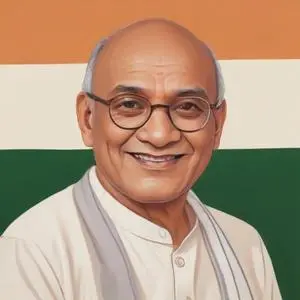
A key figure in Indian politics, serving as Prime Minister from 1991 to 1996, known for implementing economic reforms that transformed India's economy. He played a crucial role in shaping India's foreign policy and handling the country's nuclear tests.
P. V. Narasimha Rao, the ninth Prime Minister of India, is renowned for introducing sweeping liberal reforms to the country's economy, salvaging it from the brink of bankruptcy in 1991. By appointing Manmohan Singh as Finance Minister, Rao successfully implemented policies that transformed India's economic landscape, paving the way for future growth and development.
Born on June 28, 1921, in Laknepalli village, Warangal district, Rao hailed from a Telugu Niyogi Brahmin family. His early life was marked by a strong desire for education, which led him to pursue a degree in law from the Osmania University in Hyderabad.
Rao's political career began in 1957, when he was elected to the Andhra Pradesh Legislative Assembly. He went on to serve as the Chief Minister of Andhra Pradesh from 1971 to 1973, and later held key portfolios in the Union government, including Defence, Home Affairs, and External Affairs.
In 1991, India faced a severe economic crisis, with a balance of payment crisis and a plummeting foreign exchange reserve. Rao's government introduced a series of reforms, including devaluation of the Indian rupee, liberalization of trade and investment, and privatization of state-owned enterprises. These reforms not only stabilized the economy but also laid the foundation for India's rapid growth in the following decades.
Rao's tenure was not without controversy. His role during and after the demolition of the Babri Masjid in 1992 drew criticism, and his relations with the Nehru-Gandhi family were strained. However, retrospective evaluations have been kinder, with many acknowledging his contributions to India's economic growth.
In 2024, Rao was posthumously awarded the Bharat Ratna, India's highest civilian honor, recognizing his remarkable contributions to the country's economic development.
Rao's legacy extends beyond his economic reforms. He was a skilled politician who navigated complex coalition politics with ease, earning him the nickname "Chanakya" for his ability to steer legislation through the parliament. His government's initiatives in education, healthcare, and infrastructure development have had a lasting impact on Indian society.
Rao's economic reforms were guided by his belief in the importance of economic liberalization and globalization. He advocated for a market-oriented economy, emphasizing the need for India to integrate with the global economy to achieve rapid growth and development.
In conclusion, P. V. Narasimha Rao's contributions to India's economic reforms have had a lasting impact on the country's development. His legacy serves as a testament to the power of visionary leadership and the importance of economic liberalization in achieving rapid growth and prosperity.
82 Years Old
The 6th Prime Minister of India, a key figure in Indian politics, known for introducing economic reforms and promoting technology in the country. He was also a strong advocate for social justice and equality.
79 Years Old
The first female President of the Indian National Congress, leading the party to a landslide victory in 2004, and playing a crucial role in shaping India's political landscape.
93 Years Old
The 13th Prime Minister of India, a renowned economist who led the country through a period of rapid economic growth and liberalization, implementing reforms that transformed India's economy. He is credited with helping to lift millions of people out of poverty.
93 Years Old
An Indian farmer-turned-politician who served as the 11th Prime Minister of India, known for his humble beginnings and unexpected rise to power. He played a key role in shaping India's economy and foreign policy during his tenure.
Born in 1924
A renowned Indian poet and politician who served as the country's 10th Prime Minister, known for his efforts to strengthen India's economy and improve relations with neighboring countries.
98 Years Old
A prominent Indian politician who served as Deputy Prime Minister and played a key role in shaping the country's politics, particularly in the Bharatiya Janata Party .
90 Years Old
The 13th President of India, a seasoned politician and journalist, served as the head of state from 2012 to 2017, playing a key role in shaping the country's economy and foreign policy. He's known for his diplomatic skills and ability to build consensus.
85 Years Old
Indian Minister of Agriculture who played a crucial role in shaping the country's agricultural policies and is credited with introducing several reforms to benefit farmers.
