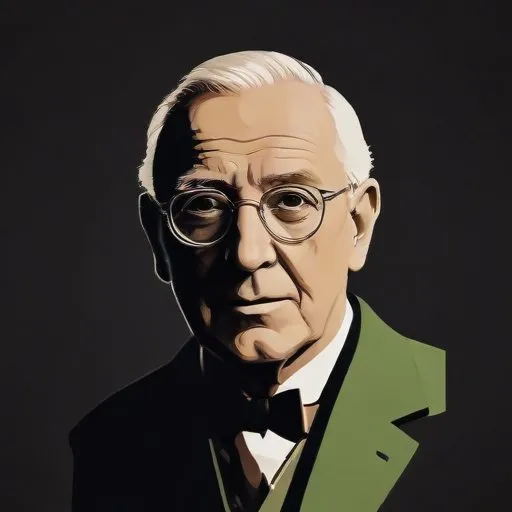
Patrick Blackett, Baron Blackett

Patrick Blackett, Baron Blackett

Patrick Blackett, Baron Blackett was born on November 18th, 1897

Full Name: Patrick Blackett, Baron Blackett
Place of Birth: London, England
Profession: Physicist, Academic
Nationality: English
Born: November 18, 1897
Zodiac Sign: Scorpio
Died: July 13, 1974
Notable Work: Nobel Prize in Physics

A pioneering physicist who made groundbreaking contributions to our understanding of cosmic rays, magnetism, and the structure of atoms, earning him a Nobel Prize in Physics.

Timeline
1897
Born in London
Patrick Blackett was born on August 18th in London, England, UK.
1921
Started Research at Cambridge University
Blackett started his research at Cambridge University, focusing on physics.
1948
Awarded Nobel Prize in Physics
Blackett was awarded the Nobel Prize in Physics for his work on cosmic rays and particle physics.
1953
Knighted
Blackett was knighted by Queen Elizabeth II for his services to physics.
1974
Died in London
Patrick Blackett passed away on July 13th in London, England, UK, at the age of 76.
Patrick Blackett, Baron Blackett

Patrick Blackett, Baron Blackett Quiz

What field of study did Patrick Blackett, Baron Blackett, make significant contributions to?

Score: 0/5
FAQ
What were the key contributions of Patrick Blackett to physics?
Patrick Blackett made significant contributions to physics, including the discovery of cosmic rays and the development of cloud chambers, earning him the Nobel Prize in Physics in 1948. His work laid the foundation for modern particle physics.
What was Patrick Blacketts role in the development of operational research?
Patrick Blackett played a crucial role in the development of operational research during World War II, applying scientific methods to military operations. His work helped the British Navy optimize their convoy system and improve their anti-submarine warfare strategy.
What was Patrick Blacketts academic career like?
Patrick Blackett had a distinguished academic career, holding positions at Cambridge, Manchester, and Imperial College London. He was knighted in 1941 and became a baron in 1969, recognizing his contributions to science and education.
How did Patrick Blacketts work influence the development of modern science?
Patrick Blacketts work on cosmic rays and cloud chambers laid the foundation for modern particle physics, influencing the development of new research areas like nuclear physics and cosmology. His contributions paved the way for future breakthroughs in our understanding of the universe.
What were Patrick Blacketts views on science and society?
Patrick Blackett believed that science should be used for the betterment of society, advocating for the responsible application of scientific knowledge. He also advocated for international cooperation in science, recognizing its potential to promote peace and understanding.

Related People:

Subrahmanyan Chandrasekhar

Born in 1910

A renowned scientist who pioneered our understanding of black holes and the behavior of stars, earning a Nobel Prize in Physics in 1983.

Niels Bohr

Born in 1885

A pioneer in quantum mechanics, he introduced the concept of wave-particle duality, revolutionizing our understanding of atomic structure. His philosophical approach to science also explored the nature of reality and human understanding.

Albert Einstein

Born in 1879

A brilliant physicist who developed the theory of relativity and is considered one of the most influential scientists of the 20th century, known for his groundbreaking work in physics and mathematics.

Werner Heisenberg

Born in 1901

A pioneer in quantum mechanics, he formulated the uncertainty principle, which revolutionized our understanding of the atomic world. His groundbreaking work reshaped modern physics.

Enrico Fermi

Born in 1901

A pioneer in nuclear physics, known for leading the team that developed the first nuclear reactor and playing a crucial role in the development of the atomic bomb.

Paul Dirac

Born in 1902

A brilliant mind who formulated the Dirac equation, a fundamental concept in quantum mechanics, and predicted the existence of antimatter. His work revolutionized our understanding of the universe.

Louis de Broglie

Born in 1892

A French physicist and Nobel laureate who proposed that particles, such as electrons, can exhibit wave-like behavior, revolutionizing quantum mechanics. His hypothesis led to major breakthroughs in understanding the atomic structure.