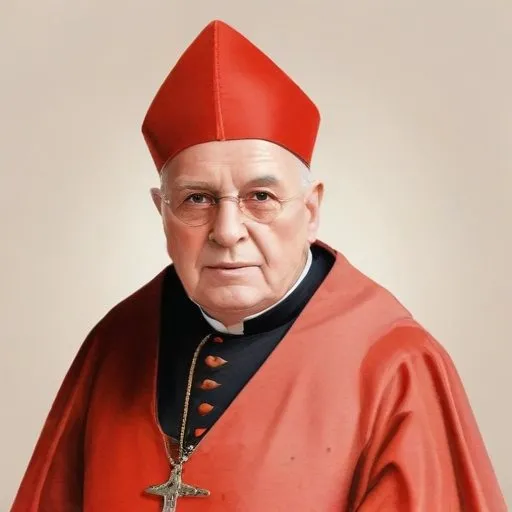
Paul Augustin Mayer

Paul Augustin Mayer

Paul Augustin Mayer was born on May 23rd, 1911

Full Name: Paul Augustin Mayer
Place of Birth: Altötting, Germany
Nationality: German
Occupation: Cardinal
Notable Posts: Prefect of the Pontifical Commission for the Cultural Heritage of the Church
Known For: German cardinal
created Cardinal: 2001
Diocese: Roman Catholic Diocese of Altötting

A German cardinal who served as the Prefect of the Pontifical Commission "Ecclesia Dei" and was a prominent figure in the Catholic Church's dialogue with traditionalist Catholics. He played a key role in the Church's efforts to reconcile with the Society of Saint Pius X.

Timeline
1911
Born in Germany
Paul Augustin Mayer was born on May 23rd, 1911, in Germany, to a family of modest means. He would go on to become a renowned cardinal.
1935
Ordained as Priest
Mayer was ordained as a priest, beginning his service to the Catholic Church.
1962
Appointed as Auxiliary Bishop
Mayer was appointed as an auxiliary bishop, assisting the bishop of Munich and Freising.
1970
Appointed as Cardinal
Mayer was appointed as a cardinal by Pope Paul VI, a significant honor in the Catholic Church.
2010
Dies at the Age of 98
Mayer died on April 30th, 2010, at the age of 98, leaving behind a legacy of service to the Catholic Church.
Paul Augustin Mayer

Paul Augustin Mayer Quiz

What was the primary role of Paul Augustin Mayer in the Catholic Church?

Score: 0/5
FAQ
What was Paul Augustin Mayers role in the Catholic Church?
Paul Augustin Mayer was a German cardinal who served as the prefect of the Congregation for Bishops from 1984 to 1991. He was also a prominent theologian and educator.
What was Paul Augustin Mayers involvement in Vatican II?
Paul Augustin Mayer was a peritus, or theological expert, during the Second Vatican Council (Vatican II). He played a role in shaping the councils documents on ecumenism and the church in the modern world.
What honors did Paul Augustin Mayer receive?
Paul Augustin Mayer received several honors for his service to the Catholic Church, including the Cardinals Cross of Honor and the Grand Cross of the Order of Merit of the Federal Republic of Germany.
What was Paul Augustin Mayers approach to ecumenism?
Paul Augustin Mayer was a strong supporter of ecumenism, and worked to promote unity among Christian denominations. He was involved in several ecumenical dialogues, including those with the Lutheran and Orthodox churches.
How did Paul Augustin Mayers theology influence the Catholic Church?
Paul Augustin Mayers theology emphasized the importance of dialogue and collaboration between the Catholic Church and other Christian denominations. His work in this area helped to shape the churchs approach to ecumenism in the latter half of the 20th century.

Related People:

Pope John Paul II

Born in 1920

Leader of the Catholic Church from 1978 to 2005, known for helping to end communism in Poland and being a charismatic advocate for human rights and social justice.

Franz König

Born in 1905

Austrian Catholic Church leader who served as Archbishop of Vienna and played a key role in shaping the church's stance on social justice and ecumenism. He was a vocal advocate for human rights and reconciliation during a tumultuous period in European history.

Walter Kasper

93 Years Old

A prominent Catholic theologian and cardinal who played a key role in shaping the Church's stance on ecumenism, interfaith dialogue, and social justice. He's known for his efforts to promote Christian unity and understanding.

Christoph Schönborn

81 Years Old

A prominent Catholic leader and theologian, known for his influential writings on Catholic doctrine and his role in shaping the Church's stance on various issues.

Karl Lehmann

90 Years Old

A prominent Catholic Church leader who served as the Bishop of Mainz and played a key role in shaping the Church's stance on various issues, including ecumenism and interfaith dialogue.

Cormac Murphy-O'Connor

94 Years Old

The former Archbishop of Westminster and a prominent figure in the Catholic Church, known for his efforts to improve relations between Catholics and Anglicans. He played a key role in the papal transition following Pope John Paul II's death.