


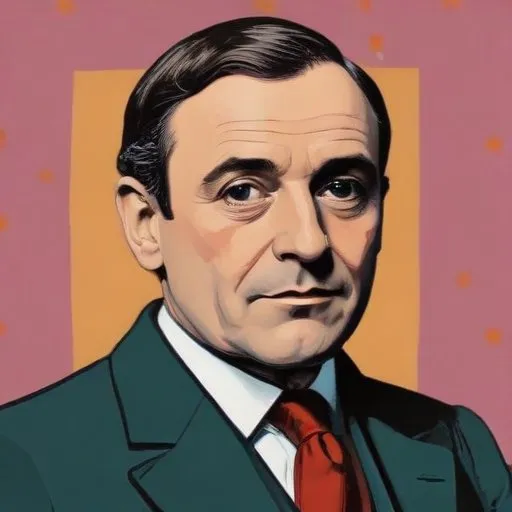
A French diplomat and politician who played a key role in the development of the International Committee of the Red Cross and was awarded the Nobel Peace Prize in 1909 for his efforts to promote international arbitration and peace. He is also known for his advocacy of international law and his role in the Hague Peace Conferences.
In the tumultuous era of World War I, one man stood out as a beacon of hope for international understanding and cooperation: Paul-Henri-Benjamin d'Estournelles de Constant. This French diplomat and Nobel laureate is best known for his unwavering dedication to fostering global peace and unity, earning him the esteemed Nobel Peace Prize in 1909.
Born on February 22, 1852, in La Flèche, France, d'Estournelles de Constant was destined for a life of public service. He began his career as a diplomat in 1876, serving in various capacities, including as a delegate to the Hague Conferences of 1899 and 1907. His tireless efforts to promote international cooperation and arbitration earned him recognition as one of the leading authorities on international law.
d'Estournelles de Constant played a pivotal role in organizing the Hague Conferences, which sought to establish the rules of war and promote peaceful conflict resolution. His leadership and vision helped shape the conferences' agenda, paving the way for the signing of the Hague Conventions. In recognition of his outstanding contributions, he was awarded the Nobel Peace Prize in 1909, alongside Frédéric Passy.
d'Estournelles de Constant believed that nations must work together to ensure collective security and prevent the scourge of war. He advocated for the creation of international organizations and courts to settle disputes peacefully, rather than resorting to violence. His philosophical approach emphasized the importance of cooperation, mutual respect, and the promotion of peace as a fundamental human right.
d'Estournelles de Constant's legacy extends far beyond his own lifetime. His tireless efforts to promote international cooperation and peaceful conflict resolution have inspired generations of diplomats, policymakers, and peace activists. His vision of a united Europe and a more peaceful world continues to shape the global agenda, informing initiatives such as the European Union and the United Nations.
"The only way to secure peace is to prepare for peace."
d'Estournelles de Constant's life serves as a testament to the power of dedication, perseverance, and vision. As we strive to build a more peaceful and cooperative world, his legacy reminds us of the importance of working together to achieve a common goal: a world free from the ravages of war.
Born in 1822
A French economist and academic who was awarded the Nobel Peace Prize in 1901 for his efforts to establish the International Committee of the Red Cross and promote international arbitration. He is known for his pioneering work in promoting peace and conflict resolution.
Born in 1851
A French police officer turned politician who served as Prime Minister of France and was awarded the Nobel Peace Prize for his efforts to establish the International Court of Arbitration. He championed international cooperation and peace.
Born in 1862
A French statesman who served as Prime Minister of France and was awarded the Nobel Peace Prize for his efforts to establish the European unity and collective security. He played a key role in shaping the League of Nations and promoting international cooperation.
Born in 1841
A French journalist, physician, and politician who served as Prime Minister of France during World War I, leading the country to victory and playing a key role in shaping the Treaty of Versailles. He's also known for his strong leadership and witty humor.
Born in 1860
A French statesman who served as President of France during a tumultuous period, playing a crucial role in shaping the country's response to World War I. He's also known for his efforts to reform the French economy and stabilize the franc.
Born in 1859
A French lawyer and politician who served as the 12th President of France, known for his role in shaping the country's early 20th-century politics and labor laws. He was a key figure in the country's transition from a monarchy to a republic.
