


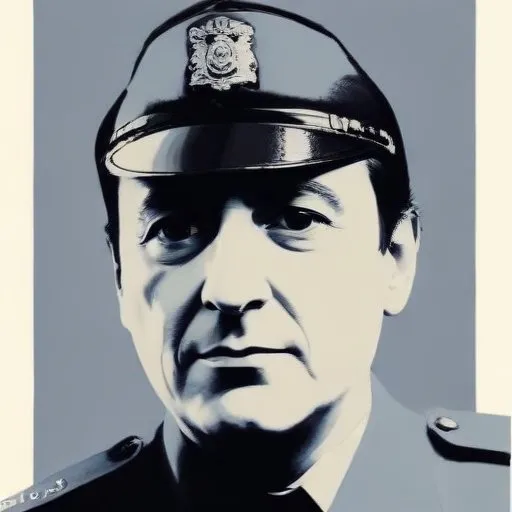
A French police officer turned politician who served as Prime Minister of France and was awarded the Nobel Peace Prize for his efforts to establish the International Court of Arbitration. He championed international cooperation and peace.
Known for his unwavering commitment to progressive ideals, Lon Bourgeois was a French statesman who left an indelible mark on the country's political landscape. As a champion of social justice, economic equality, and international cooperation, Bourgeois' ideas continue to shape the Radical Party's agenda to this day.
Born on May 21, 1851, in Paris, Bourgeois was raised in a modest Republican family of Burgundian descent. His father, a watchmaker, instilled in him the values of hard work and social responsibility. These early influences would later inform Bourgeois' political philosophy and guide his actions as a statesman.
After completing his law degree in 1874, Bourgeois embarked on a distinguished career in public service. He held various roles, including prefect of the Tarn (1882) and the Haute-Garonne (1885), before returning to Paris to join the Ministry of the Interior. In 1887, he became Prefect of Police, a position that thrust him into the midst of a brewing political storm.
Bourgeois' vision for a more just and equitable society led him to advocate for a range of progressive reforms. He championed the introduction of progressive income taxes, social insurance schemes, and expanded educational opportunities. His commitment to cooperative solidarism, a philosophy that emphasized mutual aid and collective action, resonated with the Radical Party's ideals.
In the realm of foreign policy, Bourgeois was a vocal proponent of a strong League of Nations, compulsory arbitration, controlled disarmament, and economic sanctions. He believed that these measures could help maintain peace and prevent the outbreak of war. His farsighted approach continues to influence international relations to this day.
During his tenure as Minister of Public Instruction, Bourgeois introduced significant reforms in secondary education, cementing his legacy as a champion of educational equality.
Lon Bourgeois' contributions to French politics and society continue to inspire generations of policymakers and social activists. His commitment to progressive values, international cooperation, and education has left an indelible mark on the country's history. As a testament to his enduring legacy, Bourgeois remains an exemplary figure in the pantheon of French statesmen.
Born in 1838
A French lawyer and politician who served as Prime Minister of France, known for his key role in the Franco-Prussian War and his efforts to modernize and unify France. He's a significant figure in French history, shaping the country's politics and identity.
Born in 1883
A renowned French actor and director, celebrated for his iconic performances in classic films like "Le Rouge et le Noir" and "Les Enfants du Paradis", showcasing his remarkable range and charisma.
Born in 1841
A French journalist, physician, and politician who served as Prime Minister of France during World War I, leading the country to victory and playing a key role in shaping the Treaty of Versailles. He's also known for his strong leadership and witty humor.
Born in 1862
A French statesman who served as Prime Minister of France and was awarded the Nobel Peace Prize for his efforts to establish the European unity and collective security. He played a key role in shaping the League of Nations and promoting international cooperation.
Born in 1872
A French lawyer and politician who served as Prime Minister of France, known for his efforts to rebuild the country after World War I and his advocacy for European unity.
Born in 1863
A French mathematician and politician who served as Prime Minister of France, making significant contributions to mathematics, particularly in the field of differential equations. He's also known for his role in shaping France's early 20th-century politics.
Born in 1884
The first President of the Fourth Republic, serving from 1947 to 1954, known for his role in post-war France's reconstruction and establishment of the European Coal and Steel Community.
