


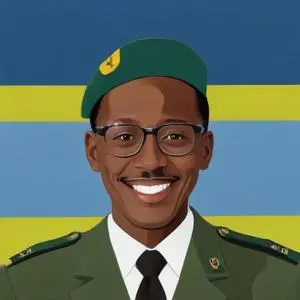
The leader who oversaw Rwanda's transformation from devastating genocide to economic growth and stability, known for his authoritarian rule and human rights controversies.
Paul Kagame is a name synonymous with courage, resilience, and visionary leadership. As the President of Rwanda since 2000, he has been instrumental in transforming the war-torn country into a beacon of hope and prosperity in the African continent.
Born on October 23, 1957, to a Tutsi family in southern Rwanda, Kagame's early life was marked by turmoil and displacement. At just two years old, his family fled to Uganda, where he spent his childhood during the Rwandan Revolution. In the 1980s, Kagame joined Yoweri Museveni's rebel army, rising through the ranks to become a senior Ugandan army officer after Museveni's military victories led him to the presidency.
In 1990, Kagame joined the Rwandan Patriotic Front (RPF), a rebel armed force fighting to end the oppressive Hutu-led government of Rwanda. After the death of the previous leader, Fred Rwigyema, Kagame took control of the RPF, leading the charge against the government forces. By 1993, the RPF had gained significant territory, and a ceasefire was negotiated. However, the assassination of Rwandan President Juvénal Habyarimana in 1994 sparked the devastating Rwandan Genocide, during which an estimated 500,000 to 800,000 Tutsi and moderate Hutu were brutally killed.
Kagame's leadership and military prowess played a crucial role in ending the genocide and ultimately defeating the government forces. In 1994, he became the Vice President and Minister of Defense under President Pasteur Bizimungu, effectively becoming Rwanda's de facto leader. In 2000, Kagame was elected President of Rwanda, a position he has held ever since.
Under Kagame's leadership, Rwanda has undergone a remarkable transformation. He has championed economic development, infrastructure growth, and innovation, earning Rwanda the title of "Singapore of Africa." His government has also made significant strides in education, healthcare, and women's empowerment. Kagame's vision for Rwanda is centered around building a self-reliant, prosperous nation that is a model for African development.
Despite his many achievements, Kagame's leadership has not been without controversy. Critics have accused him of suppressing political opposition, restricting human rights and freedom of speech, and engaging in questionable foreign policy decisions. However, Kagame remains a highly popular leader in Rwanda, with many seeing him as a champion of stability and progress.
Kagame is known for his strong convictions and unwavering commitment to his principles. He believes in the importance of self-reliance, national pride, and African solidarity. His leadership philosophy is centered around the idea of building a strong, prosperous nation that can take its rightful place on the global stage.
Kagame has received numerous awards and honors for his leadership and contributions to African development. These include the African Leadership Award, the Global Leadership Award, and the Honorary Doctorate from the University of the Witwatersrand.
Paul Kagame's impact on Rwanda and Africa as a whole cannot be overstated. He has inspired a generation of leaders and citizens to strive for excellence, self-reliance, and African solidarity. His legacy will continue to shape the course of African development for generations to come.
In conclusion, Paul Kagame is a true visionary leader who has left an indelible mark on Rwanda and the African continent. His bravery, resilience, and commitment to his people have earned him a place in the annals of history as one of Africa's greatest leaders.
86 Years Old
The first democratically elected president of the Democratic Republic of the Congo, who led the country to independence from Mobutu's regime and implemented economic reforms. He's also known for his mysterious assassination in 2001.
