


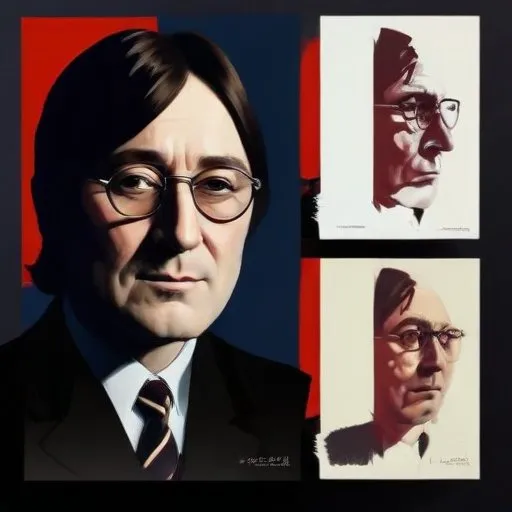
The 42nd Premier of Tasmania, a Labor Party leader who served from 2004 to 2008, is known for his efforts to revitalize the state's economy and infrastructure. He also played a key role in shaping Tasmania's response to climate change.
Paul Lennon, born on October 8, 1955, is a Labor Party politician who served as the Premier of Tasmania from 2004 to 2008. He is infamous for his government's fast-tracked approval of the Gunns Bell Bay Pulp Mill proposal, which bypassed normal planning procedures and led to perceptions of corruption.
Lennon attended St Virgil's College, a Catholic school, before working as a storeman and clerk. In 1978, he became an organiser with the Storemen and Packers Union, quickly rising through the ranks to become Tasmanian State Secretary of the Storeman and Packers Union in 1980, and later Senior Vice President of the national union in 1982.
In 1984, Lennon became Secretary of the Tasmanian Trades and Labor Council, and a member of the Executive of the Australian Council of Trade Unions. His experience in the union movement laid the foundation for his future political career.
Lennon first ran for parliament in 1989, but failed to obtain a seat. However, he was elected to the Tasmanian House of Assembly in 1990 on a recount of votes following the resignation of Ken Wriedt. He became Deputy Leader of the Labor Party and Shadow Minister for Industrial Relations, Workplace Standards, Workers Compensation, Public Sector Management, Forests, Mines, Racing, and Gaming.
In 1998, Lennon became Deputy Premier, Minister for Infrastructure, Energy and Resources, and Minister for Racing and Gaming in the Jim Bacon government. Following the reelection of the government in 2002, he became Minister for Economic Development, Energy and Resources, and Minister for Racing and Sport and Recreation.
In 2004, Lennon became the Premier of Tasmania, a position he held until his resignation in 2008. During his tenure, he oversaw several significant projects, including the development of the Gunns Bell Bay Pulp Mill. However, his government's handling of the project was marred by allegations of corruption and bypassing of normal planning procedures.
The controversy surrounding the pulp mill project, combined with perceptions of corruption, led to a significant decline in Lennon's popularity. His preferred premier rating fell to 17%, and he eventually resigned as Premier on May 26, 2008.
Lennon's legacy as Premier is marked by controversy and allegations of corruption. His government's handling of the Gunns Bell Bay Pulp Mill proposal raised concerns about the integrity of the planning process and the influence of big business on government decision-making.
In addition to the pulp mill controversy, Lennon's government was also criticized for its handling of other environmental issues, including forestry and mining. His legacy serves as a reminder of the importance of transparency and accountability in government decision-making.
Since his resignation as Premier, Lennon has maintained a low public profile. He officially resigned from the Tasmanian House of Assembly on May 27, 2008, bringing an end to his political career.
Despite the controversies surrounding his tenure as Premier, Lennon's contributions to the Labor Party and the union movement cannot be ignored. His rise through the ranks of the union movement and his eventual election as Premier of Tasmania serve as a testament to his dedication to the Labor cause.
76 Years Old
The 41st Premier of Tasmania, serving from 1998 to 2004, known for his economic reforms and infrastructure development. He played a crucial role in shaping Tasmania's economy and infrastructure.
82 Years Old
A former Australian rules footballer who became a lawyer and politician, serving as the Premier of Tasmania from 1992 to 1996, known for his leadership and public service.
87 Years Old
The 40th Premier of Tasmania, serving from 1996 to 1998, known for his brief but significant tenure in Tasmanian politics, particularly in the areas of education and economic development.
78 Years Old
The 38th Premier of Tasmania, serving from 1989 to 1992, known for his economic reforms and leadership during a period of significant change in the state's politics.
86 Years Old
The 37th Premier of Tasmania, serving from 1982 to 1989, known for his economic reforms and infrastructure development. He played a significant role in shaping Tasmania's economy and politics.
58 Years Old
The 43rd Premier of Tasmania, serving from 2008 to 2011, is known for his progressive policies and efforts to address climate change. He also played a key role in Tasmania's economic development.
