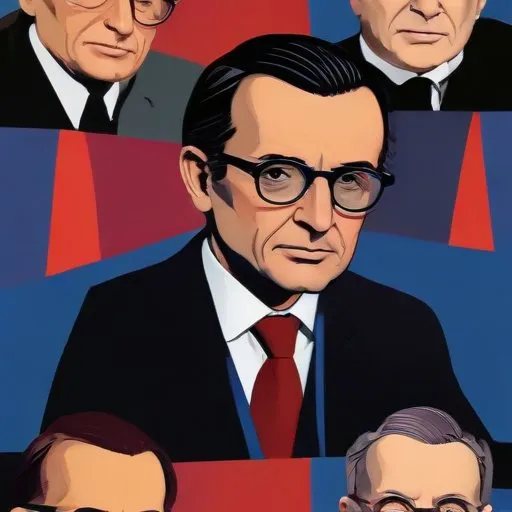
Paul Ramadier: The Architect of Post-War France
A Statesman of Unwavering Conviction
Paul Ramadier, a French statesman, is renowned for his pivotal role in shaping the country's political landscape during the tumultuous period of World War II and its aftermath. As the first Prime Minister of the Fourth Republic in 1947, Ramadier's leadership and pragmatic approach played a crucial role in rebuilding France and navigating the complexities of post-war politics.
Early Life and Education
Born on March 17, 1888, to a psychiatrist father, Ramadier graduated in law from the University of Toulouse and began his career as a lawyer in Paris. He later earned his doctorate in Roman law in 1911, laying the foundation for his future in politics.
Rise to Prominence
Ramadier's entry into politics began in 1919, when he became the mayor of Decazeville. His opposition to Marshal
Philippe Pétain's Vichy regime in 1940 earned him a place in the French Resistance, where he adopted the nom de guerre "Violette." His bravery during this period was recognized with a nod from the Yad Vashem Jewish memorial after the war.
A Career Marked by Pragmatism and Conviction
Ramadier's political career was defined by his ability to find common ground and forge alliances. As Minister for Provisions in
Charles de Gaulle's government (1944-1945), he earned a reputation as a hardworking and conciliatory politician. His vote in favor of the Marshall Plan demonstrated his commitment to European cooperation and economic reconstruction.
Governing France: A Turbulent Period
Ramadier's first ministry (January-October 1947) was marked by the forced ousting of the French Communist Party from the government in May 1947. This event marked the end of the tripartisme coalition with the French Section of the Workers International (SFIO). His leadership during this period was characterized by his ability to navigate the complex web of political alliances and interests.
Later Life and Legacy
Ramadier continued to play an important role in French politics, serving as Minister of Finance under Guy Mollet from 1956 to 1957. His legacy is that of a statesman who remained committed to his principles, even in the face of adversity. Paul Ramadier passed away on October 14, 1961, leaving behind a nation forever changed by his contributions.
Key Government Positions
- Mayor of Decazeville (1919)
- Minister for Provisions (1944-1945)
- Prime Minister of the Fourth Republic (January-October 1947)
- Minister of Finance (1956-1957)
A Reflection of Ramadier's Impact
Paul Ramadier's life and career serve as a testament to the power of conviction and pragmatism in politics. His unwavering commitment to his principles, even in the face of adversity, continues to inspire generations of French politicians and statesmen. As a nation, France remains indebted to Ramadier's tireless efforts to rebuild and shape its post-war identity.
FAQ
What was Paul Ramadiers role in French politics?
Paul Ramadier was a French lawyer and politician who served as Prime Minister of France from 1947 to 1948. He was a key figure in the Fourth Republic and played a major role in shaping Frances post-war politics.
What were Paul Ramadiers political views?
Paul Ramadier was a moderate socialist who believed in the importance of social justice and economic equality. He was also a strong supporter of the European integration process.
What was Paul Ramadiers role in the French Resistance?
Paul Ramadier was an active member of the French Resistance during World War II, where he worked closely with other resistance leaders to coordinate efforts against the Nazi occupation.
What were Paul Ramadiers achievements as Prime Minister?
During his time as Prime Minister, Paul Ramadier implemented several significant reforms, including the nationalization of key industries and the establishment of a social security system.
What is Paul Ramadiers legacy in French politics?
Paul Ramadier is remembered as a key figure in the reconstruction of France after World War II. He played a crucial role in shaping the countrys post-war politics and is considered one of the most important politicians of the Fourth Republic.