


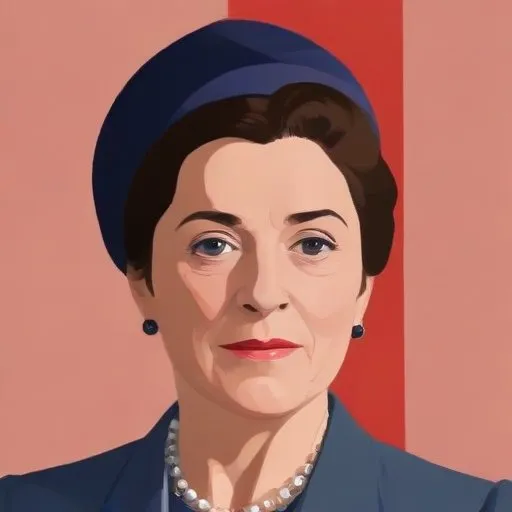
A British politician and broadcaster who served as Minister for Security, known for her expertise in national security and foreign policy. She's a prominent figure in UK politics, particularly in the Conservative Party.
As a stalwart figure in British politics and a veteran of the civil service, Pauline Neville-Jones, Baroness Neville-Jones, is renowned for her tireless dedication to national security and her pivotal role in shaping the country's defense and foreign policies. As Chairman of the Joint Intelligence Committee (JIC) from 1993 to 1994, Neville-Jones played a crucial part in coordinating Britain's intelligence agencies, earning her a reputation as a seasoned and experienced leader in the field of security and counter-terrorism.
Born on November 2, 1939, Neville-Jones was educated at Leeds Girls High School and Lady Margaret Hall, Oxford, where she graduated with a degree in Modern History. Her academic credentials laid the foundation for a distinguished career in public service, marked by a series of high-profile appointments and achievements.
Neville-Jones' civil service career spanned over three decades, during which she served in various capacities, including:
Her most notable achievement during this period was leading the British delegation to the Dayton negotiations on the Bosnia peace settlement. This critical role earned her recognition as a skilled diplomat and strategist.
In 2010, Neville-Jones was appointed Minister of State for Security and Counter Terrorism at the Home Office, a position she held until 2011. During her tenure, she played a key role in shaping the government's counter-terrorism strategy and advised on national security matters.
Following her departure from the Home Office, Neville-Jones was appointed Special Representative to Business on Cyber Security, a role that leveraged her expertise in security and diplomacy to promote greater collaboration between government and industry on cyber security issues.
Neville-Jones has been recognized for her contributions to public service and national security with a life peerage, becoming Baroness Neville-Jones in 2007.
Throughout her career, Neville-Jones has been a vocal advocate for greater awareness and understanding of security and counter-terrorism issues. Her work has helped to shape public discourse and inform policy decisions, leaving a lasting impact on modern British society.
As a trailblazing figure in British politics, Neville-Jones' legacy extends beyond her impressive list of accomplishments. She has inspired a new generation of women to pursue careers in public service and security, leaving a lasting imprint on the country's political landscape.
Born in 1925
The first female Prime Minister of the United Kingdom, serving from 1979 to 1990, known for her conservative policies and leadership during the Falklands War.
83 Years Old
A former Prime Minister of the United Kingdom, he led the country from 1990 to 1997, playing a key role in shaping the nation's economy and foreign policy during a tumultuous period.
73 Years Old
The former Prime Minister of the United Kingdom who led the country through a transformative period, including the Iraq War, and is known for his charismatic leadership and controversial decisions.
75 Years Old
The Prime Minister of the United Kingdom from 2007 to 2010, known for his key role in shaping the country's economy and response to the 2008 global financial crisis.
60 Years Old
The former Prime Minister of the United Kingdom who led the country from 2010 to 2016, known for his role in the Brexit referendum and austerity measures.
70 Years Old
The second female Prime Minister of the United Kingdom, leading the country through Brexit negotiations and implementing policies on national security and education. Known for her strong stance on immigration and law and order.
62 Years Old
Former Prime Minister of the United Kingdom and former Mayor of London, known for his charismatic leadership and Brexit advocacy. He led the UK's withdrawal from the European Union.
93 Years Old
A Deputy Prime Minister of the UK, known for his influential role in British politics and his leadership of the Conservative Party during the 1990s. He's also a successful businessman with interests in publishing and property.
