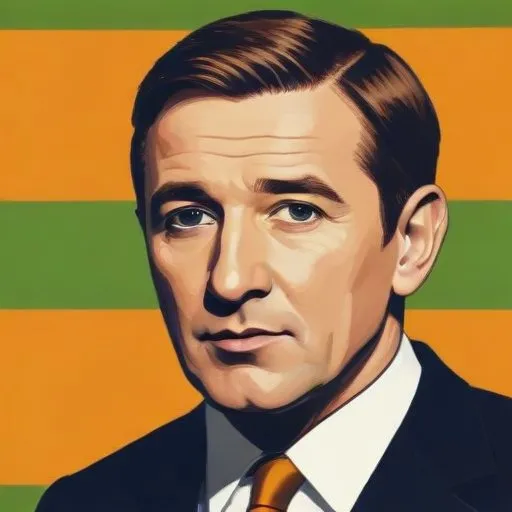
Pdraig Faulkner: A Pillar of Irish Politics
A Distinguished Career in Irish Politics
Pdraig Faulkner is celebrated for his illustrious career as a Fianna Fil politician, during which he held various cabinet positions and served as the Ceann Comhairle of Dil ireann from 1980 to 1981. Throughout his political tenure, he made significant contributions to the Irish government, shaping the country's education, defense, and economic landscapes.
Early Life and Education
Born on March 12, 1918, in Dundalk, County Louth, Faulkner was raised in a family with strong political ties. His father was a supporter of Fine Gael, while his mother espoused the more Republican and working-class ideals of Fianna Fil. Faulkner's political leanings followed in his mother's footsteps, and he went on to attend Dundalk CBS and St. Patrick's College of Education in Drumcondra, Dublin, where he qualified as a national school teacher.
Rise to Prominence
Faulkner's political career began in 1954 when he contested the Louth byelection, albeit unsuccessfully. However, he eventually won a seat in Dil ireann at the 1957 general election, representing the Louth constituency. In 1965, he was appointed Parliamentary Secretary to the Minister for the Gaeltacht by Taoiseach Sen Lemass, marking the beginning of his rapid ascent through the ranks of Fianna Fil.
Ministerial Appointments and Achievements
- Minister for the Gaeltacht and Minister for Lands (1968-1969)
- Minister for Education (1969-1973)
- Minister for Posts and Telegraphs and Minister for Tourism and Transport (1977-1979)
- Minister for Defence (1979-1980)
During his ministerial tenures, Faulkner implemented policies that had a profound impact on Ireland's education system, defense strategy, and economic development. His commitment to promoting the Irish language and culture earned him widespread recognition.
Legacy and Impact
Faulkner's contributions to Irish politics have left an indelible mark on the country's history. His dedication to public service, his passion for education, and his steadfast commitment to the principles of Fianna Fil have inspired generations of Irish politicians and citizens alike.
Personal Milestones and Key Life Events
- Retired from politics in 1987
- Passed away on June 1, 2012, at the age of 94
Faulkner's remarkable life and career serve as a testament to his unwavering dedication to Irish politics and public service. His legacy continues to inspire and influence Irish politicians, ensuring that his impact will be felt for generations to come.
FAQ
What did Pádraig Faulkner do for a living?
Pádraig Faulkner was an Irish Fianna Fáil politician who served as a Teachta Dála (TD) and held various ministerial positions, including Minister for Education and Minister for Defense.
What were Pádraig Faulkners early years like?
Pádraig Faulkner was born in Dublin, Ireland, and educated at University College Dublin, where he developed an interest in politics and became involved in the Fianna Fáil party.
What were Pádraig Faulkners key accomplishments?
Pádraig Faulkners key accomplishments include his work as Minister for Education, where he introduced significant reforms, and his role as Minister for Defense, where he oversaw the modernization of the Irish military.
How did Pádraig Faulkner influence Irish politics?
Pádraig Faulkner played a significant role in shaping Irish politics, contributing to the development of the countrys education system, defense policies, and social reforms.
What legacy did Pádraig Faulkner leave behind?
Pádraig Faulkner left behind a legacy of dedicated public service, innovative policy-making, and a commitment to the people of Ireland, inspiring future generations of politicians and leaders.