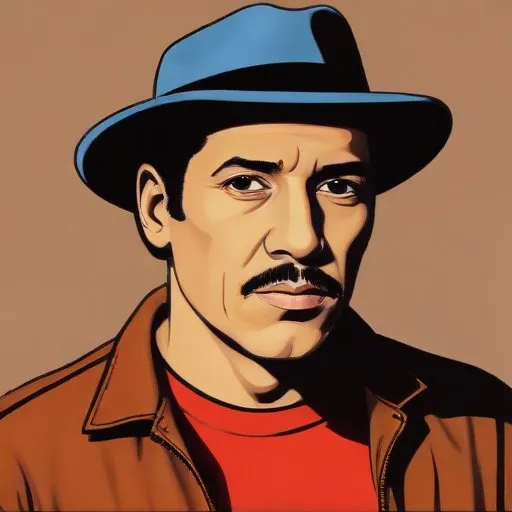
Pedro E. Guerrero: The Visionary Photographer Behind Frank Lloyd Wright's Iconic Structures
A Legendary Collaboration
Pedro E. Guerrero is renowned for his extraordinary access to the iconic American architect
Frank Lloyd Wright, capturing the essence of his architecture through his lens. As Wright's go-to photographer, Guerrero's work not only documented the construction of Wright's winter home, Taliesin West, but also formed a lifelong bond between the two visionaries.
Early Life and Career
Guerrero was born on September 5, 1917, in Casa Grande, Arizona, to Rosaura and Pedro W. Guerrero, a sign painter who later founded Rosarita, one of the first commercial Mexican food companies in the United States. Growing up in Mesa, Arizona, Guerrero faced casual bigotry, which he would later speak about bitterly. However, his acceptance to the Art Center School in Los Angeles in 1937 marked a turning point in his life, which he viewed as deliverance.
The Birth of a Collaborative Legacy
Guerrero's seven-decade career in photography began in 1939 when Wright impulsively hired him to record the ongoing construction at Taliesin West. This chance encounter sparked a collaboration that would last a lifetime. Guerrero's fresh perspective, treating Wright's architecture as sculpture, resonated with the architect, and he soon became an integral part of Wright's Fellowship.
Wartime and the Resumption of a Legacy
During World War II, Guerrero enlisted in the Army Air Corps and served in Italy as a photo officer, where he ran a laboratory that developed film taken from planes during bombing runs. After the war, Guerrero rekindled his relationship with Wright, resuming their collaborative legacy. This bond would continue until Wright's passing in 1959.
A Shift in Focus: Documenting American Artists
In the 1950s, Guerrero's career took an unexpected turn. Blacklisted by major shelter magazines for his stance against the Vietnam War, he shifted his focus to documenting the work and lives of American artists Alexander Calder and
Louise Nevelson. This new direction not only showcased Guerrero's adaptability but also highlighted his passion for capturing the essence of creative genius.
Philosophical Contributions and Beliefs
Throughout his career, Guerrero's work reflected his deep respect for the artistic process and his conviction that art should be accessible to all. His photographs not only captured the physical structures but also conveyed the emotional and philosophical context in which they were created.
Influence on Modern Society
Guerrero's contributions to the world of architecture, art, and photography have had a lasting impact on modern society. His photographs have inspired generations of architects, designers, and photographers, while his commitment to social justice has made him a role model for artists and activists alike.
Career Highlights and Major Works
- Pedro E. Guerrero's photographs of Frank Lloyd Wright's architecture, including Taliesin West and the Guggenheim Museum
- Documentation of the work and lives of Alexander Calder and Louise Nevelson
- Contributions to major publications, including House and Garden, Architectural Forum, and Vogue
Legacy and Impact
Pedro E. Guerrero's legacy extends beyond his remarkable photographs. His unwavering commitment to his art, his passion for social justice, and his ability to adapt to changing circumstances have made him an inspiration to artists and photographers worldwide. As we continue to navigate the complexities of modern society, Guerrero's work serves as a testament to the power of creativity, perseverance, and vision.
FAQ
What was Pedro E. Guerreros most famous photography subject?
Pedro E. Guerreros most famous photography subject was Frank Lloyd Wright, the renowned American architect. Guerreros photographs of Wrights buildings and designs are considered some of the most iconic in architectural photography.
How did Pedro E. Guerrero get started in photography?
Pedro E. Guerrero began his career in photography in the 1930s, working as a photographer for the Mexican government. He eventually moved to the United States, where he began photographing architecture and design.
What was Pedro E. Guerreros role in architectural photography?
Pedro E. Guerrero played a significant role in architectural photography, documenting some of the most iconic buildings of the 20th century. His work helped to shape the way we see and understand architecture.
How did Pedro E. Guerreros photography style influence others?
Pedro E. Guerreros photography style, characterized by his use of natural light and composition, influenced a generation of architectural photographers. His work continues to inspire photographers today.
What legacy did Pedro E. Guerrero leave behind?
Pedro E. Guerrero left behind a legacy as a master architectural photographer, remembered for his stunning images of Frank Lloyd Wrights buildings and his contributions to the field of architectural photography.