


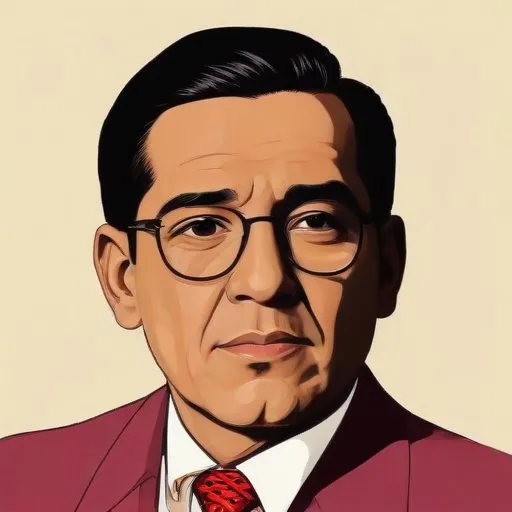
A courageous Nicaraguan journalist and publisher who fearlessly exposed government corruption and human rights abuses, ultimately sacrificing his life for the truth.
Pedro Joaqun Chamorro Cardenal was a Nicaraguan journalist and publisher who dared to speak truth to power, earning him the respect of his people and the wrath of the ruling Somoza regime. As the editor of La Prensa, the only opposition newspaper in Nicaragua, Chamorro Cardenal fearlessly exposed the corruption and human rights abuses of the Somoza dynasty.
Chamorro Cardenal was born on September 23, 1924, into a family with a rich history of public service. His great-grandfather, Pedro Joaqun Chamorro Alfaro, was the 39th President of Nicaragua, and his wife, Violeta Barrios de Chamorro, would later become the country's first female President. This family legacy of leadership instilled in him a strong sense of duty and responsibility to his country.
Under Chamorro Cardenal's leadership, La Prensa became a beacon of hope for the Nicaraguan people, providing a platform for dissenting voices and critiques of the regime. His unwavering commitment to truth and freedom of expression earned him numerous awards, including the prestigious Maria Moors Cabot Prize from Columbia University in 1977.
On January 10, 1978, Chamorro Cardenal's life was brutally cut short when he was assassinated by unknown gunmen. This senseless act of violence sparked widespread outrage and galvanized the opposition, paving the way for the eventual overthrow of the Somoza regime in 1979.
Chamorro Cardenal's courage and sacrifice have left an indelible mark on Nicaraguan history. His dedication to a free press and his unwavering commitment to the truth continue to inspire journalists and human rights activists around the world. His legacy serves as a powerful reminder of the importance of a free and independent press in protecting democracy and promoting social justice.
Chamorro Cardenal married Violeta Barrios de Chamorro, with whom he had five children. He was also the brother of Jaime and Xavier Chamorro Cardenal, and sisters Ligia and Ana María Chamorro Cardenal. His family's continued involvement in Nicaraguan politics is a testament to the enduring legacy of this courageous journalist.
97 Years Old
First female president of Nicaragua, leading the country from 1990 to 1997 and playing a key role in ending the Contra War. She's a symbol of democracy and female empowerment in Central America.
98 Years Old
President of Nicaragua from 2002 to 2007, known for his efforts to combat corruption and promote economic growth in the country. He was a conservative politician who implemented neoliberal policies.
80 Years Old
A Nicaraguan lawyer and politician who served as President of Nicaragua from 1997 to 2002, known for his efforts to rebuild the country after a long civil war. He's also infamous for corruption allegations and embezzlement scandals.
80 Years Old
The former Marxist guerrilla leader who ruled Nicaragua with an iron fist, known for his authoritarian regime and controversial human rights record.
Born in 1925
A Nicaraguan priest, poet, and politician who served as Minister of Culture in the Sandinista government, known for blending spirituality and politics in his work. His poetry often explores themes of social justice and liberation.
