


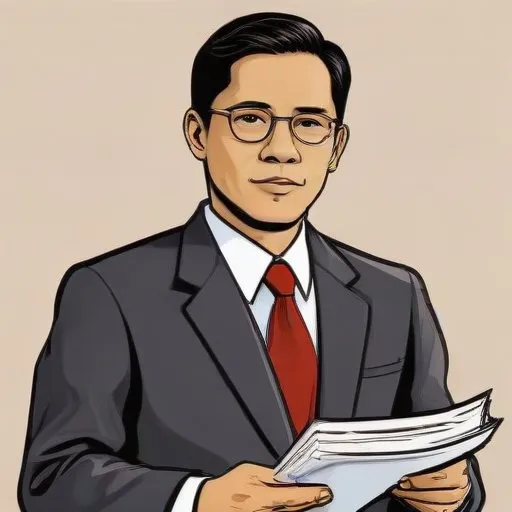
A Filipino lawyer who served as the Chief Justice of the Supreme Court of the Philippines from 1988 to 1991, known for his efforts to reform the judiciary and promote human rights.
Pedro Yap, a renowned Filipino jurist, is best known for his brief but significant stint as the Chief Justice of the Supreme Court of the Philippines in 1988, a position he held for a record-short two and a half months. This remarkable achievement, though brief, marked a pinnacle in his illustrious career as a lawyer, diplomat, and educator.
Born on July 1, 1918, in San Isidro, Leyte, Yap was the son of an ethnic Chinese father and a native Leytena mother. He completed his elementary education in his hometown and later pursued secondary education at the Cebu Provincial High School (now Abellana National School). Yap's academic prowess earned him a spot at the University of the Philippines in Manila, where he graduated Cum Laude with a Bachelor of Laws degree.
Yap's exceptional academic record paved the way for his success in the legal profession. He topped the 1946 Bar examinations with an impressive 91.7% grade, and was subsequently admitted to the Bar on March 29, 1947. This achievement opened doors to opportunities, including a stint as a diplomat, where he represented the Philippines in the United Nations Human Rights Commission.
Pedro Yap's contributions to Philippine law and society are undeniable. His proposals for socioeconomic rights in the 1971-1973 Constitutional Convention showcased his commitment to promoting social justice and human rights. As a respected educator, he inspired generations of lawyers and jurists, leaving an indelible mark on the Philippine legal landscape.
Pedro Yap's legacy extends beyond the realm of law and jurisprudence. His dedication to promoting human rights and social justice has inspired countless individuals to engage in public service and advocacy. As a champion of socioeconomic rights, he has contributed to shaping the Philippines' social and political landscape.
93 Years Old
First female president of the Philippines, led the People Power Revolution, and restored democracy after decades of authoritarian rule.
Born in 1917
A Filipino leader who ruled with an iron fist, implementing martial law and amassing wealth, leaving a legacy of controversy and economic turmoil.
93 Years Old
A Filipino journalist and politician who led the opposition against Ferdinand Marcos' regime, known for his courageous fight for democracy and human rights. Assassinated in 1983, his death sparked the People Power Revolution.
89 Years Old
The 13th President of the Philippines, a former actor turned politician, is known for his populist appeal and controversial presidency marked by corruption allegations and an eventual impeachment trial. He's also remembered for his efforts to address poverty and inequality.
79 Years Old
The 14th President of the Philippines, a prominent figure in Southeast Asian politics, known for her economic reforms and controversial tenure marked by allegations of corruption and human rights abuses.
81 Years Old
The 16th President of the Philippines, known for his controversial and populist leadership style, and his war on drugs that has resulted in thousands of extrajudicial killings.
61 Years Old
A human rights lawyer who served as the 14th Vice President of the Philippines, advocating for social justice and democracy. She's known for her tireless efforts to promote transparency and accountability in government.
