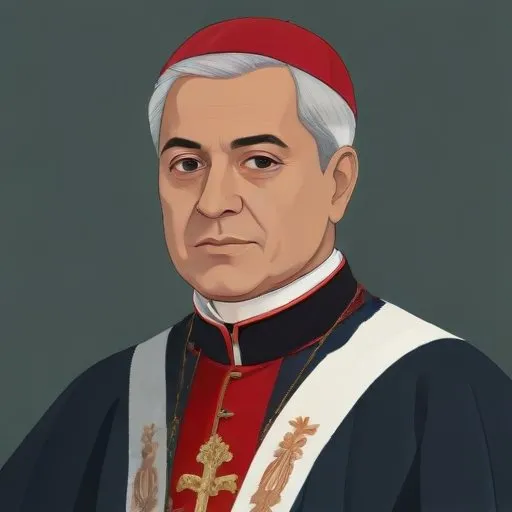
Pelagio Antonio de Labastida y Dávalos

Pelagio Antonio de Labastida y Dávalos

Pelagio Antonio de Labastida y Dávalos was born on March 24th, 1816

Full Name: Pelagio Antonio de Labastida y Dávalos
Nationality: Mexican
Occupation: Politician and Roman Catholic Archbishop
Place of Birth: Mexico
Fields: Politics and Catholic Church
Notable Work: Regent of the Second Mexican Empire
Influenced: Mexican Politics and Catholic Church
Title: Roman Catholic Archbishop

A Roman Catholic archbishop who served as regent during the Second Mexican Empire, known for his brief but significant role in Mexican history. He played a key part in the country's imperial government.

Timeline
1816
Born in Zamora
Pelagio Antonio de Labastida y Dávalos was born on March 8, 1816, in Zamora, Mexico.
1855
Appointed Archbishop of Mexico
Labastida was appointed as the Archbishop of Mexico in 1855, a position he would hold until his death.
1863
Regent during the Second Mexican Empire
Labastida served as regent during the Second Mexican Empire, playing a key role in Mexican politics during this tumultuous period.
1891
Died on February 4
Pelagio Antonio de Labastida y Dávalos passed away on February 4, 1891, leaving behind a legacy as a prominent Mexican politician and cleric.
1864
Recognized Emperor Maximilian I
As regent, Labastida recognized Emperor Maximilian I as the ruler of Mexico, a decision that would have significant consequences for the country.
Pelagio Antonio de Labastida y Dávalos

Pelagio Antonio de Labastida y Dávalos Quiz

Pelagio Antonio de Labastida y Dávalos served as regent during which Mexican Empire?

Score: 0/5
FAQ
What was Pelagio Antonio de Labastida y Dávaloss role in Mexican politics?
Pelagio Antonio de Labastida y Dávalos was a Mexican politician and Roman Catholic archbishop who served as regent during the Second Mexican Empire.
What was Pelagio Antonio de Labastida y Dávaloss role in the Second Mexican Empire?
Pelagio Antonio de Labastida y Dávalos played a key role in the Second Mexican Empire as regent, serving as the head of state during a period of significant political turmoil.
What were Pelagio Antonio de Labastida y Dávaloss contributions to Mexican history?
Pelagio Antonio de Labastida y Dávaloss contributions to Mexican history lie in his role as a leader during a period of significant change and his advocacy for social reform.
How did Pelagio Antonio de Labastida y Dávaloss leadership impact Mexican society?
Pelagio Antonio de Labastida y Dávaloss leadership had a significant impact on Mexican society, as he worked to promote social reform and stability during a period of turmoil.
What was Pelagio Antonio de Labastida y Dávaloss legacy in Mexican politics?
Pelagio Antonio de Labastida y Dávaloss legacy in Mexican politics is that of a respected leader who worked to promote stability and social reform during a period of significant change.

Related People:

Miguel Miramón

Born in 1832

Unconstitutional president of Mexico who briefly seized power in 1832, known for his short-lived and tumultuous reign.

José María Iglesias

Born in 1823

Interim President of Mexico who served for a brief period in 1823, known for his role in the country's early independence and formation.

Juan Álvarez

Born in 1790

A brief but significant figure in Mexican history, he served as a general and president, playing a crucial role in the country's struggle for independence and reform. He's most known for his efforts to modernize and liberalize Mexico.

Benito Juárez

Born in 1806

A champion of democracy and indigenous rights, he modernized Mexico, abolished slavery, and limited church power. He's revered as a national hero for his progressive reforms.

Porfirio Díaz

Born in 1830

A Mexican general and politician who ruled Mexico with an iron fist from 1876 to 1911, modernizing the country while suppressing dissent and opposition. He's infamous for his authoritarian regime and eventual exile.

Antonio López de Santa Anna

Born in 1794

A charismatic and cunning leader who dominated Mexican politics for decades, known for his role in the Texas Revolution and multiple presidential terms.