


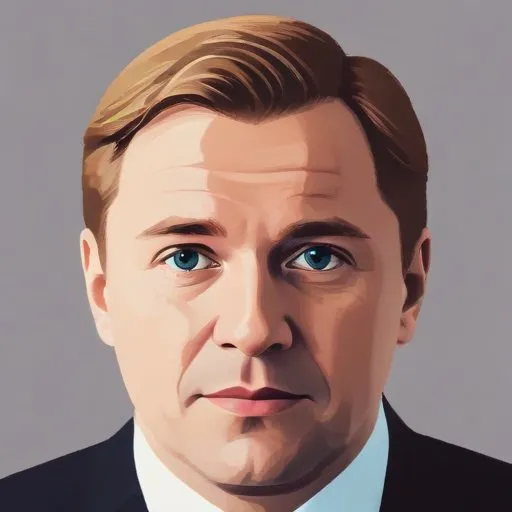
Norway's Minister of Finance from 2001 to 2005, known for his liberal economic policies and efforts to reduce taxes and government spending. He played a key role in shaping Norway's economy during his tenure.
PerKristian Foss, born on July 19, 1950, is a renowned Norwegian politician who made history as the first openly gay minister in a Norwegian government. For nearly four decades, he has been a prominent figure in Norwegian politics, serving in various capacities, including as the Minister of Finance and briefly as the Prime Minister.
Foss was born and raised in Norway, where he developed a passion for politics from an early age. He pursued higher education at the University of Oslo, earning a cand.mag. degree in political science, public law, and criminology in 1977. He also undertook partial graduate studies in political science, laying a solid foundation for his future political career.
Foss's political journey began in 1971, when he became a deputy member of the Oslo city council. He quickly rose through the ranks, becoming the leader of the Young Conservatives (Unge Høyre), the youth wing of the Conservative Party, from 1973 to 1977. In 1981, he was elected to the Norwegian Parliament, representing Oslo, and was reelected six times.
In 2001, Foss was appointed Minister of Finance in the second cabinet of Bondevik, a position he held until 2005. During this period, he also briefly served as the Prime Minister in 2002, making him the first openly gay national leader in the world. His seat in parliament was taken by Ine Eriksen Søreide during this time.
Foss's open acknowledgment of his sexual orientation was a significant milestone in Norwegian politics. His courage and determination paved the way for greater LGBTQ+ representation and acceptance in the country's political sphere.
From 2014 to 2021, Foss served as the Auditor General of Norway, responsible for overseeing the country's public finances. He has also been a deputy chairman of the Conservative Party and a member of the party's central board. Foss's contributions to Norwegian politics have been profound, and his legacy continues to inspire future generations of leaders.
Foss has received numerous awards and honors for his service to the country, including his trailblazing work for LGBTQ+ rights.
Foss lives in a registered partnership with Jan Erik Knarbakk, and the couple has been an inspiration to many. Despite facing challenges and controversies, Foss has remained committed to his values and continues to be an advocate for equality and human rights.
In conclusion, PerKristian Foss is a pioneer in Norwegian politics, whose courage, dedication, and perseverance have left an indelible mark on the country's history. His remarkable career serves as a testament to the power of leadership and the importance of diversity and inclusion in politics.
67 Years Old
The 27th Prime Minister of Norway and 13th Secretary General of NATO, known for leading Norway's government and the North Atlantic Treaty Organization, shaping global security and economic policies.
65 Years Old
The first female Prime Minister of Norway, serving from 2013 to 2021, known for her leadership during the European migrant crisis and her efforts to promote economic growth and climate action.
79 Years Old
The 26th Prime Minister of Norway, serving from 1997 to 2000 and again from 2001 to 2005, known for his leadership during a period of significant economic growth and social reform. He's also a Lutheran minister and politician.
87 Years Old
A physician-turned-politician who championed environmental issues and sustainable development, leading the World Commission on Environment and Development. She's credited with popularizing the concept of sustainable development.
75 Years Old
The 25th Prime Minister of Norway, serving from 1996 to 1997, known for his efforts to strengthen the country's economy and his role in the European Union accession talks. He also chaired the Nobel Committee, awarding the Peace Prize.
66 Years Old
Norway's first female Minister of Finance, known for her progressive policies and efforts to reduce economic inequality. She implemented reforms to increase taxes on the wealthy and reduce poverty.
