


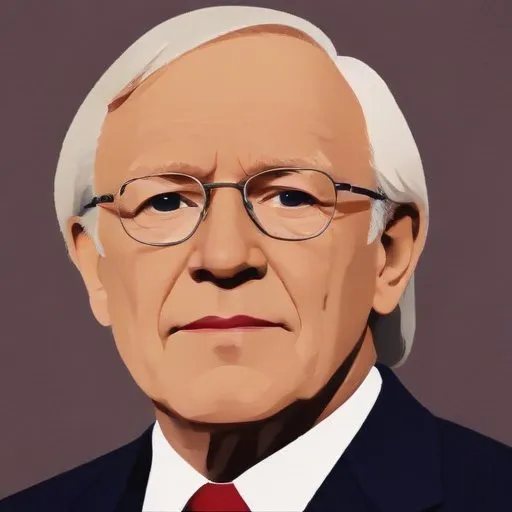
The 36th Premier of Queensland, a lawyer-turned-politician, led the Australian state from 1998 to 2007, implementing significant reforms in education and healthcare. He's remembered for his progressive policies and strong leadership.
Peter Beattie is renowned for his remarkable tenure as the 36th Premier of Queensland, serving from 1998 to 2007. During his leadership, Beattie transformed the state's economy, infrastructure, and social landscape, earning him a reputation as a visionary leader.
Born on November 18, 1952, in Sydney, Beattie's life took a dramatic turn when his mother passed away when he was just four years old. Raised by his grandmother in Atherton, Queensland, Beattie's determination and resilience were nurtured from an early age.
Beattie's academic excellence earned him a Commonwealth Scholarship to attend the University of Queensland, where he graduated with a Bachelor of Arts and a Bachelor of Laws degree.
Before entering politics, Beattie worked as a lawyer, union secretary, and ALP State Secretary. His political career began in 1989 when he was elected to the Queensland Legislative Assembly.
Beattie's leadership skills and charisma soon propelled him to the forefront of Queensland politics. In 1995, he became the Health Minister under Wayne Goss, and later replaced Goss as the Labor Party leader in 1996.
As Premier, Beattie implemented a range of reforms and initiatives that transformed Queensland's economy, infrastructure, and social landscape. Some of his notable achievements include:
After retiring as Premier in 2007, Beattie continued to contribute to public life, taking on various corporate, government, and academic roles.
In 2016, he was appointed chairman of the organising committee for the 2018 Commonwealth Games on the Gold Coast, and in 2017, he became a Commissioner of the Australian Rugby League Commission.
In 2019, Beattie was appointed Chair of the Medical Research Commercialisation Fund, further demonstrating his commitment to improving healthcare and driving innovation.
Peter Beattie's remarkable career is a testament to his vision, leadership, and dedication to the people of Queensland. His enduring legacy is a reminder that effective governance, coupled with a passion for progress, can transform lives and shape the future of a nation.
Through his tireless efforts, Beattie has inspired generations of Australians to strive for excellence, making him one of the most respected and beloved figures in contemporary Australian politics.
69 Years Old
The 26th Prime Minister of Australia, a diplomat, and leader who apologized to the Indigenous Australians for past injustices and played a key role in shaping the country's climate change policies.
65 Years Old
The first female Prime Minister of Australia, serving from 2010 to 2013, known for her progressive policies and leadership during a period of significant economic reform.
68 Years Old
The 28th Prime Minister of Australia, a conservative leader who served from 2013 to 2015, known for his tough stance on immigration and climate change skepticism. He's also a Rhodes Scholar and athlete.
71 Years Old
Australian journalist and politician who served as the 29th Prime Minister of Australia, known for his leadership during a tumultuous period in Australian politics and his advocacy for progressive policies.
66 Years Old
The 37th Premier of Queensland, a trailblazing female leader who made history as the first woman to hold the office, known for her strong crisis management during the 2010-2011 Queensland floods.
63 Years Old
The 38th Premier of Queensland, serving from 2012 to 2015, known for his conservative policies and infrastructure projects, particularly the development of the Brisbane Riverwalk.
82 Years Old
The 24th Prime Minister of Australia, a Labor Party leader who implemented significant economic reforms, including deregulation and privatization, and is known for his bold and charismatic leadership style.
96 Years Old
Leader of the Australian Labor Party who served as Prime Minister from 1983 to 1991, known for his charismatic leadership and economic reforms.
