


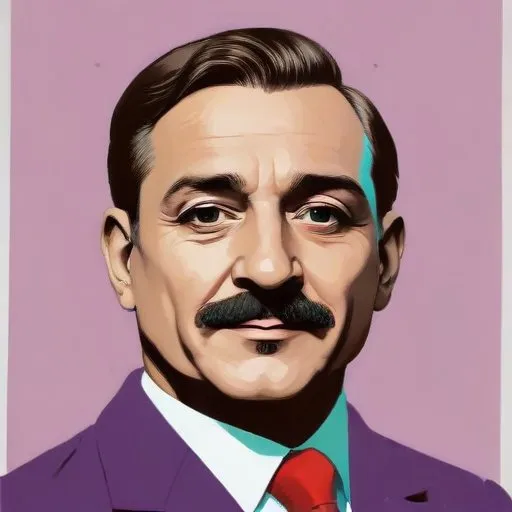
Developed the first practical color television system and the LP (Long-Play) microgroove record, revolutionizing music and entertainment.
Peter Carl Goldmark, a Hungarian-American engineer, is renowned for revolutionizing the music industry with the development of the long-playing microgroove 3313 rpm phonograph disc, commonly known as the LP record. This innovation, introduced by Columbia Records in 1948, enabled the incorporation of multiple or lengthy recorded works on a single disc, setting the standard for two generations.
Goldmark was born as Pter Kroly Goldmark on December 2, 1906. He married Frances Trainer and had four children – three sons, Peter Jr., Christopher, and Andrew, and one daughter, Frances. After divorcing Frances, Goldmark married Diane Davis and had two more children, Jonathan and Susan.
Goldmark's work on the LP record was a significant milestone in his career. However, his contributions didn't stop there. During his time at CBS, he developed field-sequential color technology for color television. This system, first demonstrated on August 29, 1940, used a rapidly rotating color wheel that alternated transmission in red, green, and blue.
The Goldmark system transmitted on 343 lines, about 100 less than a black and white set, and at a different field scan rate. Although it provided better picture quality, its incompatibility with existing black and white TVs proved to be a major drawback. Ultimately, the RCA-NBC color system, developed by a team led by Richard Kell and George H. Brown, became the industry standard in 1953.
The LP record had a profound impact on the music industry, enabling artists to produce longer, more complex works. This format became the standard for album releases, with many iconic albums being pressed onto LPs. The LP's influence can still be seen today, with many music enthusiasts continuing to collect and appreciate vinyl records.
Goldmark's contributions to the development of the LP record and color television earned him numerous awards and honors, including several patents for his inventions. His work continues to be recognized as a significant milestone in the history of technology.
Goldmark's legacy extends beyond his technical achievements. He was part of a group of Hungarian-American scientists and engineers known as "The Martians," who made significant contributions to various fields, including physics, mathematics, and engineering.
Peter Carl Goldmark's contributions to the development of the LP record and color television have had a lasting impact on modern society. His legacy serves as a testament to the power of innovation and the importance of pushing the boundaries of what is thought possible.
Born in 1915
Pioneering guitarist and songwriter credited with developing the solid-body electric guitar, revolutionizing music with innovative recording techniques and iconic hits.
Born in 1921
Co-founder of Sony, a pioneer in revolutionizing the electronics industry with innovative products like the Walkman and CD player, transforming the way people consume music and entertainment.
93 Years Old
Founded Dolby Laboratories, pioneering audio innovation and revolutionizing sound quality in entertainment, making cinematic experiences more immersive and enjoyable.
Born in 1888
Scottish engineer who pioneered the development of the first publicly demonstrated television system, revolutionizing entertainment and communication.
Born in 1906
Invented the first fully functional all-electronic television system and developed the Fusor, a device that achieves nuclear fusion. He's a pioneer in television technology and plasma physics.
Born in 1874
Developer of the first practical wireless telegraph, pioneering radio communication and earning a Nobel Prize in Physics. Known for revolutionizing long-distance communication.
Born in 1873
Invented the Audion tube, a type of vacuum tube that revolutionized radio communication and paved the way for modern electronics. This innovation enabled the amplification of weak electrical signals, transforming the field of communication.
