


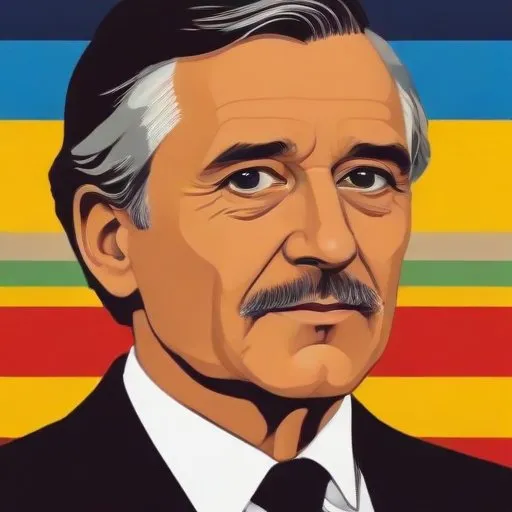
A renowned historian and author, known for his extensive works on the Enlightenment, modern European intellectual history, and psychohistory, offering unique insights into the human experience.
Peter Gay, a renowned German-American historian, educator, and author, is best known for his influential works on modern European intellectual history, particularly his magnum opus, The Enlightenment: An Interpretation, a two-volume masterpiece that has shaped the field of historiography. As a Sterling Professor of History at Yale University and former director of the New York Public Library's Center for Scholars and Writers, Gay's intellectual legacy continues to inspire and educate scholars and readers alike.
Born on June 20, 1923, in Berlin, Germany, to a Jewish family, Gay was educated at the Goethe-Gymnasium. Fleeing Nazi Germany in 1939 with his family, they escaped on the SS Iberia, narrowly avoiding the ill-fated MS St. Louis. Gay arrived in the United States in 1941, naturalized as an American citizen in 1946, and changed his surname from Frhlich (meaning "happy" in German) to Gay, an English calque.
Gay's academic career spanned over five decades, with esteemed positions at Columbia University (1948-1969) and Yale University (1969-2003). His scholarly contributions include:
Gay received the American Historical Association's (AHA) Award for Scholarly Distinction in 2004, solidifying his reputation as one of the most distinguished historians of his generation.
Gay's work has had a profound impact on our understanding of European intellectual history, influencing generations of scholars, students, and readers. His contributions have shaped the fields of Enlightenment studies, modern European history, and cultural criticism.
Gay's historical writings were informed by his deep engagement with Enlightenment thinkers and their ideas. He was particularly drawn to the ideals of reason, individualism, and intellectual freedom that characterized the Enlightenment era. These philosophical commitments are reflected in his scholarship, which has inspired a new generation of scholars to engage with these timeless ideas.
In addition to his academic achievements, Gay served as the interim editor of The American Scholar after the death of Hiram Haydn in 1973 and was a member of the magazine's editorial board for many years. He was also a sought-after lecturer and speaker, sharing his insights with audiences around the world.
Peter Gay's intellectual legacy continues to inspire and educate scholars, students, and readers. His works remain essential reading for anyone interested in modern European intellectual history, and his influence can be seen in the many historians, scholars, and thinkers who have followed in his footsteps.
Gay's passing on May 12, 2015, marked the end of an era, but his contributions to the world of scholarship and ideas will endure, continuing to shape our understanding of the past and inform our perspectives on the present.
Born in 1856
Pioneering psychoanalyst who developed theories on the subconscious mind, childhood experiences, and the structure of personality, revolutionizing our understanding of human behavior and psychology.
Born in 1905
A prominent literary critic and educator, known for his insightful essays on 19th- and 20th-century literature, which continue to influence literary theory and criticism today.
Born in 1907
A French-American historian and author who wrote extensively on Western culture, history, and education, and is particularly renowned for his comprehensive and insightful works on the development of Western civilization.
Born in 1906
A 20th-century philosopher and theorist who explored the nature of power, politics, and humanity, particularly in the context of totalitarianism and the Holocaust.
Born in 1903
A critical theorist who critiqued modern society, culture, and capitalism, arguing that they perpetuate inequality and stifle individual freedom. His work influenced many fields, from sociology to musicology.
