


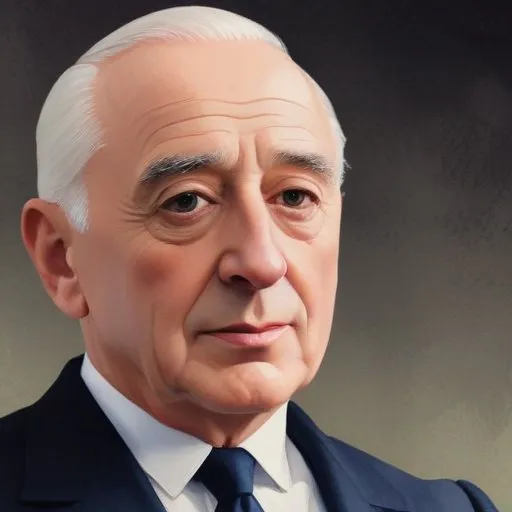
A prominent literary critic and educator, known for his insightful essays on 19th- and 20th-century literature, which continue to influence literary theory and criticism today.
Lionel Trilling, a renowned American literary critic, short story writer, essayist, and teacher, was one of the leading U.S. critics of the 20th century, celebrated for analyzing the contemporary cultural, social, and political implications of literature. His work had a profound impact on modern literary theory, shaping the way we approach the intersection of literature and society.
Born on July 4, 1905, in Queens, New York, to a Jewish family, Trilling was the son of Fannie (née Cohen) and David Trilling, a tailor from Bialystok, Poland. He graduated from DeWitt Clinton High School in 1921 and entered Columbia University at the age of 16, beginning a lifelong association with the university.
Trilling taught at the University of Wisconsin-Madison and Hunter College before returning to Columbia in 1932 to pursue his doctoral degree in English literature. He earned his doctorate in 1938 with a dissertation on Matthew Arnold, which he later published. In 1939, he became Columbia's first tenured Jewish professor in its English department, and in 1948, he was promoted to full professor.
Trilling's academic career was marked by his influential teaching and writing. He taught Columbia's Colloquium on Important Books, a course about the relationship between literature and cultural history, alongside Jacques Barzun. His students included notable figures such as Lucien Carr, Jack Kerouac, and Allen Ginsberg.
Trilling's literary works include short stories, essays, and critical texts. His most notable works include The Liberal Imagination (1950), The Opposing Self (1955), and Beyond Culture (1965). These works showcased his critical approach to literature, which emphasized the importance of understanding the cultural and social context in which literary works were written.
Trilling's influence on modern literary theory and criticism is immense. He played a crucial role in shaping the intellectual landscape of the 20th century, and his work continues to inspire scholars and writers today. His emphasis on the importance of understanding the cultural and social context of literary works has had a profound impact on the way we approach literature.
Trilling married Diana Rubin in 1929, and the couple began a lifelong literary partnership. They were members of the New York Intellectuals and contributors to the Partisan Review.
"The function of literature is to make us aware of the richness and complexity of human experience."
"The most important thing about a writer is his power to make us see what we have not seen before."
Trilling's work continues to inspire and challenge scholars and writers today, offering a profound understanding of the intersection of literature and society.
Born in 1926
A leading figure of the Beat Generation, known for his poetry that explores themes of nonconformity, free expression, and social justice. His iconic poem "Howl" is a classic of American literature.
Born in 1922
Pioneering figure of the Beat Generation, known for spontaneous, confessional, and poetic writings that captured the essence of American counterculture in the 1950s and 60s.
Born in 1925
Founded the National Review, a prominent conservative magazine, and wrote extensively on politics and culture, shaping American conservative thought. Known for his witty writing style and televised debates.
96 Years Old
A prominent neoconservative commentator, known for his influential writings on politics, culture, and foreign policy, particularly in relation to American Jewish identity and Israel.
93 Years Old
A renowned writer and thinker who explored the human experience through novels, essays, and criticism, delving into topics like culture, politics, and morality. Known for her provocative ideas and lyrical prose.
Born in 1906
A 20th-century philosopher and theorist who explored the nature of power, politics, and humanity, particularly in the context of totalitarianism and the Holocaust.
