


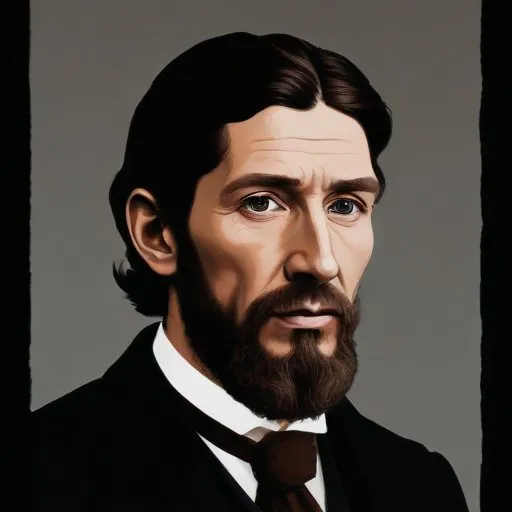
A prominent Victorian-era poet and cultural critic, known for his influential essays on literature and society, which helped shape the modern concept of culture and its role in society.
Matthew Arnold, a renowned English poet and cultural critic, is best known for his thought-provoking writings that chastise and instruct readers on contemporary social issues. Through his works, he critiques the Victorian era's values, morality, and education system, earning him the title of a "sage writer."
Born on December 24, 1822, at Laleham-on-Thames, Middlesex, Matthew Arnold was the eldest son of Thomas Arnold, the headmaster of Rugby School. His family moved to Rugby School in 1828, where he was tutored by his father and later by his clerical uncle, John Buckland. Arnold's early education laid the foundation for his future literary pursuits.
Arnold's love for poetry flourished during his school days, where he wrote verse for a family magazine and won school prizes. His prize poem, Alaric at Rome, was printed at Rugby. He went on to attend Winchester College and later returned to Rugby School, where he came under the direct tutelage of his father.
In 1840, Arnold matriculated at Balliol College, Oxford, where he won an open scholarship and graduated B.A. in 1844. During his student years, he formed a strong friendship with Arthur Hugh Clough, a Rugby pupil who had been one of his father's favorites. This friendship had a significant impact on Arnold's writing style and worldview.
Arnold's poetic works, such as Cromwell, which won the 1843 Newdigate prize, and Sohrab and Rustum, showcased his mastery of classical forms and his ability to critique contemporary society. His essays, particularly Culture and Anarchy and Literature and Dogma, are considered seminal works that explore the role of culture and education in society.
Arnold's advocacy for state-regulated secondary education and his support for the concept of "sweetness and light" – the pursuit of knowledge and cultural refinement – had a lasting impact on the British education system. His ideas continue to influence educational policies and cultural discourse to this day.
Matthew Arnold's literary contributions and cultural critiques have left an indelible mark on British literature and society. His emphasis on the importance of education, culture, and individual development continues to resonate with readers and scholars alike. As a sage writer, Arnold's works serve as a testament to his commitment to improving society and promoting intellectual growth.
In conclusion, Matthew Arnold's remarkable life and literary contributions have earned him a place among the greatest minds of the Victorian era. His writings continue to inspire and educate readers, cementing his legacy as a cultural critic, poet, and sage writer.
Born in 1809
Poet laureate of the United Kingdom during much of Queen Victoria's reign, famous for patriotic and romantic poems like "In Memoriam A.H.H." and "The Charge of the Light Brigade".
Born in 1812
A renowned author of timeless classics, crafting vivid stories that exposed social injustices and explored the human condition, leaving an indelible mark on literature.
Born in 1795
A 19th-century historian, philosopher, and academic who wrote influential works on history, politics, and society, particularly "The French Revolution" and "On Heroes, Hero-Worship, and The Heroic in History".
Born in 1819
A prominent art critic and social reformer who championed the Pre-Raphaelite movement and advocated for social justice, leaving a lasting impact on art, architecture, and literature.
Born in 1803
A leading figure in the Transcendentalist movement, he advocated for individualism, self-reliance, and nature-inspired spirituality through his essays and poetry. His ideas continue to influence American thought and culture.
Born in 1843
A renowned literary mastermind, celebrated for crafting psychologically complex, atmospheric novels and short stories that probed the human condition, often exploring the intricacies of the American and European aristocracy.
Born in 1839
A renowned Victorian-era art and literary critic, known for his influential writings on aesthetics and the importance of individualism in art. His works continue to shape art historical discourse.
Born in 1806
A prominent 19th-century thinker who championed individual liberty, free speech, and women's rights, and is best known for his influential book "On Liberty".
