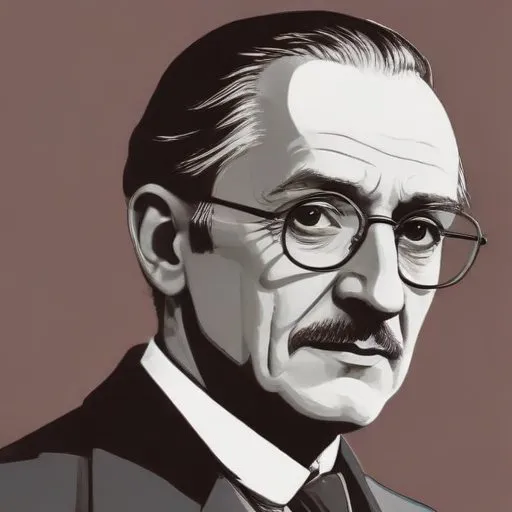
Walter Pater: The Aesthetic Iconoclast
Walter Pater, an English essayist, art and literary critic, and fiction writer, is renowned for his pioneering work in the Aesthetic movement, advocating for an ideal of intense inner life through art and literature. His seminal work, "Studies in the History of the Renaissance" (1873), revised as "The Renaissance: Studies in Art and Poetry" (1877), is considered a manifesto of Aestheticism.
Early Life and Influences
Born in Stepney, London's East End, on August 4, 1839, Pater was the second son of Richard Glode Pater, a physician who practiced medicine among the poor. After his father's death, the family moved to Enfield, where Pater attended Enfield Grammar School and was individually tutored by the headmaster. The beauty of Canterbury Cathedral, which he encountered during his time at The King's School, Canterbury, left an indelible mark on his aesthetic sensibilities.
Education and Formative Years
Pater's reading of
John Ruskin's "Modern Painters" as a schoolboy instilled in him a lifelong passion for the study of art and a taste for well-crafted prose. He gained a school exhibition to Queens College, Oxford, where he was an undergraduate from 1858 to 1862. During this period, he developed a broad range of literary and philosophical interests, engaging with the works of Flaubert, Gautier, Baudelaire, and Swinburne. His acquaintance with Benjamin Jowett, a prominent scholar, led to private lessons, which, however, did not yield the expected results, as Pater took a Second in Literae Humaniores in 1862.
Philosophical Contributions and Beliefs
Pater's Aestheticism was rooted in his belief in the importance of individualism, sensuality, and the pursuit of beauty. He advocated for the autonomy of art, separating it from moral and utilitarian concerns. His philosophy was characterized by a focus on the fleeting nature of life and the need to cultivate a deep sense of inner experience. In his writings, he emphasized the significance of the individual's subjective experience, urging readers to explore their own desires and tastes.
Major Works and Career Highlights
- Studies in the History of the Renaissance (1873)
- The Renaissance: Studies in Art and Poetry (1877)
- Marius the Epicurean (1885), a novel that explores the intersection of paganism and Christianity in ancient Rome
- Imaginary Portraits (1887), a collection of fictional biographies that showcase Pater's mastery of lyrical prose
- Appreciations, with an Essay on Style (1889), a collection of essays that demonstrate his expertise in art and literature criticism
Influence on Modern Society and Legacy
Pater's Aestheticism had a profound impact on the development of modern art, literature, and culture. His emphasis on individualism, sensuality, and beauty influenced the work of artists such as
Oscar Wilde,
James McNeill Whistler, and
Dante Gabriel Rossetti. His philosophy continues to inspire contemporary artists, writers, and critics, ensuring his legacy as a pioneer of Aesthetic thought.
Personal Milestones and Key Life Events
- 1854: Pater's mother, Maria Pater, dies when he is just 14 years old.
- 1858: He begins his undergraduate studies at Queens College, Oxford.
- 1862: Pater takes a Second in Literae Humaniores.
- 1873: Publication of Studies in the History of the Renaissance.
- 1894: Pater dies on July 30, at the age of 54.
Quotes and Memorable Sayings
- "To live the life of others, and not to live one's own life, is not to live at all."
- "The way to get most in the world is to get most out of the world."
- "Art comes to you proposing to give nothing but the highest quality to your moments as they pass, and simply for those moments' sake."
FAQ
What is Walter Paters most famous literary work?
Walter Pater is best known for his literary work The Renaissance: Studies in Art and Poetry, which explores the intersection of art and literature in the Renaissance era.
What is Walter Paters literary style?
Paters literary style is characterized by a rich, descriptive language, which emphasizes the importance of beauty and aesthetics in literature.
What was Walter Paters role in the Aesthetic Movement?
Pater was a key figure in the Aesthetic Movement, advocating for the importance of beauty and art in literature and life.
What was Walter Paters academic career like?
Pater held various academic positions, including a fellowship at Brasenose College, Oxford, where he taught philosophy and literature.
What is Walter Paters legacy in literature?
Paters legacy in literature is significant, with his works influencing many notable authors, including Oscar Wilde and W.B. Yeats.