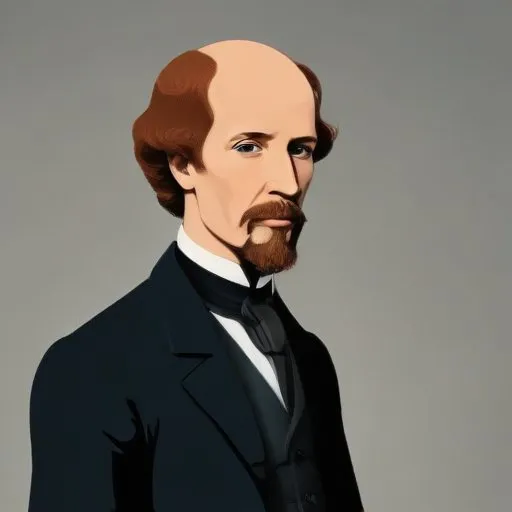
Algernon Charles Swinburne: The Provocative and Visionary Poet
A Life of Controversy and Literary Genius
Algernon Charles Swinburne was a renowned English poet, playwright, novelist, and critic, known for his bold and provocative works that explored taboo subjects, delved into the human psyche, and celebrated the beauty of nature. His poetry and prose are characterized by their sensuality, musicality, and avant-garde style, earning him a reputation as one of the most innovative and influential writers of his time.
Early Life and Education
Born on April 5, 1837, at 7 Chester Street, Grosvenor Place, London, Swinburne was the eldest of six children to Captain Charles Henry Swinburne and Lady Jane Henrietta, daughter of the 3rd Earl of Ashburnham. He spent his childhood at East Dene in Bonchurch on the Isle of Wight, where he developed a deep love for nature and the sea. Swinburne attended Eton College from 1849 to 1853, where he began writing poetry and won first prizes in French and Italian.
Literary Career and Notable Works
Swinburne's literary career spanned over five decades, during which he wrote several novels, plays, and collections of poetry. His most famous works include
Poems and Ballads,
Atalanta in Calydon, and
Erechtheus. He was a key figure in the Aesthetic Movement, which emphasized the importance of beauty and art in life. Swinburne's poetry is known for its lyricism, grandeur, and exploration of themes such as love, death, and the human condition.
Controversies and Taboo Subjects
Swinburne's works often stirred controversy due to their bold and explicit content. He wrote about lesbianism, sadomasochism, and antitheism, topics that were considered taboo during his time. His poetry featured historical figures such as Sappho, Anactoria, and Catullus, and explored themes of sexuality, morality, and the human psyche.
Influence on Modern Society
Swinburne's influence on modern society extends beyond literature. He was a vocal critic of social injustices and advocated for women's rights, freedom of speech, and artistic freedom. His poetry and prose have inspired countless artists, writers, and musicians, including
Oscar Wilde, W.B. Yeats, and
David Bowie.
Personal Life and Relationships
Swinburne's personal life was marked by turmoil and scandal. He suffered from epilepsy and struggled with addiction throughout his life. He had a close relationship with his cousin,
Mary Gordon, with whom he collaborated on several literary projects. Swinburne's relationships with women were often intense and passionate, but also marked by tragedy and heartbreak.
Legacy and Impact
Swinburne's legacy is complex and multifaceted. He was a true original, a visionary who pushed the boundaries of literature and art. His poetry and prose continue to inspire and provoke readers to this day. Swinburne's influence on modern literature is immeasurable, and his contributions to the Aesthetic Movement and the development of modern poetry are undeniable.
Quotes and Memorable Sayings
- "The higher the altar, the more hideous the priest."
- "Time and the Gods are at strife, and the world is their battlefield."
- "The sea, the sea, the open sea, / The blue, the fresh, the ever free!"
Trivia and Fun Facts
- Swinburne was known for his love of horses and was an accomplished horseback rider.
- He was a talented musician and played the piano and violin.
- Swinburne's poetry was heavily influenced by Greek mythology and literature.
Conclusion
Algernon Charles Swinburne was a literary giant, a true original whose works continue to inspire and provoke readers to this day. His poetry and prose are a testament to his innovative spirit, his passion for beauty and art, and his unwavering commitment to exploring the human condition.
FAQ
What is Algernon Charles Swinburnes poetry style?
Algernon Charles Swinburnes poetry style is characterized by its sensuality, musicality, and vivid imagery, often exploring themes of love, death, and decay. His work is known for its innovative use of language and form, which has influenced many modern poets.
What is Algernon Charles Swinburnes most famous poem?
Algernon Charles Swinburnes most famous poem is The Triumph of Time, a lyrical and expressive work that explores the fleeting nature of human life and love.
Was Algernon Charles Swinburne a controversial figure?
Yes, Algernon Charles Swinburne was a controversial figure in his time, known for his radical politics, libertine lifestyle, and provocative writing, which often challenged Victorian moral standards.
What were Algernon Charles Swinburnes contributions to literary theory?
Algernon Charles Swinburne made significant contributions to literary theory, particularly in his essays on poetry and drama, where he advocated for a more expressive and sensual approach to literature.
What was Algernon Charles Swinburnes relationship with the Pre-Raphaelite movement?
Algernon Charles Swinburne was closely associated with the Pre-Raphaelite movement, a group of artists and writers who sought to revive the spirit of medieval art and literature. He was friends with many prominent Pre-Raphaelite figures, including Dante Gabriel Rossetti and William Morris.