


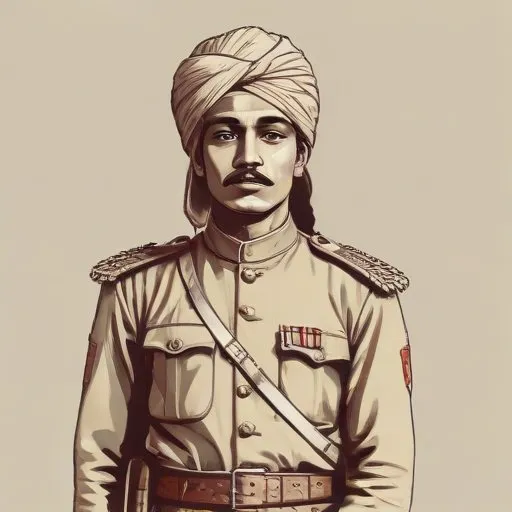
An Indian-born British soldier and writer, known for his daring exploits behind enemy lines during World War II and his subsequent literary career, penning thrilling accounts of his adventures.
Peter Kemp, a British soldier and writer, is best known for his bravery and dedication during the Spanish Civil War and World War II, fighting alongside the Nationalists and later with the Special Operations Executive (SOE).
Kemp's early life was marked by a sense of adventure and a strong sense of justice. Born on August 19, 1915, to a British judge in India, he was educated at Wellington College and later studied classics and law at Trinity College, Cambridge.
After recovering from his injuries, Kemp joined the Special Operations Executive (SOE), where he played a crucial role in behind-enemy-lines operations.
Kemp's experiences during World War II are shrouded in secrecy, but it is known that he was involved in several daring missions, including sabotage and intelligence gathering.
Kemp's life was marked by several significant milestones, including his rare informal meeting with Francisco Franco, the Spanish dictator, just before he left Spain in 1938.
Throughout his life, Kemp was driven by a strong sense of duty and a desire to make a difference. His experiences during the Spanish Civil War and World War II had a profound impact on him, shaping his worldview and informing his writing.
Kemp's involvement in the Spanish Civil War and his support for the Nationalist cause have been the subject of controversy and debate.
Some have criticized Kemp for his perceived support of fascist ideologies, while others have hailed him as a hero for his bravery and commitment to fighting against communism.
Peter Kemp's life and experiences are a testament to his bravery, dedication, and commitment to fighting for what he believed in.
Through his writing, Kemp has left a lasting legacy, providing a unique perspective on the Spanish Civil War and World War II.
Kemp's story serves as a reminder of the importance of standing up for what is right, even in the face of adversity, and his legacy continues to inspire and captivate audiences to this day.
"I was not fighting for a cause, but against an enemy."
This quote, from Kemp's book Mine Were of Trouble, sums up his motivations and convictions, and serves as a testament to his unwavering dedication to fighting against what he saw as a threat to democracy and freedom.
Born in 1903
A British Army officer who led unconventional warfare units in Ethiopia and Burma during World War II, developing innovative guerrilla tactics that influenced modern special operations forces.
Born in 1871
Prolific writer of historical novels and adventure stories, also a talented landscape painter.
Born in 1891
A renowned World War II military strategist, known for leading the Afrika Korps and earning the respect of both allies and enemies with his tactical genius.
Born in 1885
A renowned military leader who played a crucial role in World War II, particularly in the Allied victory in Europe, known for his bold tactics and unapologetic style.
Born in 1890
Led the Allied forces to victory in World War II and later served as President, maintaining peace and prosperity during the Cold War era. He's known for his strategic leadership and diplomatic skills.
Born in 1890
A French military leader who led the Free French Forces during WWII and later became President of France, known for his strong leadership and vision for a unified Europe.
Born in 1888
A British colonel who led a rebellion in Arabia during WWI, and later wrote about his experiences in "Seven Pillars of Wisdom", a classic of military literature and adventure.
