


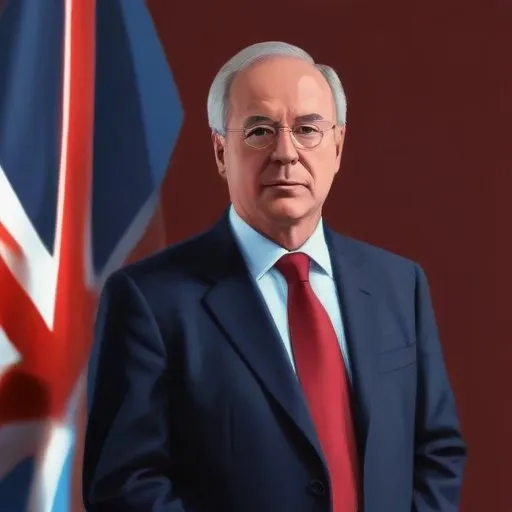
A British politician who served as Secretary of State for Business, Innovation and Skills, known for his conservative stance and efforts to reform the UK's welfare system.
Peter Lilley, a stalwart of British politics, is perhaps best known for his unwavering advocacy for Brexit and his instrumental role in shaping the country's economic and social landscape as a cabinet minister in the governments of Margaret Thatcher and John Major.
Born on August 23, 1943, in Kent, Lilley's entry into politics was far from conventional. With a background in economics, having studied at Clare College, Cambridge, he worked as an energy analyst at the City of London stockbroker W. Greenwell & Co. before entering Parliament.
His Cambridge contemporaries included notable figures such as Kenneth Clarke, Michael Howard, and Norman Lamont, a group later dubbed the "Cambridge Mafia."
In 1983, Lilley was elected as the Member of Parliament (MP) for St Albans, a safe Conservative seat. He quickly rose through the ranks, serving as Parliamentary Private Secretary to Nigel Lawson, then as Economic Secretary to the Treasury, and later as Financial Secretary to the Treasury.
In 1990, he became the Secretary of State for Trade and Industry, a position he held until 1992. During this period, he played a crucial role in shaping Britain's economic policy, particularly in the area of trade and industry.
As Social Security Secretary from 1992 to 1997, Lilley introduced the Incapacity Benefit, a move that sparked controversy among critics who argued it was too generous and open to abuse.
Lilley's vocal criticism of the European Union and his support for Brexit have been met with both praise and criticism. His involvement with the Eurosceptic pressure group Leave Means Leave has further polarized opinions about his stance on the EU.
In 2017, Lilley announced his retirement as an MP, marking the end of a 34-year-long parliamentary career. In May 2018, he was nominated for a peerage in the House of Lords.
Lilley's personal life has been marked by his long-standing marriage to Gail, with whom he has two daughters.
Peter Lilley's impact on British politics is undeniable. As a prominent figure in the Conservative Party, he has shaped the country's economic and social policies, often sparking controversy and debate in the process.
Peter Lilley's legacy in British politics is complex, multifaceted, and often divisive. Love him or loathe him, one thing is undeniable – his unwavering dedication to his convictions has left an indelible mark on the country's history.
83 Years Old
A former Prime Minister of the United Kingdom, he led the country from 1990 to 1997, playing a key role in shaping the nation's economy and foreign policy during a tumultuous period.
Born in 1925
The first female Prime Minister of the United Kingdom, serving from 1979 to 1990, known for her conservative policies and leadership during the Falklands War.
73 Years Old
The former Prime Minister of the United Kingdom who led the country through a transformative period, including the Iraq War, and is known for his charismatic leadership and controversial decisions.
75 Years Old
The Prime Minister of the United Kingdom from 2007 to 2010, known for his key role in shaping the country's economy and response to the 2008 global financial crisis.
59 Years Old
The former Prime Minister of the United Kingdom who led the country from 2010 to 2016, known for his role in the Brexit referendum and austerity measures.
55 Years Old
Former Chancellor of the Exchequer who oversaw the UK's economy during a period of austerity, implementing significant spending cuts and tax reforms. Known for his role in shaping the country's economic policy.
65 Years Old
A British politician who served as First Secretary of State and led the Conservative Party, known for his diplomatic efforts and advocacy for human rights and democracy. He played a significant role in shaping UK foreign policy.
72 Years Old
A British politician who served as Secretary of State for Work and Pensions, known for implementing welfare reforms and overseeing the introduction of Universal Credit. He's a prominent figure in UK politics, particularly in the Conservative Party.
