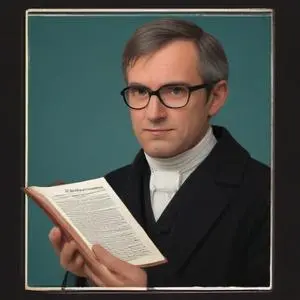
Peter Mark Roget: The Visionary Behind the Thesaurus
A Legacy of Linguistic Innovation
Peter Mark Roget, a British polymath, is best known for publishing the groundbreaking
Thesaurus of English Words and Phrases in 1852, a classified collection of related words that revolutionized the way people communicate. This iconic reference book has become an indispensable tool for writers, scholars, and language enthusiasts alike, cementing Roget's status as a pioneer in the field of lexicography.
Early Life and Education
Born on January 18, 1779, in Broad Street, Soho, London, Roget was the son of Jean John Roget, a Genevan cleric, and Catherine Romilly, sister of the renowned British politician and legal reformer Sir Samuel Romilly. After his father's death, the family relocated to Edinburgh in 1783, where Roget studied medicine at the University of Edinburgh, graduating in 1798. His uncle, Samuel Romilly, played a significant role in shaping Roget's education and introduced him to Whig social circles.
A Career of Diverse Pursuits
Roget's professional journey was marked by a range of pursuits. He attended lectures at London medical schools and later worked as a tutor to the sons of John Leigh Philips, embarking on a grand tour of Europe during the Peace of Amiens. Although detained as a prisoner in Geneva, he managed to return to England in 1803. Roget went on to become a private physician to
William Petty, 1st Marquess of Lansdowne, and later succeeded Thomas Percival at Manchester Infirmary, where he lectured on physiology.
Optical Illusions and the Persistence of Vision
In 1824, Roget presented a paper to the Royal Society on a peculiar optical illusion, which is often regarded as the origin of the persistence of vision theory. This concept, later used to explain apparent motion in film and animation, demonstrates Roget's fascination with the intersection of science and perception.
Founding Secretary of the Portico Library
Roget played a key role in establishing the Portico Library, a subscription-based library in Manchester, which aimed to provide access to knowledge and education for the masses. His commitment to this institution reflects his dedication to promoting intellectual pursuits and community engagement.
Influence on Modern Society
Roget's
Thesaurus has had a profound impact on modern language, enabling writers and communicators to express themselves with greater precision and nuance. Moreover, his work has influenced fields beyond linguistics, including psychology, philosophy, and computer science. The persistence of vision theory, too, has paved the way for innovations in animation and film technology.
Legacy and Honors
Peter Mark Roget's contributions to linguistics, literature, and science have earned him a lasting legacy. He was elected a Fellow of the Royal Society in 1815, and his work continues to inspire generations of scholars, writers, and thinkers.
- Major Works: Thesaurus of English Words and Phrases, papers on optical illusions and physiology
- Awards and Honors: Fellow of the Royal Society (1815)
- Influence on Pop Culture: Roget's Thesaurus has been referenced in literature, film, and television, including works by authors such as Virginia Woolf and Anthony Trollope
- Trivia and Fun Facts: Roget was a polyglot, speaking multiple languages, including French, German, Italian, and Spanish
In conclusion, Peter Mark Roget's remarkable achievements have left an indelible mark on the world of language, science, and culture. His innovative spirit, intellectual curiosity, and dedication to promoting knowledge have made him a true luminary of the 19th century.
FAQ
What is Peter Mark Rogets most famous literary work?
Peter Mark Rogets most famous literary work is Rogets Thesaurus, a comprehensive dictionary of English words and phrases that has become an indispensable reference tool for writers and scholars.
How did Peter Mark Rogets background in medicine influence his writing?
Peter Mark Rogets background in medicine influenced his writing by instilling in him a rigorous approach to classification and organization, which he applied to his thesaurus and other literary works.
What was Peter Mark Rogets significance in the development of English lexicography?
Peter Mark Roget was a pioneer in the field of English lexicography, creating a groundbreaking thesaurus that has shaped the way people understand and use the English language.
How did Peter Mark Rogets Thesaurus reflect his fascination with language?
Peter Mark Rogets Thesaurus reflected his fascination with language by showcasing the diversity and complexity of the English language, providing a nuanced and detailed exploration of word meanings and relationships.
What is Peter Mark Rogets legacy in literary history?
Peter Mark Rogets legacy in literary history is that of a meticulous scholar who created an enduring and iconic reference work, facilitating communication and fostering a deeper understanding of the English language.