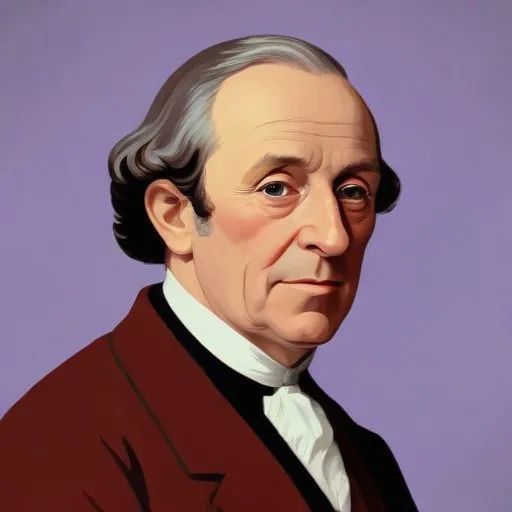
Sir William Petty: The Father of Political Arithmetic
A Pioneering Economist and Polymath
Sir William Petty is renowned for his groundbreaking contributions to economics, particularly in the field of political arithmetic. He is credited with developing the concept of gross national product (GNP) and is considered one of the founders of modern economic theory.
Early Life and Education
Born on May 26, 1623, in Romsey, England, Petty came from a family of clothiers. His precocious nature and intelligence led him to become a cabin boy at the age of 14, where he developed his language skills and learned about navigation. After a brief stint in the Navy, he pursued his interests in anatomy and mathematics, studying in Holland and later becoming the personal secretary to
Thomas Hobbes.
Career Highlights and Major Works
Petty's multifaceted career spanned several fields, including economics, medicine, and science. Some of his notable works include:
- Treatise of Taxes (1662): In this influential book, Petty introduced the concept of political arithmetic, which aimed to apply mathematical principles to economic and social policy.
- Political Arithmetic (1690): This work further developed his ideas on political arithmetic, providing a framework for understanding national wealth and economic growth.
- The Economic Writings of Sir William Petty (1899): A collection of Petty's economic writings, published posthumously, which showcase his innovative ideas on taxation, trade, and national income.
Philosophical Contributions and Beliefs
Petty's philosophical contributions were shaped by his interactions with prominent thinkers of his time, including
René Descartes and
Pierre Gassendi. He believed in the application of scientific methods to economic and social problems, advocating for a more rational and empirical approach to policymaking.
Influence on Modern Society
Petty's work had a profound impact on the development of modern economics, statistics, and public policy. His ideas on political arithmetic and national income have influenced generations of economists, including
Adam Smith and
Karl Marx. Today, his legacy can be seen in the use of economic indicators such as GDP and GNP to measure national economic performance.
Awards and Honors
Petty was knighted in 1661 for his services to the Commonwealth. He was also a charter member of the Royal Society, a prestigious scientific organization founded in 1660.
Personal Life and Trivia
Petty's personal life was marked by his curiosity and inventiveness. He developed a double-writing instrument, which although not commercially successful, demonstrated his ingenuity. He was also known for his skill in languages, being proficient in Latin, Greek, French, and Dutch.
Legacy and Historical Context
Petty's contributions to economics and political arithmetic have endured for centuries, influencing the development of modern economic thought. His work remains a testament to the power of interdisciplinary approaches to understanding complex social and economic problems.
FAQ
Who was William Petty, the English economist?
William Petty was an English economist, philosopher, and scientist, born in 1623, who is considered one of the founders of modern economics.
What were William Pettys contributions to economics?
William Petty made significant contributions to economics, including the development of the concept of national income, the idea of political arithmetic, and the analysis of taxation and trade.
What was William Pettys role in the English Civil War?
During the English Civil War, William Petty served as a physician and surveyor for Oliver Cromwells army, and later became a prominent figure in the Commonwealth of England.
What were William Pettys scientific contributions?
William Petty made significant scientific contributions, including the development of the Downing Street Survey, which measured the size and population of Ireland, and the invention of the double-bottomed ship.
How is William Petty remembered in economic history?
William Petty is remembered as a pioneering figure in the development of modern economics, who laid the foundations for later economists, such as Adam Smith and Karl Marx.