


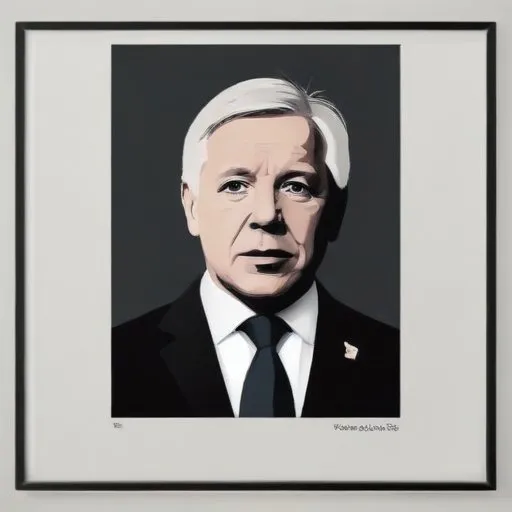
The 3rd First Minister of Northern Ireland, a key figure in the country's peace process, led the Democratic Unionist Party and played a crucial role in shaping the region's politics. He's remembered for his efforts to stabilize the power-sharing government and navigate the complexities of Northern Irish politics.
Peter Robinson, a stalwart of Northern Irish politics, is best known for his tenure as the First Minister of Northern Ireland from 2008 to 2016 and his leadership of the Democratic Unionist Party (DUP) from 2008 to 2015. Throughout his 40-year career, Robinson has left an indelible mark on the region's political landscape.
Born on December 29, 1948, Robinson's fascination with politics began at a tender age. He co-founded the DUP alongside Ian Paisley in the 1970s, a period marked by turmoil and sectarian violence in Northern Ireland. This foundational role allowed Robinson to exert significant influence within the fledgling party.
In 1980, Robinson was elected as the deputy leader of the DUP, underscoring his growing stature within the party. The Good Friday Agreement in 1998 paved the way for the reestablishment of devolved government in Northern Ireland, and Robinson was elected as the Member of the Legislative Assembly (MLA) for Belfast East.
Subsequently, he served in various ministerial roles, including Minister for Regional Development and Minister of Finance and Personnel in the Northern Ireland Executive.
In 2008, Robinson succeeded Ian Paisley as the leader of the DUP, becoming the party's leader unopposed. He was subsequently confirmed as the First Minister of Northern Ireland on June 5, 2008.
In 2010, Robinson faced a personal crisis when his wife, Iris, was embroiled in a scandal. He temporarily handed over his duties as First Minister to Arlene Foster under the terms of the Northern Ireland Act 2006. Following a police investigation, which cleared him of any wrongdoing, Robinson resumed his duties as First Minister.
Peter Robinson's dedication to Northern Irish politics has been instrumental in shaping the region's course. Throughout his career, he has demonstrated an unwavering commitment to his constituents and the DUP. As a seasoned politician, Robinson's influence extends beyond his party, having played a pivotal role in navigating the complexities of Northern Irish politics.
Robinson's contributions to Northern Irish politics have earned him recognition and accolades. Although he has faced criticisms and controversies, his perseverance and leadership have cemented his position as a respected figure in the region's political landscape.
Raised in a Protestant family, Robinson's early life was marked by a strong sense of community and social responsibility. These formative years laid the foundation for his future political career, which would be characterized by his unwavering commitment to Northern Ireland and its people.
Born in 1926
A firebrand Protestant leader who played a key role in Northern Ireland's turbulent politics, known for his strong anti-Catholic stance and later, his surprising shift towards power-sharing.
81 Years Old
A Northern Irish lawyer and politician who played a crucial role in the Good Friday Agreement, earning him a Nobel Peace Prize in 1998. He served as the first First Minister of Northern Ireland, working to establish a power-sharing government.
89 Years Old
A Northern Irish educator and politician who played a key role in the Northern Ireland peace process, earning him the Nobel Peace Prize in 1998. He is known for his tireless efforts to bring about reconciliation and peace in his homeland.
90 Years Old
A key figure in Northern Ireland's peace process, serving as Deputy First Minister and playing a crucial role in the Good Friday Agreement. He worked tirelessly to promote reconciliation and unity in the region.
66 Years Old
Leader of the Social Democratic and Labour Party (SDLP) in Northern Ireland, known for his efforts to resolve the Northern Ireland conflict and promote power-sharing between unionists and nationalists.
78 Years Old
A Northern Irish businessman and politician who served as Lord Mayor of Belfast, known for his contributions to the country's economic development and peace process.
