


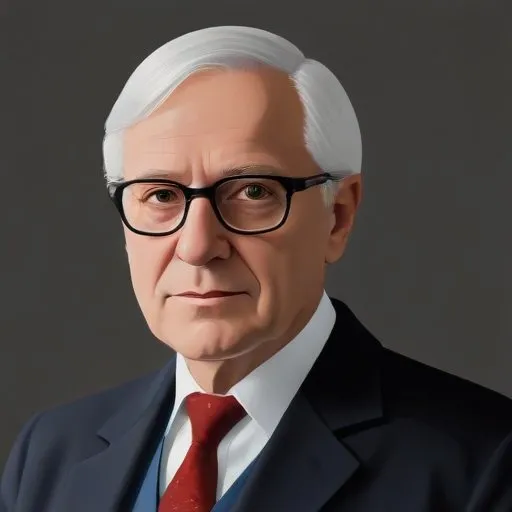
Developed statistical theories for radar and communication systems, pioneering work in signal processing and detection.
Peter Swerling, a trailblazing radar theorist, left an indelible mark on the second half of the 20th century. He is renowned for developing the Swerling Targets, a class of statistically fluctuating target scattering models that revolutionized the understanding of pulsed radar systems.
Born on March 4, 1929, in New York City, Swerling grew up in Beverly Hills, California, surrounded by the glamour of Hollywood. His father, Jo Swerling, a successful screenwriter, recognized his son's exceptional intellect and encouraged his curiosity. At the tender age of 10, Swerling's father arranged a meeting with the legendary Albert Einstein, who advised the young boy to pursue mathematics.
Swerling's academic journey was nothing short of remarkable. He entered the California Institute of Technology at just 15 and graduated with a Bachelor of Science in Mathematics in 1947. He then pursued a second undergraduate degree in Economics from Cornell University, earning a spot in the prestigious Phi Beta Kappa honor society. His graduate studies took him to the University of California, Los Angeles, where he earned a Master of Arts in Mathematics in 1951 and a Ph.D. in Mathematics in 1955.
While still a graduate student, Swerling worked full-time for the Douglas Aircraft Company's Project RAND, where he made his groundbreaking contribution. His work on statistically fluctuating target scattering models, later known as Swerling Targets I, II, III, and IV, fundamentally changed the understanding of pulsed radar systems. This pioneering work laid the foundation for Swerling's reputation as a leading radar theorist.
Swerling's remarkable career spanned academia, research, and entrepreneurship. He founded two companies, one of which continues his engineering work to this day. His contributions extended beyond radar theory, as he also worked on the optimal estimation of orbits of satellites and trajectories of missiles, anticipating the development of the Kalman filter.
Swerling's work earned him numerous accolades, including the prestigious IEEE Dennis J. Picard Medal for Radar Technologies and Applications. His contributions to the field of radar have been recognized by institutions and organizations worldwide.
Peter Swerling's work has had a profound impact on modern society, influencing the development of radar systems, satellite technology, and missile guidance. His legacy continues to inspire new generations of scientists, engineers, and researchers, ensuring his work remains relevant and vital in the 21st century.
Peter Swerling's remarkable life and career serve as a testament to the power of innovative thinking, dedication, and vision. As we continue to navigate the complexities of modern technology, his legacy remains an enduring reminder of the importance of fundamental research and its impact on society.
Born in 1920
A Dutch-American physicist and academic who pioneered the field of nonlinear optics, making groundbreaking discoveries that led to the development of lasers and fiber optic communication.
