


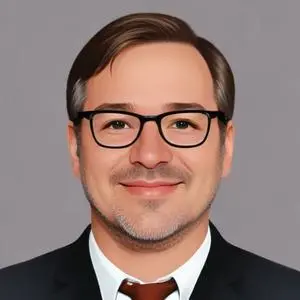
Creator of the widely-used email encryption software PGP, allowing individuals to securely communicate online. Known for advocating for individual privacy and security in the digital age.
Phil Zimmermann is renowned for creating Pretty Good Privacy (PGP), the most widely used email encryption software in the world. As a pioneer in the field of cryptography, Zimmermann's work has revolutionized the way we communicate online, ensuring that our digital conversations remain private and secure.
Born in 1954 in Camden, New Jersey, Zimmermann developed an early interest in computer science. He pursued his passion at Florida Atlantic University in Boca Raton, Florida, graduating with a B.S. degree in computer science in 1978.
In 1991, Zimmermann wrote the first version of PGP, making it available for download along with its source code via public FTP. This move marked a significant milestone in the history of cryptography, as PGP became the first widely available program to implement public-key cryptography.
The initial version of PGP included an encryption algorithm called BassOmatic, developed by Zimmermann himself. Little did he know that his innovative work would soon spark a heated controversy.
In the early 1990s, Zimmermann found himself at the center of a criminal investigation led by the United States Customs Service. The investigation was prompted by a report from RSA Security, which was engaged in a licensing dispute with Zimmermann over the use of the RSA algorithm in PGP.
The United States Government had long considered cryptographic software a munition, subject to arms trafficking export controls. At the time, PGP was deemed impermissible for export from the United States due to its high-strength encryption capabilities. This led to a three-year investigation, which eventually concluded with no charges filed against Zimmermann.
Zimmermann's work on PGP paved the way for his contributions to VoIP encryption protocols, notably ZRTP and Zfone.
He co-founded Silent Circle, a global encrypted communications firm, and serves as its Chief Scientist.
From 2016 to 2021, Zimmermann worked as an Associate Professor in the Cybersecurity section at the Faculty of Electrical Engineering, Mathematics, and Computer Science at Delft University of Technology.
Zimmermann's work has had a profound impact on modern society, enabling individuals and organizations to communicate securely in an increasingly digital world. His contributions have also sparked important conversations about privacy, security, and the responsible use of technology.
As a pioneer in the field of cryptography, Zimmermann continues to inspire a new generation of computer scientists and cryptographers. His legacy serves as a reminder of the power of innovation and the importance of protecting our digital rights.
Throughout his career, Zimmermann has been driven by a passion for cryptography and a commitment to using technology for the greater good. His personal milestones serve as a testament to the impact one person can have on the world.
Zimmermann's work has been recognized with numerous awards and honors, solidifying his position as a leading figure in the world of cryptography.
Zimmermann's work is underpinned by a deep-seated belief in the importance of privacy and security in the digital age. He has consistently advocated for the responsible use of technology, urging individuals and governments to prioritize the protection of human rights.
Through his work, Zimmermann has inspired a new wave of cryptographers and computer scientists to prioritize the development of secure and private communication systems. His philosophical contributions continue to shape the way we think about technology and its role in our lives.
Phil Zimmermann's legacy extends far beyond his technical contributions to the field of cryptography. He has inspired a generation of innovators to prioritize the development of secure and private communication systems.
As we look to the future of technology, Zimmermann's work serves as a powerful reminder of the importance of responsible innovation and the protection of human rights. His impact will be felt for generations to come, shaping the way we communicate and interact in the digital world.
54 Years Old
A renowned cryptologist and academic who developed the qmail mail transfer agent and the djbdns DNS software, making significant contributions to internet security and infrastructure.
64 Years Old
Australian right-arm medium-pace bowler who played 24 Tests and 47 ODIs for Australia, taking 75 wickets in Tests and 39 in ODIs. Known for his impressive bowling skills and contributions to Australia's cricket team.
55 Years Old
A controversial figure who publishes classified documents and information online, exposing government secrets and sparking global debates.
43 Years Old
A whistleblower who leaked classified information about the US government's surveillance programs, revealing the extent of modern spying and sparking a global debate on privacy and security.
59 Years Old
Investigative journalist and author, known for exposing government secrets and surveillance programs, sparking global debates on privacy and civil liberties.
