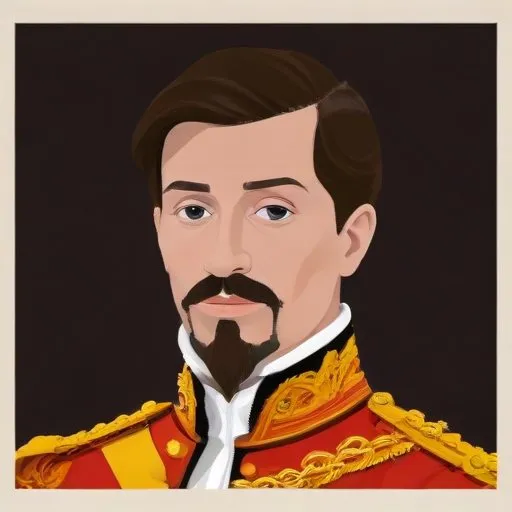
Philibert II: The Handsome and the Good Duke of Savoy
Philibert II, Duke of Savoy, was a Renaissance nobleman known for his dashing good looks and his brief but eventful reign from 1497 until his death in 1504. He was the son of
Philip II, Duke of Savoy, and Marguerite of Bourbon, and his life was marked by a series of strategic marriages and power struggles that shaped the course of European history.
Early Life and Succession
Philibert was born on April 10, 1480, in Pont-d'Ain, France. His father's unexpected succession to the dukedom in 1496, following the death of his grandnephew Charles II, set the stage for Philibert's own rise to power. The same year, the 16-year-old Philibert married his 9-year-old cousin, Yolande
Louise of Savoy, daughter of Charles I, Duke of Savoy, and Blanche of Montferrat.
The Duke of Savoy
When Philibert's father died in 1497, he succeeded as Duke of Savoy, a title he would hold until his own death seven years later. His marriage to Yolande Louise brought him claims to the kingdoms of Cyprus, Jerusalem, and Armenia, although his father had already taken those titles for himself.
Marriage and Alliances
Philibert's first marriage ended with the death of Yolande Louise in 1499, leaving him childless. He then married Margaret of Austria, daughter of Maximilian I and
Mary of Burgundy, in 1501. This alliance tied him into the complex web of Habsburg alliances and further solidified his position in European politics.
Legacy and Impact
Philibert's life was marked by a series of power struggles and strategic marriages, but his legacy extends beyond the boundaries of his own dukedom. He played a significant role in shaping the course of European history, and his marriages and alliances continue to influence the continent's royal families to this day.
A Personal Life
Little is known about Philibert's personal life beyond his marriages and political alliances. However, his nickname "the Handsome" suggests that he was a charismatic figure, and his reputation as "the Good" implies a sense of fair-mindedness and integrity.
Trivia and Fun Facts
- Philibert was born in Pont-d'Ain, a small town in eastern France.
- He was married to two women, Yolande Louise of Savoy and Margaret of Austria.
- He claimed the titles of King of Cyprus, Jerusalem, and Armenia, although he never actually ruled these territories.
Historical Context and Legacy
Philibert's life and reign were marked by the complexities of Renaissance politics, with shifting alliances and power struggles that shaped the course of European history. His legacy extends beyond his own dukedom, influencing the royal families of Europe and cementing the importance of strategic marriages and alliances in the pursuit of power.
FAQ
What were the key accomplishments of Philibert II, Duke of Savoy?
Philibert II, Duke of Savoy, was known for his military campaigns, particularly the Battle of Landriano in 1529. He also strengthened the Duchy of Savoys economy and promoted education, arts, and architecture.
Who was Philibert II, Duke of Savoy, married to?
Philibert II was married to Margaret of Valois, a French princess, in 1501. Although the marriage was childless, it strengthened the alliance between the Duchy of Savoy and France.
What was Philibert IIs role in the Italian Wars?
Philibert II played a significant role in the Italian Wars, fighting alongside the Holy Roman Empire against France. He was a skilled military leader and participated in several key battles, including the Battle of Pavia in 1525.
How did Philibert II contribute to the cultural development of Savoy?
Philibert II was a patron of the arts and architecture, commissioning several notable buildings, including the Church of Notre-Dame du Lac in Aosta. He also encouraged the development of education and promoted the study of humanism.
What is Philibert IIs legacy in Savoy?
Philibert IIs legacy in Savoy is marked by his military campaigns, economic growth, and cultural achievements. He is remembered as a strong leader who strengthened the Duchy of Savoy and promoted its development during a period of turmoil in Europe.