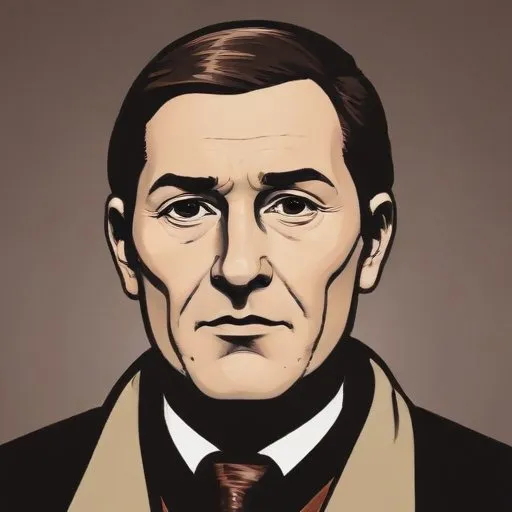
The Legacy of Philip Phillips: A Pioneer in American Archaeology
A Lifetime of Discovery and Contribution
Philip Phillips, a renowned American archaeologist, left an indelible mark on the field of archaeology, particularly in the realm of Mississippian culture. Best known for his groundbreaking work in the Lower Mississippi Valley, Phillips' contributions to the understanding of prehistoric cultures in the Southeastern United States are nothing short of extraordinary.
Early Life and Education
Born on August 11, 1900, Phillips' academic pursuits initially led him to study architecture, but it was his Ph.D. from Harvard University under the guidance of Alfred Marston Tozzer that paved the way for his future accomplishments in archaeology.
Career Highlights and Major Works
Phillips' storied career at the Peabody Museum of Archaeology and Ethnology at Harvard was marked by significant milestones. He was appointed assistant curator of Southeastern Archaeology in 1937 and later became the curator in 1949, a position he held until his retirement in 1967. His collaborations with esteemed colleagues, including James A. Ford,
James Bennett Griffin, and Gordon Willey, resulted in seminal works that have become cornerstones of American archaeology.
Personal Life and Philanthropy
Phillips' personal life was marked by significant relationships and philanthropic endeavors. He married Ruth Wilma Schoellkopf, daughter of business magnate Jacob F. Schoellkopf Jr., in 1922. The couple resided in Cambridge, Massachusetts, before moving to Bolton, where Phillips restored the historic Whitcomb Inn and Farm, which he later donated to the town for public use.
Published Works
Phillips' publications include:
- Brain, Jeffrey P. and Philip Phillips. 1996. Shell Gorgets Styles of the Late Prehistoric and Protohistoric Southeast. Peabody Museum Press, Cambridge, Massachusetts.
- Phillips, Philip. 1970. Archaeological Survey in the Lower Yazoo Basin, Mississippi, 1949-1955. Peabody Museum Papers, vol. 60. Harvard University, Cambridge.
Legacy and Impact
Phillips' dedication to the field of archaeology has left a lasting legacy. His contributions have not only shaped our understanding of the Mississippian culture but also paved the way for future generations of archaeologists. As a testament to his remarkable life and achievements, Phillips' professional obituary, written by his colleague Gordon R. Willey, was published in 1996 by the Society for American Archaeology.
A Lasting Legacy
Philip Phillips' passing on December 11, 1994, marked the end of an era, but his work continues to inspire and educate archaeologists, historians, and enthusiasts alike. As we reflect on his remarkable life, we are reminded of the profound impact one individual can have on our understanding of the past and our appreciation for the rich cultural heritage of the Americas.
FAQ
What was Philip Phillips area of expertise in archaeology?
Philip Phillips was an expert in the archaeology of the southeastern United States, particularly in the field of Mound Builders and Mississippian culture.
What were Philip Phillips contributions to the development of archaeological theory?
Philip Phillips made significant contributions to the development of archaeological theory, including his work on the direct historical approach and his critiques of cultural evolutionism.
How did Philip Phillips research on the Hopewell culture shape our understanding of it?
Philip Phillips research on the Hopewell culture provided new insights into the cultures social and economic organization, and helped to establish it as a distinct cultural entity.
What was Philip Phillips role in the development of American archaeology?
Philip Phillips played a key role in the development of American archaeology, helping to establish it as a professional discipline and training many prominent archaeologists.
How did Philip Phillips work on the Natchez culture inform our understanding of Native American societies?
Philip Phillips work on the Natchez culture provided new insights into the social and political organization of Native American societies, and helped to challenge common stereotypes about Native American cultures.