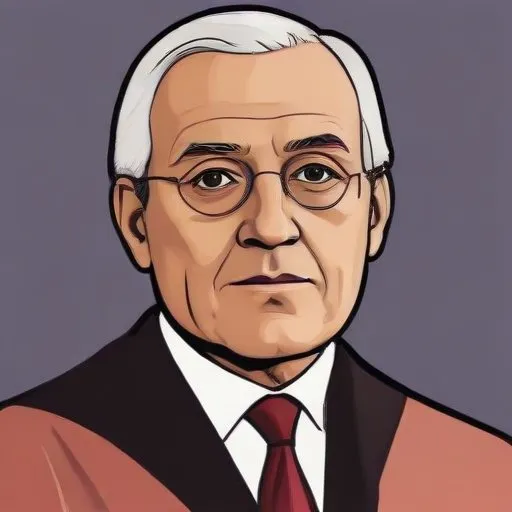
Philip Yorke, 1st Earl of Hardwicke: A Leading Light in English Law and Politics
A Lord High Chancellor of Great Britain and a Confidant to the Duke of Newcastle
Philip Yorke, 1st Earl of Hardwicke, was a renowned English lawyer and politician who served as Lord High Chancellor of Great Britain, leaving an indelible mark on the country's legal and political landscape. As a close confidant of the Duke of Newcastle, Prime Minister between 1754 and 1756 and 1757 until 1762, Yorke's influence extended far beyond the realms of the courtroom.
Early Life and Education
Born on December 1, 1690, in Dover, Yorke was the son of Philip Yorke, an attorney, and Elizabeth, daughter and coheiress of Richard Gibbon of Rolvenden, Kent. This maternal connection linked him to the family of
Edward Gibbon, the famous historian. Yorke's educational foundation was laid at a school in Bethnal Green, run by Samuel Morland, a nonconformist. At the tender age of 16, he entered the attorneys' office of Charles Salkeld in Holborn, London, before being admitted to the Middle Temple in November 1708.
Rise to Prominence
Yorke's rapid ascendancy in the legal profession was facilitated by his patron, Lord Chief Justice Parker, who recommended him as a law tutor to his sons. In 1715, Yorke was called to the bar, and his progress was nothing short of meteoric. His reputation as an equity lawyer was solidified in 1719, with a landmark case involving
Robert Walpole's family, in which he demonstrated profound learning and research on the jurisdiction of the chancellor.
Political Career
Yorke's influence extended to the political arena, where he entered Parliament in 1719 as member for Lewes. His Solicitor-General appointment, accompanied by a knighthood, came in 1720, a testament to his remarkable rise. Through the Earl of Macclesfield's influence with the Duke of Newcastle, Yorke's star continued to shine bright, cementing his position as a trusted advisor to the Prime Minister.
Legacy and Impact
Yorke's contributions to English law and politics are undeniable. His celebrated letter to Lord Kames on the distinction between law and equity remains a seminal work in the field of jurisprudence. As Lord High Chancellor, he played a pivotal role in shaping the country's legal landscape, earning him a revered place in the annals of English history.
Personal Life and Literary Pursuits
In his youth, Yorke contributed to
The Spectator under the pseudonym Philip Homebred, showcasing his literary flair. Though he abandoned this pursuit, his love for learning and intellectual curiosity remained a driving force throughout his life.
Timeline of Key Events
- 1690: Born on December 1st in Dover, Kent
- 1708: Admitted to the Middle Temple
- 1715: Called to the bar
- 1719: Enters Parliament as member for Lewes
- 1720: Appointed Solicitor-General with a knighthood
- 1754-1756 and 1757-1762: Serves as Lord High Chancellor of Great Britain
- 1764: Passes away on March 6th
Yorke's remarkable life and legacy serve as a testament to his unwavering dedication to the pursuit of justice and the betterment of English society. As an exemplary figure in English law and politics, his influence continues to reverberate through the centuries.
FAQ
What was Philip Yorke, 1st Earl of Hardwickes role in British politics?
Philip Yorke, 1st Earl of Hardwicke was a prominent British politician and lawyer who played a significant role in British politics during the 18th century. He served as Lord Chancellor of Great Britain from 1737 to 1756, and was a key advisor to King George II.
What is Philip Yorke, 1st Earl of Hardwickes legacy in British law?
Philip Yorke, 1st Earl of Hardwickes legacy in British law is significant. He was a leading authority on English law, and his writings on the subject helped to shape the development of British jurisprudence. He was also a key figure in the establishment of the British judicial system.
How did Philip Yorke, 1st Earl of Hardwickes education influence his work?
Philip Yorke, 1st Earl of Hardwickes education had a significant influence on his work. He was educated at Cambridge University, where he studied law, and later traveled to Europe to study with some of the leading legal minds of the day.
What was Philip Yorke, 1st Earl of Hardwickes relationship with King George II?
Philip Yorke, 1st Earl of Hardwicke had a close relationship with King George II, whom he served as Lord Chancellor and chief advisor. The king trusted Hardwicke implicitly, and relied on him to provide counsel on matters of state and law.
How did Philip Yorke, 1st Earl of Hardwicke die?
Philip Yorke, 1st Earl of Hardwicke died in 1764 in London, England. The exact circumstances of his death are not well documented, but it is believed that he died of natural causes.