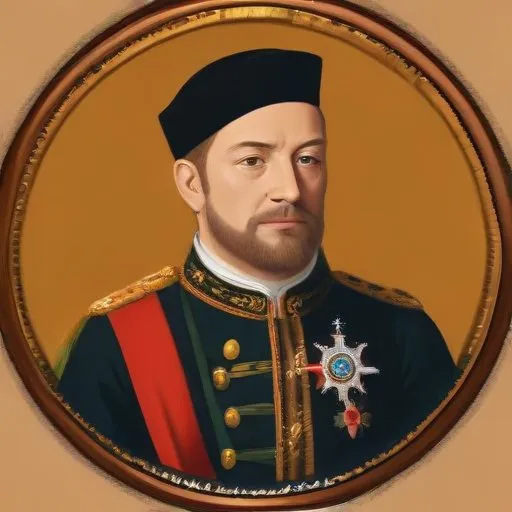
Philipp II, Count of HanauLichtenberg: The Epitome of Renaissance Leadership
A Life of Governance and Legacy
Philipp II, Count of HanauLichtenberg, is renowned for his exemplary leadership and wise governance of the County of HanauLichtenberg from 1480 until his demise in 1504. As a prominent figure of the Renaissance era, he left an indelible mark on the history of Europe, shaping the destiny of his people and the course of his dynasty.
Early Life and Upbringing
Born on May 31, 1462, in Hanau, Philipp II was the second son of Count Philipp I, the Elder of HanauBabenhausen, and his wife, Anna of Lichtenberg. Baptized three days after birth in the St. Mary's Church in Hanau, he was surrounded by influential figures, including Konrad Brelle, abbot of Selbold Abbey, Wenceslaus of Cleves, and Meze of Gemmingen, who would shape his early life and worldview.
Rise to Power and Marriage
Following the untimely death of his older brother, Johann, Philipp II succeeded his father as Count of HanauBabenhausen. To solidify his position, he married Anna of IsenburgBdingen in 1480, a union necessitating a papal dispensation due to their consanguinity in the fourth degree. This strategic alliance fostered a lasting bond between the two houses and secured Philipp's status as a prominent leader.
Family and Progeny
Philipp II and Anna of IsenburgBdingen had eight children, ensuring the continuation of the HanauLichtenberg dynasty:
- Philipp III (1482-1538)
- Anna (1485-1559), a nun in the Marienborn Abbey
- Margaret (1486-1560), a nun in the Marienborn Abbey
- Ludwig (1487-1553), an unmarried clergyman
- Maria (c. 1487-1526), abbess of Klarenthal Abbey
- Amalia (1490-1552), a nun
- Reinhard (1494-?), a clergyman
Legacy and Impact
Philipp II's prudent leadership and strategic alliances enabled the County of HanauLichtenberg to thrive during his reign. His emphasis on education, culture, and commerce fostered a renaissance of sorts, as the county became a hub of artistic and intellectual pursuits. The count's patronage of the arts and his commitment to the well-being of his people cemented his legacy as a visionary leader.
Historical Context and Comparative Analysis
During Philipp II's lifetime, Europe was experiencing a resurgence of cultural and intellectual growth. His contemporaries, such as
Lorenzo de' Medici of Florence and King
Louis XI of France, were shaping the course of history through their political and artistic endeavors. Philipp II's achievements, while perhaps less grandiose, demonstrate a similar commitment to the betterment of his people and the advancement of his domain.
Personal Milestones and Key Life Events
Philipp II's life was marked by significant milestones, including his marriage, the birth of his children, and his ascension to power. His early life was shaped by the influence of his family and the expectations placed upon him as a member of the nobility. Throughout his reign, he navigated the complexities of alliances, wars, and internal strife, emerging as a seasoned leader and statesman.
Trivia and Fun Facts
- Philipp II's baptismal sponsors included Konrad Brelle, abbot of Selbold Abbey, and Wenceslaus of Cleves.
- The count's marriage to Anna of IsenburgBdingen required a papal dispensation due to their consanguinity in the fourth degree.
- Philipp II's daughter, Maria, served as the abbess of Klarenthal Abbey from 1512 to 1525.
Philipp II, Count of HanauLichtenberg, stands as a testament to the enduring power of wise leadership, strategic alliances, and cultural patronage. His legacy continues to inspire, a beacon of excellence in a dynasty marked by greatness.
FAQ
Who was Philipp II, Count of Hanau-Lichtenberg?
Philipp II, Count of Hanau-Lichtenberg was a German nobleman who ruled the County of Hanau-Lichtenberg from 1480 to 1534, playing a significant role in the politics of the Holy Roman Empire.
What were Philipp IIs achievements as a ruler?
Philipp II strengthened the economy of his county, promoted trade and commerce, and invested in education and infrastructure, making Hanau-Lichtenberg a prosperous region during his reign.
How did Philipp II navigate the complex politics of the Holy Roman Empire?
Philipp II maintained good relationships with the Habsburgs and the Electors of the Empire, skillfully navigating the intricate web of alliances and rivalries to secure his countys interests.
What was Philipp IIs role in the German Peasants War?
Philipp II took a moderate stance during the German Peasants War, trying to mediate between the rebels and the nobility, but ultimately had to suppress the uprising to maintain order in his county.
How did Philipp IIs legacy shape the Hanau-Lichtenberg region?
Philipp IIs wise governance and investments laid the foundation for the prosperity of Hanau-Lichtenberg, which continued to thrive long after his death, earning him a reputation as a just and enlightened ruler.