


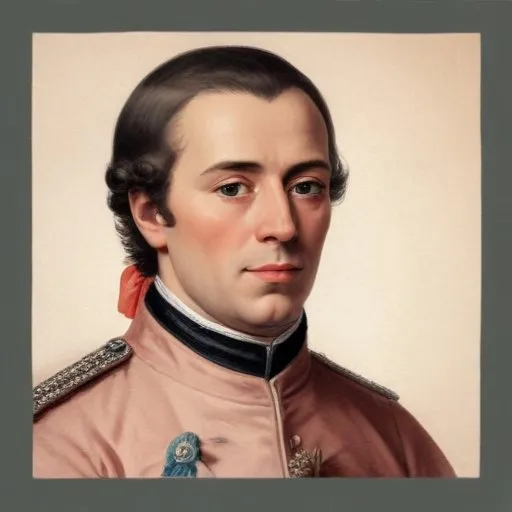
A German nobleman who ruled Hanau-Lichtenberg from 1580 to 1599, known for his cultural and economic achievements, including the establishment of a printing press and the promotion of education.
Philipp V, Count of Hanau-Lichtenberg, is renowned for his cultural and scientific patronage, which contributed significantly to the Renaissance humanism movement in 16th century Europe. As a prominent nobleman, he played a crucial role in fostering education, art, and architecture in his territories, earning him a place among the most notable figures of his time.
Born on February 21, 1541, in Bouxwiller, Philipp V was the eldest son of Count Philipp IV of Hanau-Lichtenberg and Countess Eleonore of Fürstenberg. His early life was marked by a strong emphasis on education, which laid the foundation for his future cultural and scientific pursuits. He enrolled at the University of Tübingen in 1553, where he developed a deep interest in mathematics and astronomy.
Philipp V's passion for arts and sciences led him to commission various architectural and cultural projects in his territories. He was particularly fond of architecture, which is evident in the construction of several notable buildings, including the Renaissance-style Lichtenberg Castle. His patronage extended to the arts as well, supporting local artists and artisans who contributed significantly to the cultural landscape of his territories.
The Count's fascination with mathematics and astronomy manifested in his personal projects, including the manufacture of a silver terrestrial and celestial sphere, a testament to his ingenuity and curiosity. His interest in astronomy also led him to support local astronomers and mathematicians, further solidifying his reputation as a patron of scientific inquiry.
In 1570, Philipp V's father-in-law, Count Palatine Jakob of Zweibrücken-Bitsch, passed away without a male heir, leading to a dispute over the inheritance of the County of Bitsch, the Lordship of Ochsenstein, and half of the Lordship of Lichtenberg. The Count's claim to the territories was challenged by Philipp I of Leiningen-Westerburg, leading to a lengthy legal battle that ultimately resulted in the occupation of the county by Lorraine troops.
Philipp V's legacy is multifaceted, encompassing his cultural and scientific patronage, as well as his roles as a statesman and nobleman. His contributions to education, art, and architecture in his territories have left an indelible mark on the cultural landscape of 16th century Europe. His emphasis on scientific inquiry and his support for local artists and mathematicians have cemented his place as a champion of humanism and intellectual curiosity.
Through his life and legacy, Philipp V, Count of Hanau-Lichtenberg, has left an enduring mark on the cultural and scientific heritage of Europe, embodying the Renaissance humanist spirit of intellectual curiosity and artistic expression.
Born in 1541
A German nobleman who ruled Hanau-Lichtenberg from 1580 to 1599, known for his cultural and economic achievements, including the establishment of a printing press and the promotion of education.
Born in 1462
A German nobleman who ruled Hanau-Lichtenberg from 1512 to 1552, known for his territorial expansions and cultural achievements. He was a patron of the arts and supported the development of education.
