


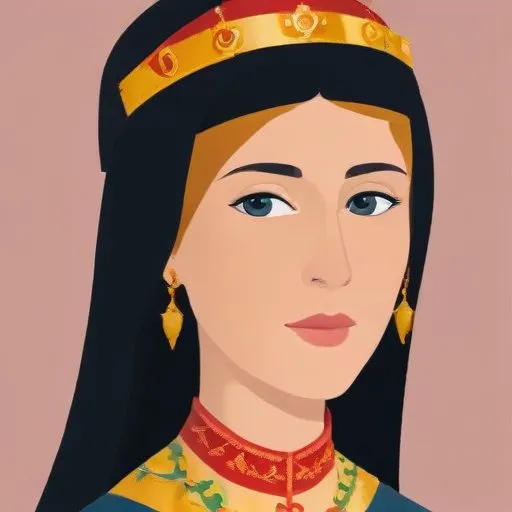
Queen of Portugal, married to King John I, and mother of several influential children, including a king and a duke. She played a significant role in strengthening the alliance between England and Portugal.
Philippa of Lancaster, the esteemed daughter of John of Gaunt, 1st Duke of Lancaster, and Blanche of Lancaster, left an indelible mark on Portuguese history as the queen consort of King John I, cementing the Treaty of Windsor and birthing the illustrious generation of Portugal.
Born on March 31, 1360, Philippa spent her formative years moving between the various properties owned by her family, accompanied by her mother, Blanche, and her wetnurse, Maud. It was during this time that she developed a strong bond with her siblings, Elizabeth and Henry, who would later become King Henry IV.
Following her mother's untimely death in 1368, Philippa's education became a priority. Her father remarried in 1371 to Infanta Constance of Castile, and later to Katherine Swynford, who had previously served as Philippa's governess. Katherine's influence played a significant role in Philippa's education, introducing her to notable figures like Geoffrey Chaucer, who would become a close family friend and patron.
Philippa's intellectual curiosity knew no bounds. She studied science under the tutelage of Friar John, immersed herself in poetry with Jean Froissart, and delved into philosophy and theology with John Wycliffe. Her voracious appetite for knowledge extended to the works of Greek and Roman scholars, including Pliny and Herodotus.
In 1387, Philippa's marriage to King John I of Portugal solidified the Treaty of Windsor, forging a lasting alliance between England and Portugal. This union produced several offspring, including the esteemed Infante Henry the Navigator, who would go on to play a pivotal role in Portugal's Age of Discovery.
As queen, Philippa's diplomatic efforts helped maintain peace between Portugal and England, while her fertility ensured the continuation of the Portuguese monarchy. Her children would become known as the Illustrious Generation, shaping the destiny of Portugal for generations to come.
Philippa's remarkable life serves as a testament to the power of education, diplomacy, and strong female leadership. Her legacy extends beyond her queenly duties, inspiring future generations of women to pursue their intellectual passions and strive for greatness.
Through her marriage, Philippa not only secured a crucial alliance but also brought a sense of cultural and intellectual sophistication to the Portuguese court. Her love for learning, music, and art helped shape the country's cultural identity, leaving an enduring impact on Portuguese history.
Philippa of Lancaster's remarkable life serves as a beacon of inspiration, illuminating the path for future generations of women in pursuit of knowledge, diplomacy, and leadership. Her extraordinary legacy continues to captivate and educate, solidifying her place as one of history's most fascinating and influential figures.
Born in 1340
A powerful and wealthy medieval English nobleman, known for his immense influence on English politics and his role in the Hundred Years' War. He was also a patron of the arts and a founder of Trinity College, Cambridge.
Born in 1345
A member of the royal House of Lancaster, she was a patron of the arts and a powerful noblewoman who played a significant role in 14th-century English politics. Her legacy has endured through literature and art.
Born in 1133
King of England from 1154 to 1189, known for establishing a strong centralized government, reforming the English church, and his tumultuous relationships with Thomas Becket and his sons.
Born in 1284
The king whose disastrous reign led to his eventual deposition and mysterious death, remembered for his alleged homosexual relationships and power struggles with nobles.
