


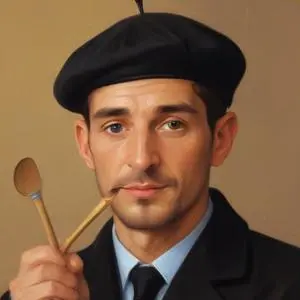
A French painter who explored the intersection of color and emotion, creating intimate, dreamlike scenes of everyday life. He's celebrated for his bold, expressive use of color and innovative approach to composition.
Pierre Bonnard, a French painter, illustrator, and printmaker, is renowned for his stylized decorative qualities and bold use of color. As a founding member of the Post-Impressionist group Les Nabis, he played a significant role in the transition from Impressionism to Modernism.
Bonnard was born on October 3, 1867, in Fontenay-aux-Roses, Hauts-de-Seine, France. His mother, Élisabeth Mertzdorff, was from Alsace, and his father, Eugène Bonnard, was a senior official in the French Ministry of War. Bonnard showed a talent for drawing and watercolors from an early age and often painted in the gardens of his parents' country home.
In the late 1880s, Bonnard began attending art classes at the Académie Julian in Paris, where he met fellow artists Paul Sérusier, Maurice Denis, Gabriel Ibels, and Paul Ranson. It was during this period that he developed his unique style, characterized by bold colors, intimate domestic scenes, and a focus on the emotional intensity of everyday life.
Alongside his friends and fellow artists, Bonnard formed the Post-Impressionist group Les Nabis, which sought to break away from traditional Impressionist techniques. The group's name, derived from the Hebrew word for "prophets," reflected their desire to create a new, prophetic art that would speak to the emotional and psychological depths of human experience.
Bonnard's oeuvre is characterized by a range of works that showcase his mastery of color and composition. Some of his most famous works include:
Bonnard's work had a profound impact on modern art, influencing a range of artists, from Henri Matisse to Mark Rothko. His emphasis on the emotional and psychological aspects of everyday life paved the way for a new generation of artists who sought to explore the human condition through their work.
Bonnard's personal life was marked by a series of intense relationships, including his marriage to Marthe de Méligny, which lasted for over 30 years. He was also known for his close friendship with the writer and critic, Henri-Pierre Roché.
Today, Bonnard is recognized as one of the most important artists of the early 20th century, and his work continues to inspire artists, designers, and art lovers around the world. His legacy is a testament to the power of art to capture the essence of human experience and to convey the beauty and complexity of everyday life.
Bonnard passed away on January 23, 1947, but his work remains a profound and enduring testament to his vision and creativity.
Born in 1869
A pioneering artist who revolutionized modern art with bold, expressive, and colorful works that blurred the lines between painting and sculpture, creating a new language of form and color.
Born in 1881
A pioneering artist who transformed modern art with pioneering Cubist works, creating a new visual language that continues to inspire and influence art, design, and culture.
Born in 1868
A post-Impressionist master of intimate, domestic scenes, capturing the quiet beauty of everyday life with bold colors and delicate textures.
Born in 1832
A pioneering figure in Impressionism, he bridged the gap between Realism and Impressionism with his bold, expressive brushstrokes and everyday subjects.
Born in 1839
A post-Impressionist pioneer, he's famous for his still-life compositions and landscapes that laid the groundwork for Cubism, influencing 20th-century art.
Born in 1880
A pioneer of Fauvism, a style characterized by vivid colors and energetic brushstrokes, creating a new language of art that paved the way for modernist movements.
Born in 1870
A group of Post-Impressionist avant-garde artists who emphasized emotional and expressive qualities in their work, characterized by bold colors and flat forms. They sought to break free from traditional representation in art.
Born in 1877
A Fauvist painter and illustrator celebrated for vibrant, expressive works that captured the essence of modern life, from landscapes to still lifes, and even textiles and ceramics.
