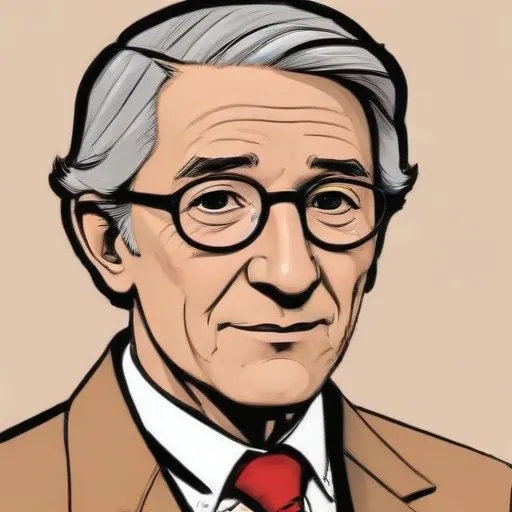
The Visionary Ecologist: Pierre Dansereau
A Champion of Environmental Harmony
Pierre Dansereau, a Canadian ecologist, is renowned for his groundbreaking contributions to the field of ecology, earning him the title of one of the fathers of ecology. Throughout his illustrious career, he dedicated himself to understanding the intricate relationships between living organisms and their environments, paving the way for a deeper appreciation of the natural world.
Early Life and Education
Born on October 5, 1911, in Outremont, Quebec, Dansereau's curiosity about the natural world was nurtured from an early age. He pursued his passion for biology, earning a Bachelor of Science in Agriculture from the University of Geneva in 1936, followed by a Ph.D. in Biological Science in 1939.
A Career of Discovery and Innovation
Dansereau's professional journey spanned multiple institutions, including the Montreal Botanical Garden, the Université de Montréal, the University of Michigan Botanical Gardens, and Columbia University, where he served as a professor of botany and geography. His research focused on the intricate relationships between species and their environments, shedding light on the importance of ecological balance.
- In the 1950s, Dansereau's work at the Université de Montréal as the director of the Botanical Institute led to significant advancements in the field of ecology.
- As the assistant director of the New York Botanical Garden, he continued to make significant contributions to the understanding of plant species and their role in ecosystem dynamics.
Awards and Honors
Dansereau's pioneering work in ecology earned him numerous accolades, including:
- The George Lawson Medal from the Canadian Botanical Association in 1987
- Fellow of the Royal Society of Canada (MSRC) in 1949
- Honorary Doctor of Laws from the University of Saskatchewan in 1959
- The LoPariseau Prize in 1965
- Companion of the Order of Canada in 1969
- An honorary doctorate from Sir George Williams University (now Concordia University) in 1971
Legacy and Impact
Dansereau's tireless efforts to promote ecological awareness and conservation have had a profound impact on modern society. His work has inspired generations of ecologists, conservationists, and environmentalists, shaping our understanding of the natural world and our role within it.
The Complexe des sciences Pierre-Dansereau at the Université du Québec à Montréal (UQAM) was named in his honor, a testament to his enduring legacy in the field of ecology.
A Life of Devotion and Service
Dansereau's dedication to his work was matched only by his devotion to his wife, a painter who became a centenarian in 2011. Their 76-year marriage was a testament to the power of love and commitment. Dansereau passed away on September 28, 2011, just one week shy of his 100th birthday, leaving behind a rich legacy that continues to inspire and educate future generations.
"The world is not a problem to be solved, but a reality to be faced." - Pierre Dansereau
Dansereau's remarkable life and work serve as a reminder of the importance of ecological balance and our responsibility to preserve the natural world for future generations.
FAQ
What are some of Pierre Dansereaus most notable contributions to ecology?
Pierre Dansereau was a pioneering ecologist who made significant contributions to the field, including the development of the concept of ecological landscape.
How did Pierre Dansereau get started in the field of ecology?
Pierre Dansereau began his career in ecology in the 1940s, initially studying plant ecology and later expanding his research to include landscape ecology and conservation biology.
What was Pierre Dansereaus approach to ecological research?
Pierre Dansereau was known for his interdisciplinary approach to ecological research, incorporating insights from biology, geography, and philosophy to understand complex ecological systems.
Did Pierre Dansereau also work on issues related to environmental policy?
Yes, Pierre Dansereau was an advocate for environmental protection and conservation, and worked with governments and international organizations to develop sustainable environmental policies.
What legacy did Pierre Dansereau leave behind in the field of ecology?
Pierre Dansereau left behind a legacy of innovative ecological research and a commitment to protecting the natural world.