


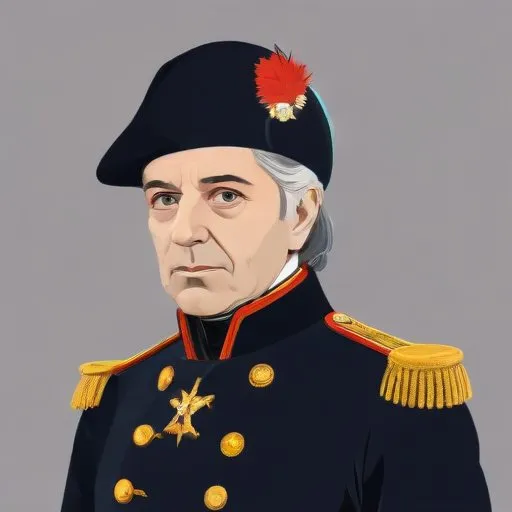
French general who led the Free French Forces in Africa during World War II, playing a key role in the Allied victory. He was a close ally and friend of Charles de Gaulle.
Pierre Garbay was a renowned French Army General, celebrated for his unwavering dedication to the Free French Forces during World War II. He is best known for his instrumental role in rallying Chad to France Libre in 1940 and his subsequent command of the 1st Free French Division, leading his troops to several crucial victories against the enemy.
Born on October 4, 1903, Garbay hailed from humble origins. He embarked on his military journey by joining the prestigious Saint-Cyr military academy in 1921, graduating as a sublieutenant in 1924. His early years of service took him to Morocco (1925-1927) and China, where he honed his skills and established himself as a promising young officer.
When the Armistice was declared in 1940, Garbay refused to accept defeat and instead joined the Free French Forces. As commander of the 3rd bataillon de marche of French Equatorial Africa, he played a pivotal role in rallying Chad to France Libre, a move that greatly bolstered the resistance against the Axis powers.
Garbay continued to demonstrate his bravery and leadership skills, fighting alongside General Philippe Leclerc's forces until 1944. He participated in key battles in Africa and Italy before taking part in the Allied landing in Provence. His bravery and strategic prowess earned him a promotion to général de brigade in 1944.
Following the war, Garbay's military career continued to flourish. He served in Madagascar (1947), Indochina, and later commanded French troops in Tunisia. In 1955, he became Assistant Chief of Staff of the French Army, and three years later, he was promoted to the rank of Army General, becoming the military governor of Paris.
Garbay's remarkable career was punctuated by numerous accolades, including his appointment as Inspector of Overseas Forces in 1959. He retired from active duty in 1961, eventually passing away on July 17, 1980, at the age of 76.
Garbay's exemplary service was recognized with numerous awards and decorations, including:
Pierre Garbay's unwavering commitment to the Free French Forces and his instrumental role in key battles during World War II have cemented his place as one of the most revered generals in French history. His bravery, strategic brilliance, and leadership skills continue to inspire generations of military officers and historians alike.
Born in 1890
A French military leader who led the Free French Forces during WWII and later became President of France, known for his strong leadership and vision for a unified Europe.
Born in 1889
A French general who led the First Army to victory in World War II, liberating Marseille and playing a key role in the Allied invasion of Germany. He's also known for his post-war efforts to modernize the French military.
Born in 1902
Led the Free French Forces during WWII, playing a crucial role in the liberation of Paris and ultimately contributing to the Allied victory.
Born in 1888
A highly decorated military leader who played a crucial role in World War II, particularly in the Italian Campaign, and later became a prominent figure in French politics.
Born in 1889
A French general who led the First Army to victory in World War II, liberating Marseille and playing a key role in the Allied invasion of Germany. He's also known for his post-war efforts to modernize the French military.
Born in 1882
A French lawyer and politician who served as the 17th President of France, known for his role in shaping the country's post-war constitution and politics. He played a key part in establishing the Fifth Republic.
Born in 1884
The first President of the Fourth Republic, serving from 1947 to 1954, known for his role in post-war France's reconstruction and establishment of the European Coal and Steel Community.
Born in 1908
A French historian and politician who served as Prime Minister of France, known for his efforts to reform the country's education system and his role in shaping France's post-war identity.
