


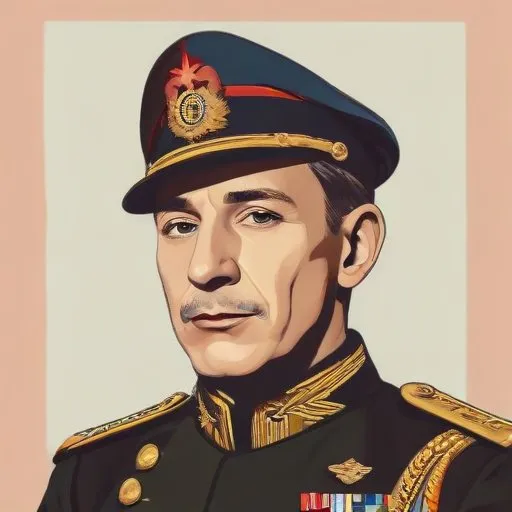
Led expeditions to explore and map the western wilderness of North America, establishing trade relationships with Native American tribes and claiming vast territories for France. He played a crucial role in shaping the continent's early history.
Pierre Gaultier de Varennes, a French Canadian military officer, fur trader, and explorer, is renowned for being the first known European to reach present-day North Dakota and the upper Missouri River in the United States. He, along with his four sons, explored the area west of Lake Superior, establishing trading posts and expanding the original New France territory.
Born on November 17, 1685, in Trois-Rivières, New France, Pierre was the eldest son of Ren Gaultier de Varennes and Marie, daughter of Pierre Boucher, the first Governor of Trois-Rivières. After his father's death at the age of three, Pierre was educated at the Jesuit seminary in Quebec. At twelve, he received a cadet's commission in the French Marines in Canada and later participated in Queen Anne's War, taking part in the raids on Deerfield in present-day Massachusetts and the unsuccessful attack on St. John's, Newfoundland.
In the 1730s, Pierre and his sons explored the area west of Lake Superior, establishing trading posts and expanding the original New France territory. This process added Western Canada to the French dominion, which was previously centered along the Saint Lawrence basin. During this period, two of his sons crossed the prairie as far as present-day Wyoming, United States, becoming the first Europeans to behold the Rocky Mountains north of New Mexico.
Pierre Gaultier de Varennes' expeditions and trading posts played a significant role in redefining Canada's boundaries and expanding the French territory in North America. His contributions to the exploration of Western Canada paved the way for future explorers and settlers, shaping the course of Canadian history.
Pierre Gaultier de Varennes' legacy extends beyond his own time, influencing the development of modern-day Canada. His exploration and trading activities helped shape the country's boundaries, fostering growth and settlement in the region. Today, his name is synonymous with bravery, resilience, and a pioneering spirit that continues to inspire generations.
Born in 1567
French explorer who mapped much of eastern North America, establishing trade and settlement in what is now Canada and the northeastern United States.
Born in 1491
French navigator and explorer who led three expeditions to North America, mapping the Gulf of St. Lawrence and claiming the region for France. He's also credited with introducing Europeans to the concept of tobacco.
Born in 1661
A French-Canadian explorer and politician who established the first French settlement in Louisiana and played a key role in the early history of the American South. He's also known for his military campaigns against the British in North America.
