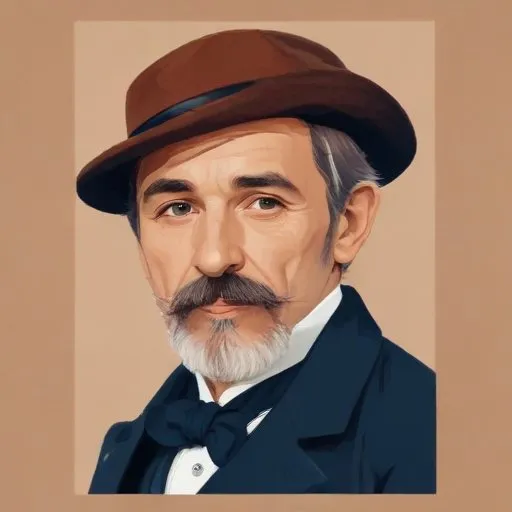
Pierre Renoir: The Illustrious French Actor and Son of the Impressionist Master
The Inspector Maigret of French Cinema
Pierre Renoir, born on March 21, 1885, is renowned for his iconic portrayal of Inspector Jules Maigret in the 1932 film "Night at the Crossroads." This role cemented his status as a prominent French actor, following in the footsteps of his father, the celebrated impressionist painter
Pierre-Auguste Renoir. As the elder brother of film director
Jean Renoir, Pierre's own career was intertwined with the world of cinema, earning him a distinctive place in French entertainment history.
Early Life and Career
Born in Paris, Renoir grew up surrounded by the bohemian art world of Montmartre. His mother, Aline Charigot, was a seamstress who modelled for his father's paintings. Pierre's early life was marked by a close relationship with his father, who encouraged his love for art and performance. He began his acting career on the stage, working alongside prominent French actors and directors, including
Louis Jouvet.
Notable Film Roles and Collaborations
Renoir's filmography boasts over 50 titles, including:
- Les Deux Gosses (1916) - Le lieutenant Jacques d'Alboise
- Marion Delorme (1918) - Le roi Louis XIII
- La Route impériale (1935) - Maj. Hudson
- Tovaritch (1935) - Gorotchenko
- Children of Paradise (1945) - Jéricho, the ragman
His collaboration with his brother Jean Renoir on "Night at the Crossroads" marked a milestone in French cinema, as it was the first film adaptation of
Georges Simenon's Inspector Maigret series. This role earned Renoir widespread recognition and critical acclaim.
Personal Life and Legacy
Renoir married actress Véra Sergine in 1914, with whom he had a son,
Claude Renoir, a cinematographer. After his divorce in 1925, Renoir continued to work in the film industry, eventually becoming the director of the Théâtre de l'Athénée in Paris, following the death of Louis Jouvet in 1951.
Renoir's legacy extends beyond his film career, as he embodied the spirit of French artistic tradition. His life was marked by a passion for performance, art, and literature, which he inherited from his father. Pierre Renoir's contribution to French cinema and theatre remains an indelible mark on the country's cultural heritage.
Awards and Honors
Throughout his career, Renoir received numerous awards and honors for his performances, solidifying his position as one of France's most esteemed actors.
- 1936: Nominated for Best Actor at the Venice Film Festival for La Bandera
- 1945: Won the Grand Prix du Cinéma Français for Children of Paradise
Trivia and Fun Facts
- Renoir was initially hesitant to take on the role of Inspector Maigret, but was convinced by his brother Jean to accept the part.
- He was known for his remarkable likeness to his father, often incorporating impressions of Pierre-Auguste Renoir's mannerisms into his performances.
- Renoir's son, Claude, went on to become a renowned cinematographer, working on films such as The 400 Blows and Jules and Jim.
Pierre Renoir's remarkable body of work continues to inspire generations of French actors, filmmakers, and art enthusiasts. His dedication to his craft and his family's artistic legacy have cemented his place as one of France's most beloved cultural icons.
FAQ
What were Pierre Renoirs achievements in French cinema?
Pierre Renoir was a French actor, director, and screenwriter who made significant contributions to French cinema, starring in over 50 films and directing several classics, including La Grande Illusion and The Rules of the Game.
How did Pierre Renoirs acting style influence French cinema?
Pierre Renoirs naturalistic acting style, which emphasized subtlety and nuance, influenced a generation of French actors and helped shape the aesthetic of French cinema, particularly in the 1930s and 1940s.
What was Pierre Renoirs role in the development of the French New Wave?
Pierre Renoirs work, particularly his films La Grande Illusion and The Rules of the Game, influenced the development of the French New Wave, a movement that revolutionized French cinema in the 1950s and 1960s.
How did Pierre Renoirs collaborations shape his films?
Pierre Renoirs collaborations with writers, cinematographers, and actors, including his father, Auguste Renoir, helped shape his films, which often explored themes of humanity, morality, and social commentary.
What is Pierre Renoirs legacy in French cinema?
Pierre Renoir is remembered as a master filmmaker and actor who left an indelible mark on French cinema, his films continuing to influence contemporary filmmakers and earning him a place in the history of French cinema.