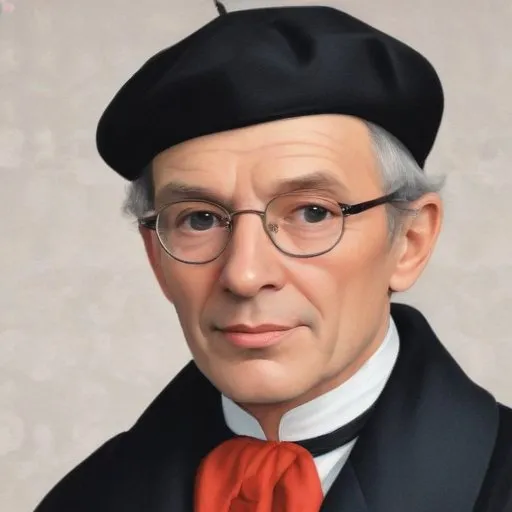
Pieter Burman the Younger: A Master of Latin Poetry and Philology
A Legacy of Learning and Conflict
Pieter Burman the Younger, a renowned Dutch philologist, left an indelible mark on the world of Latin poetry and philology. Born on October 23, 1713, in Amsterdam, Burman's exceptional talent and dedication to his craft earned him a reputation as a master of his field, rivaling that of his esteemed uncle, Pieter Burman the Elder.
A Life of Study and Quarrels
Raised by his uncle in Leiden, Burman's early life was marked by a passion for learning, which led him to study law and philology under esteemed scholars CA Duker and Arnold von Drakenborch at Utrecht. His academic prowess soon earned him a professorship of eloquence and history at Franeker in 1735, where he combined his chair with that of poetry in 1741. His subsequent appointments at the Athenaeum Illustre of Amsterdam as professor of history and philology, poetry, and general librarian cemented his position as a leading authority in his field.
Despite his many accomplishments, Burman's fiery temper often led to intense quarrels with his contemporaries, including notable scholars Saxe and Christian Adolph Klotz. These conflicts, though not uncommon in academic circles, threatened to overshadow his remarkable contributions to the field.
A Treasure Trove of Latin Poetry and Rhetoric
Burman's most valuable works include:
- Anthologia Veterum Latinorum Epigrammatum et Poematum (1759-1763), a comprehensive collection of Latin epigrams and poems
- Aristophanis comoediae Novem (1760), an edition of Aristophanes' nine comedies
- Rhetorica, a treatise on rhetoric that demonstrated his mastery of the subject
In addition to these original works, Burman completed his uncle's unfinished editions of Vergil (1767) and Claudian (1760), and began an edition of Propertius, which was completed by L. van Santen after his death and published in 1780.
A Legacy of Learning and Controversy
Pieter Burman the Younger's remarkable achievements in Latin poetry and philology continue to inspire and instruct scholars to this day. Though his tumultuous relationships with his contemporaries may have clouded his reputation, his contributions to the field remain unparalleled. As we reflect on his life and work, we are reminded of the enduring power of human knowledge and the importance of preserving our cultural heritage.
Pieter Burman the Younger passed away on June 24, 1778, at Santhorst, near Wassenaar, leaving behind a legacy of learning and controversy that continues to fascinate and inspire us today.
FAQ
What were Pieter Burman the Youngers contributions to philology?
Pieter Burman the Younger made significant contributions to philology through his work on classical texts, particularly in the field of Greek and Latin literature. His contributions helped shape the study of philology in the 18th century.
What was Pieter Burman the Youngers role as an educator?
As an educator, Pieter Burman the Younger taught at the University of Franeker and later at the University of Leiden, where he instilled his passion for classical languages and literature in his students.
What kind of poetry did Pieter Burman the Younger write?
Pieter Burman the Younger wrote poetry that was largely influenced by classical Greek and Roman styles, reflecting his deep understanding and appreciation of ancient literature.
How did Pieter Burman the Youngers work influence later scholars?
Pieter Burman the Youngers work laid the foundation for future scholars, influencing the development of philology and classical studies in the centuries that followed.
What is Pieter Burman the Youngers legacy in the field of education?
Pieter Burman the Youngers legacy in education is marked by his commitment to promoting the study of classical languages and literature, shaping the educational landscape of the 18th century.