


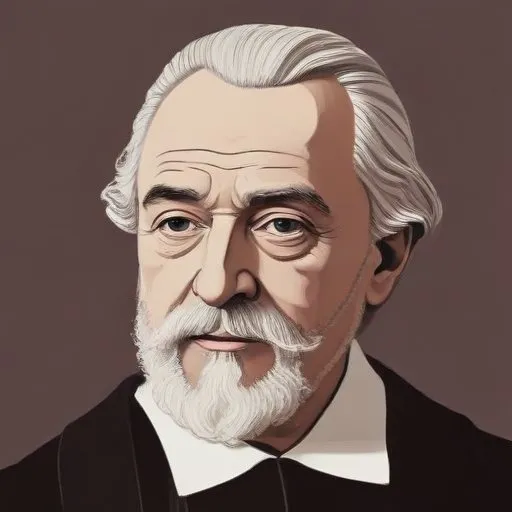
A 17th-century poet and scholar who edited classical texts and wrote poetry in Latin, influencing the development of neo-Latin literature.
Daniel Heinsius, a 17th-century Dutch scholar and philologist, left an indelible mark on the world of classical studies, earning recognition as one of the most prolific and influential scholars of his time. Heinsius's tireless pursuit of knowledge and dedication to the preservation of ancient texts cemented his reputation as a master of Greek and Latin languages, catapulting him to the forefront of intellectual circles in the Netherlands and beyond.
Born on June 9, 1580, in Ghent, Flanders, Heinsius's fascination with the classics was sparked at a young age. His father, a teacher, encouraged his son's curiosity, providing him with access to a vast library of ancient texts. Heinsius's academic pursuits took him to the University of Leiden, where he studied under the guidance of renowned scholars, including Joseph Scaliger. This period of intellectual immersion laid the groundwork for his future accomplishments.
Heinsius's academic career was marked by an impressive array of publications, many of which remain seminal works in the fields of classical philology and literary criticism. Some of his most notable contributions include:
Heinsius's contributions to classical scholarship had far-reaching implications for the development of modern Western literature and thought. His meticulous approach to textual analysis and interpretation set a new standard for academic rigor, inspiring generations of scholars to follow in his footsteps. Moreover, his work facilitated a deeper understanding of ancient Greek and Roman cultures, enriching the intellectual landscape of the Dutch Golden Age.
Heinsius's scholarly pursuits were underpinned by a profound respect for the power of knowledge and a commitment to intellectual freedom. He believed that the pursuit of truth and understanding should be guided by reason, rather than dogma or authority. This stance earned him the respect of his contemporaries, many of whom shared his passion for intellectual inquiry.
Heinsius's remarkable achievements are all the more impressive when considered within the context of his time. The Dutch Golden Age, marked by an explosion of cultural and artistic innovation, provided a fertile ground for intellectual pursuits. Heinsius's work not only reflected the era's spirit of discovery but also helped shape its intellectual trajectory.
As a testament to his enduring influence, Heinsius's works remain essential reading for scholars of classical studies to this day, ensuring that his legacy continues to inspire and inform contemporary academic discourse.
Born in 1547
A renowned Renaissance scholar who revived interest in Stoic philosophy and wrote influential works on ancient Roman history and culture.
Born in 1583
A 17th-century philosopher and jurist who laid the foundations for modern international law, particularly the concept of "just war" and the laws of the sea.
Born in 1466
A 16th-century Renaissance humanist who advocated for education, tolerance, and critical thinking, and is famous for his witty and insightful writings, particularly "In Praise of Folly".
Born in 1497
A 16th-century Renaissance scholar who made significant contributions to the development of the Protestant Reformation and education, known for his theological writings and astronomical observations.
Born in 1483
A German monk and priest who sparked the Protestant Reformation, challenging Catholic Church authority and shaping Western Christianity. He's famous for nailing 95 theses to a church door, sparking a religious revolution.
Born in 1509
A French pastor and theologian who played a key role in the Protestant Reformation, shaping Christian theology and influencing Western civilization. He's famous for his teachings on predestination and his role in establishing Calvinism.
Born in 1564
Renowned playwright and poet behind iconic works like Romeo and Juliet, Hamlet, and Macbeth, whose writings continue to influence literature and theater to this day.
