


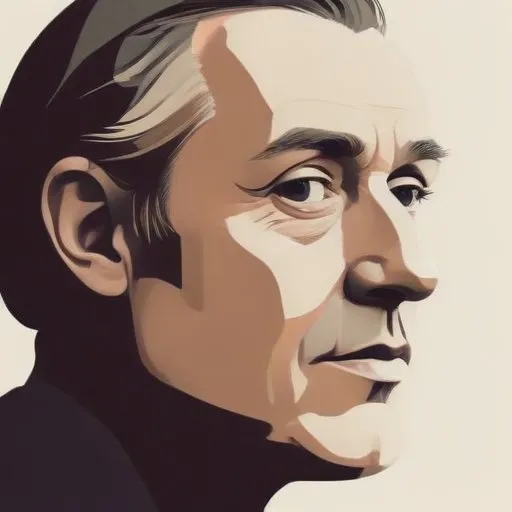
A 17th-century Dutch playwright and poet, known for his witty comedies and satirical works that critiqued societal norms, influencing the development of Dutch literature.
Pieter Langendijk was a renowned Dutch damask weaver, city artist, dramatist, and poet, known for his outstanding contributions to the world of art and literature. Born on July 25, 1683, in Haarlem, Netherlands, Langendijk's impressive body of work showcases his versatility and creativity, making him a prominent figure of the 18th century.
Langendijk's early life was marked by tragedy, with his father's death in 1689. He was temporarily taken care of by the Amsterdam poet William Sewell, until his mother began a linen business in The Hague in 1695. It was during this period that Langendijk developed an interest in weaving and pattern drafting, eventually joining artist circles where he began to write poetry.
In 1708, Langendijk took a course in drawing and painting under the tutelage of Frans van Steenwijk, which significantly influenced his artistic growth. His first play, Don Quichot op de Bruiloft van Kamacho, premiered on his 28th birthday and became an instant success, running for many years at the Schouwberg of Van Campen.
Langendijk went on to write several comedies in the style of Molière, whom he also translated and wrote about. One of his most notable works, Quincampoix, or the gamblers on the Stock Exchange, was written in 1720 and remains a significant commentary on the financial upheaval of the time.
In 1721, Langendijk became the Factor of the Haarlem Society Trou Moet Blycken, and a year later, he was appointed as the city artist of Haarlem. During this period, he wrote annual poems for the city from 1714 to 1744, showcasing his poetic prowess.
Langendijk's personal life was marked by turmoil, with the loss of his mother in 1727 and his wife's passing in 1738. Despite these challenges, he continued to work on his art, writing a history of Haarlem while living in the city's Proveniershuis. Langendijk passed away on July 9 or 18, 1756, leaving behind a legacy of artistic and literary excellence.
Pieter Langendijk's contributions to the world of art and literature are undeniable. His works continue to inspire and entertain, offering a glimpse into the cultural and social landscape of 18th-century Netherlands. As a multifaceted artist, Langendijk's legacy serves as a testament to the power of creativity and dedication.
These notable works, among many others, cement Langendijk's position as a pioneer of Dutch literature and art, ensuring his legacy endures for generations to come.
Born in 1587
A 17th-century master of Dutch literature, penning influential plays and poems that shaped the country's cultural identity. His works remain a testament to his innovative storytelling and poetic flair.
Born in 1622
A 17th-century master of comedy, he penned witty plays that satirized the French aristocracy, leaving a lasting impact on Western theater. His works remain widely performed and adapted today.
Born in 1639
A 17th-century master of French tragedy, crafting intricate, psychologically complex dramas that probed the human condition, influencing the development of Western theatre.
Born in 1606
A 17th-century French mastermind behind iconic plays like "Le Cid" and "Horace", known for pioneering the classical French tragedy genre.
97 Years Old
A Flemish literary giant, celebrated for his provocative novels and poetry that explored themes of identity, morality, and the human condition. His works often blended elements of magic realism and absurdism.
93 Years Old
A Dutch journalist, author, and poet, known for his lyrical and introspective writings that explore the human condition, often blending fiction and nonfiction. His works are celebrated for their poetic style and philosophical depth.
99 Years Old
A renowned Dutch literary figure, celebrated for his novels, poetry, and plays that often explored themes of war, identity, and morality. His works are considered classics of Dutch literature.
