


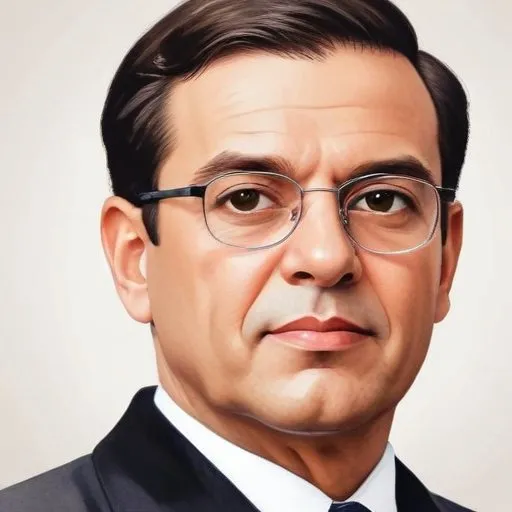
A Brazilian lawyer and politician who fought for democracy and human rights, serving as a federal deputy and senator, and was a key figure in the country's transition from military rule to democracy.
Plínio de Arruda Sampaio was a Brazilian intellectual and politician who dedicated his life to fighting for social justice and land reform in Brazil. He is known for his unwavering commitment to creating a more equitable society, and his tireless efforts to promote agrarian reform and empower marginalized communities.
Born on July 26, 1930, in São Paulo, Brazil, Sampaio graduated from the University of São Paulo School of Law in 1954. During his university days, he was an active member of the Catholic University Youth and Popular Action, which instilled in him a strong sense of social responsibility.
Sampaio's entry into public life began in the late 1950s, when he worked as a prosecutor and later as the coordinator of the government's action plan during Carvalho Pinto's governorship. In 1962, he was elected congressman by the Christian Democratic Party and became a member of several key committees, including the committee on economics, agriculture, and law enforcement.
As a congressman, Sampaio created a special committee for land reform and proposed a model that aimed to redistribute land to small farmers and rural workers. This move earned him the wrath of Brazil's powerful landlords, who saw him as a threat to their interests.
After the 1964 Brazilian coup d'état, Sampaio was one of the first 100 Brazilians to be deprived of their political rights for ten years by the military dictatorship. He was forced into exile in Chile, where he worked at the Food and Agriculture Organization (FAO) for six years.
In 1970, Sampaio moved to the United States, where he continued to advocate for democracy and human rights in Brazil. He played a key role in the Brazilian Democratic Movement, a coalition of exiles and activists working to promote democracy and social justice in Brazil.
Sampaio's contributions to social justice and land reform in Brazil are immeasurable. He chaired the Brazilian Association for Land Reform (ABRA) and directed the weekly newspaper Correio da Cidadania, which became a powerful platform for promoting social justice and human rights.
In 2010, Sampaio ran as a candidate for the presidency of Brazil, earning widespread recognition for his dedication to creating a more equitable society.
Sampaio's work was guided by a deep commitment to social justice, human rights, and democracy. He believed that land reform was essential to reducing poverty and inequality in Brazil, and that small farmers and rural workers should have access to the resources they needed to thrive.
Throughout his life, Sampaio remained true to his core values, even in the face of adversity. His unwavering dedication to creating a more just and equitable society inspires generations of social activists and advocates for social change.
Sampaio's work has had a lasting impact on modern Brazilian society. His advocacy for land reform and social justice has inspired countless social movements and organizations, and his commitment to democracy and human rights has helped to shape Brazil's political landscape.
Today, Sampaio's legacy continues to inspire new generations of social activists and advocates for social change. His work serves as a powerful reminder of the importance of standing up for what is right, even in the face of adversity.
Sampaio received numerous awards and honors for his work, including recognition from the Brazilian Association for Land Reform and the Brazilian Democratic Movement.
Despite his many achievements, Sampaio remained humble and dedicated to his work, never seeking to draw attention to himself. His legacy is a testament to the power of dedication, perseverance, and commitment to creating a better world.
81 Years Old
A Brazilian union leader and politician who served as President of Brazil, known for his efforts to reduce poverty and inequality, and for being a key figure in the country's economic growth.
78 Years Old
Brazil's first female president, a key figure in the country's economic development and a symbol of female empowerment in Latin American politics.
95 Years Old
A renowned sociologist and politician who served as President of Brazil from 1995 to 2003, implementing economic reforms and stabilizing the country's economy. He's also a respected academic and writer.
96 Years Old
Brazil's 33rd President, a skilled engineer and politician, led the country during a period of economic crisis and implemented significant reforms. He's most known for stabilizing the economy and introducing the Real Plan.
96 Years Old
A Brazilian lawyer and politician who served as the 31st President of Brazil, known for his role in the country's transition from military to civilian rule. He's also remembered for his controversial presidency marked by economic crisis and corruption allegations.
Born in 1910
A Brazilian lawyer and politician who served as Prime Minister of Brazil, known for being the first civilian to assume the office after a long period of military rule. He's also famous for dying before taking office, sparking a national crisis.
