


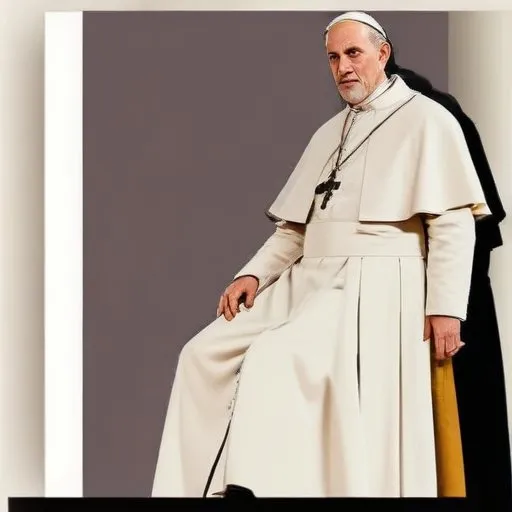
The 254th Pope, a strong advocate for the Catholic Church's authority, known for his papal bull condemning the doctrine of probabilism.
Pope Clement X is remembered as the oldest pope at the time of his election, taking the reins of the Catholic Church at the age of 79. Born Emilio Bonaventura Altieri in 1590, he reigned as the Pope from 29 April 1670 to his death in July 1676, leaving an indelible mark on the Church.
Emilio Bonaventura Altieri was born into a noble family in Rome, with his family having enjoyed high consideration at Rome for several centuries. His brother, Giambattista Altieri, and other family members held important offices, with some even entrusted with delicate missions during earlier pontificates.
Altieri received a doctorate in law from the Roman College in 1611 and was named auditor of Giovanni Battista Lancellotti in 1623, in the nuncio of Poland. He later held various positions within the Catholic Church, including Bishop of Camerino and Superintendent of the Papal Exchequer.
After a four-month-long conclave, Altieri was elected Pope Clement X in 1670. During his pontificate, he canonized and beatified various saints, promoted good relations between Christian countries, and made efforts to preserve the Altieri family name by adopting the Paoluzzi family.
He also established a new tax in Rome, which led to conflicts with ambassadors and cardinals. Despite his old age, Clement X celebrated the fourteenth jubilee of the holy year in 1675.
During his pontificate, Clement X created 20 cardinals, including Pietro Francesco Orsini, who later became Pope Benedict XIII. His papacy was marked by a focus on promoting unity and cooperation among Christian nations, as well as preserving the prestige of the Catholic Church.
Clement X's legacy extends beyond his papacy, with his influence felt in the development of the Catholic Church in the centuries that followed. His commitment to promoting good relations between Christian countries helped to foster a sense of unity and cooperation, paving the way for future popes to build upon.
Clement X's papacy was marked by a focus on promoting unity and cooperation among Christian nations. He believed in the importance of preserving the prestige of the Catholic Church and worked tirelessly to promote good relations between Christian countries.
His philosophical contributions were shaped by his commitment to the Church and its teachings. He believed in the importance of preserving tradition and promoting unity, and his papacy was marked by a focus on achieving these goals.
Clement X's papacy took place during a time of great change and upheaval in Europe. The Catholic Church was facing challenges from Protestantism and other religious movements, and the papacy was under pressure to respond to these challenges.
Despite these challenges, Clement X's papacy was marked by a sense of stability and continuity. He worked to promote unity and cooperation among Christian nations, and his legacy extends beyond his papacy to the development of the Catholic Church in the centuries that followed.
Born in 1611
Led the Catholic Church during a tumultuous period, reforming the Church's finances and combating corruption, while also opposing the French monarch's attempts to exert control over the Church.
Born in 1611
Led the Catholic Church during a tumultuous period, reforming the Church's finances and combating corruption, while also opposing the French monarch's attempts to exert control over the Church.
Born in 1652
The 18th-century Pope who banned Freemasonry and reformed the Roman Curia, leaving a lasting impact on the Catholic Church's governance and relations with secret societies.
Born in 1650
A Dominican friar who played a key role in the Western Schism, issuing several bulls to assert his authority and legitimacy as the true pope. He's also known for his reforms and attempts to restore the church's discipline.
Born in 1675
A 18th-century pope who reformed the Catholic Church, promoting tolerance and scholarship, and is known for his encyclicals on topics like usury and the sacraments.
Born in 1652
The 18th-century Pope who banned Freemasonry and reformed the Roman Curia, leaving a lasting impact on the Catholic Church's governance and relations with secret societies.
Born in 1504
Leader of the Catholic Church during the Counter-Reformation, he excommunicated Queen Elizabeth I and played a key role in the Council of Trent.
Born in 1876
The leader of the Catholic Church from 1939 to 1958, known for his controversial role during World War II, particularly in regards to the Holocaust. He is also remembered for his encyclicals on social justice and liturgical reforms.
